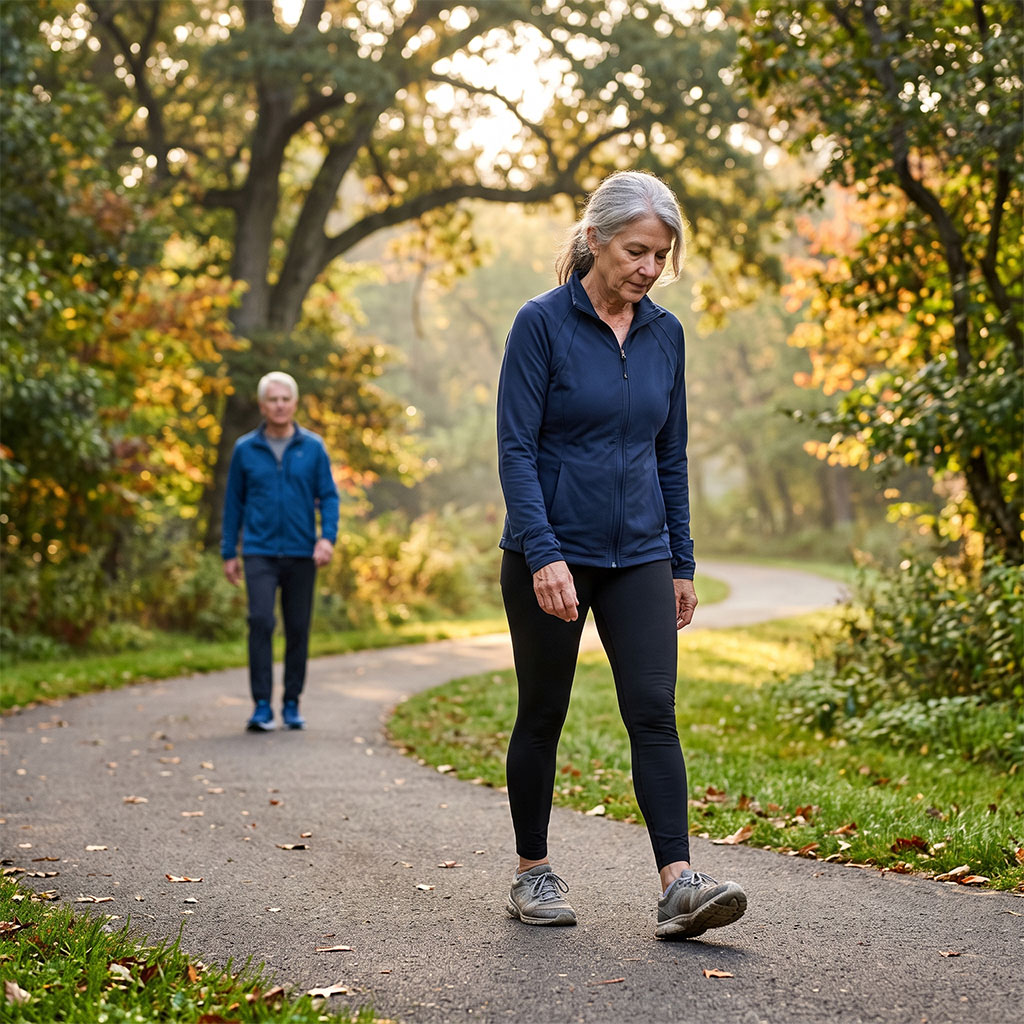
Now imagine David, age 72.
He enjoys walking every afternoon.
However, he spends most of the walk looking at his phone to check messages and count steps.
He often finishes with a stiff neck and sore shoulders.
After becoming more aware of his posture and keeping his eyes focused ahead instead, he notices walking feels more natural and comfortable.
Sometimes small changes produce surprisingly big improvements.
Don’t Forget About Hydration and Weather
Walking safely also means paying attention to your surroundings.
Very hot weather can increase the risk of dehydration.
Cold weather may make muscles and joints feel stiffer.
Rain, ice, and wet leaves can create slippery surfaces.
Choosing the right clothing, staying hydrated, and adjusting your plans to match the weather can make every walk safer.
Walking Is Not a Competition
Fitness watches and step counters can be motivating.
But they can also make people feel guilty when they don’t reach a certain number.
Remember that your health is not defined by one daily step count.
Some days you’ll walk farther.
Some days you’ll need more rest.
Listening to your body is just as important as meeting a goal.
When Should You Talk to Your Doctor?
While mild muscle soreness after becoming more active is common, it’s important to seek medical advice if you experience:
- Chest pain or pressure while walking.
- Severe shortness of breath.
- Dizziness or fainting.
- Pain that continues to worsen instead of improving.
- New swelling in a leg or joint.
- Repeated falls or increasing problems with balance.
These symptoms deserve prompt medical evaluation.