Skip to content
Instructions:
- Remove the beef tenderloin from the refrigerator about 20 minutes before cooking to bring it closer to room temperature, which helps it cook more evenly. Pat it dry thoroughly with paper towels to ensure a good sear, then season generously with kosher salt and freshly ground black pepper.
- Heat olive oil in a large skillet over high heat until shimmering. Sear the beef on all sides, including the ends, for 1–2 minutes per side. This creates a flavorful brown crust while keeping the center rare, which is ideal for Beef Wellington.
- Transfer the seared beef to a plate and immediately brush the entire surface with Dijon mustard while the meat is still warm. This adds a subtle tang and helps the mushroom duxelles adhere. Allow the beef to cool completely before proceeding.
- Prepare the mushroom duxelles by finely chopping cremini mushrooms, being careful not to puree them, as some texture is desirable. Finely mince shallots and garlic for depth of flavor.
- Melt unsalted butter in a skillet over medium heat. Add the shallots and cook for about 2 minutes until softened, then stir in garlic, chopped mushrooms, and fresh thyme leaves. Cook the mixture, stirring often, for 12–15 minutes until most moisture has evaporated and the mixture becomes dark, thick, and concentrated. Season lightly with salt and pepper and let cool completely.
- On a clean work surface, lay out a large sheet of plastic wrap. Arrange the prosciutto slices in a slightly overlapping rectangle large enough to wrap around the beef.
- Spread the cooled mushroom duxelles evenly over the prosciutto, creating a thin, compact layer. Place the Dijon-coated tenderloin in the center of this layer.
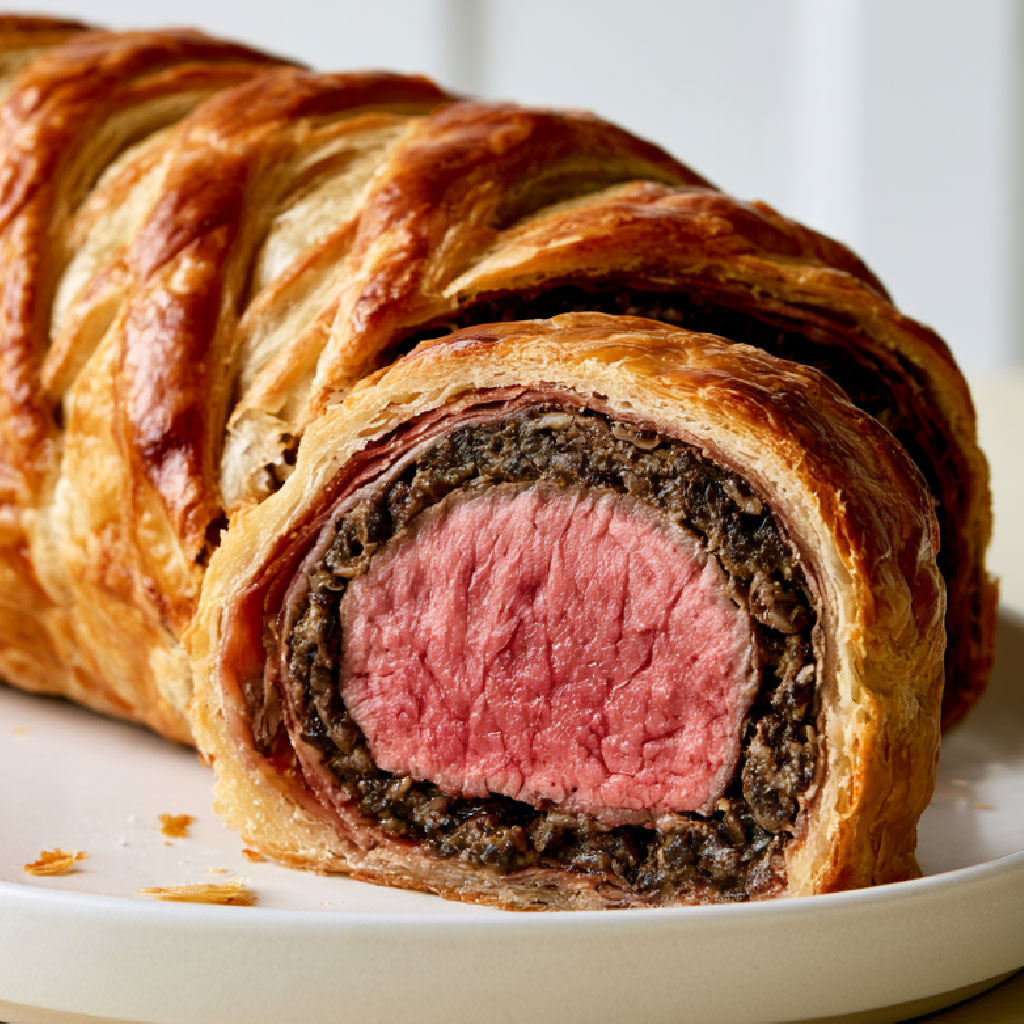
- Using the plastic wrap to help, roll the prosciutto and mushroom layer tightly around the beef, forming a neat, even cylinder. Twist the ends of the plastic wrap to secure the shape and refrigerate for 20 minutes to firm up the roll.
- Lightly flour your work surface and roll out the puff pastry to a rectangle large enough to fully encase the chilled beef roll, leaving enough extra pastry to seal the ends without overlapping too thickly.
- Remove the plastic wrap from the beef roll and place it in the center of the puff pastry. Fold the pastry around the beef, sealing all seams with a little beaten egg wash. Trim excess pastry to avoid thick, soggy spots that won’t cook evenly.
- Place the wrapped Wellington seam-side down on a parchment-lined baking sheet. Refrigerate for 30 minutes to firm the pastry and help maintain the shape during baking while you preheat the oven to 425°F (220°C).
- Brush the entire pastry surface generously with egg wash to encourage a rich golden color. Using a sharp knife, lightly score a decorative diagonal crisscross pattern on the pastry, taking care not to cut through it.
- Bake the Wellington for 30–40 minutes until the pastry is deeply golden, crisp, and puffed. Use an instant-read thermometer to check the internal temperature: USDA recommends 145°F (63°C) with a 3-minute rest for whole cuts of beef, though many prefer to remove it slightly earlier for a medium-rare rosy center.
- Remove from the oven and let the Wellington rest for 10–15 minutes to allow the juices to redistribute. Slice carefully with a sharp serrated knife into thick portions and serve immediately.
Variations
- Truffle Mushroom Wellington: Stir a small amount of truffle paste into the mushroom duxelles for an earthy, luxurious aroma.
- Herb-Infused Wellington: Add finely chopped fresh rosemary and parsley to the mushroom mixture to enhance herbal notes.
- Mushroom and Chestnut Wellington: Substitute part of the mushrooms with finely chopped cooked chestnuts for a subtle sweetness and added texture.
- Individual Beef Wellingtons: Divide the tenderloin into smaller portions, wrap each separately, and adjust baking times for single servings perfect for elegant plating.
- Vegetarian Wellington: Replace the beef with a thick roasted portobello mushroom or a mixture of root vegetables wrapped in the puff pastry for a meat-free alternative.
Tips
- Choose an evenly shaped, center-cut beef tenderloin to ensure uniform cooking and a neat presentation.
- Make sure both the beef and mushroom duxelles are completely cool before wrapping to prevent the pastry from becoming soggy.
- Cook the mushroom duxelles until nearly all moisture evaporates; excess liquid will ruin the pastry’s crispness.
- Use cold puff pastry straight from the fridge for the flakiest, most buttery crust.
- Avoid stretching the pastry too tightly when wrapping to prevent shrinking and tearing during baking.
- Brush the pastry thoroughly with egg wash for a deep golden, glossy finish.
- Use an instant-read thermometer to monitor doneness accurately; resting the Wellington after baking helps retain juiciness.
- Store any leftover cooked Beef Wellington in an airtight container in the refrigerator for up to 3–4 days.
- Reheat leftovers gently in a 300°F (150°C) oven until warmed through, but be aware this will further cook the beef.