Skip to content
Instructions:
- Start by bringing a large pot of water to a rolling boil over high heat, then season it with 1 tablespoon kosher salt to enhance the pasta’s flavor.
- Add 1 pound of medium pasta shells to the boiling water and stir immediately to prevent sticking. Cook them until just al dente, about 8–10 minutes, stirring occasionally.
- Reserve ¼ cup of the starchy pasta cooking water before draining the shells, which helps adjust the sauce’s consistency later.
- Drain the pasta thoroughly but do not rinse it, as the starch on the pasta helps the cheese sauce cling better.
- Return the drained pasta to the empty cooking pot and toss with 1 tablespoon unsalted butter until melted and the shells are lightly coated. Set aside.
- Warm 2 cups whole milk and 1 cup heavy cream until hot but not boiling; this prevents lumps and helps the sauce blend smoothly.
- In a heavy-bottomed saucepan over medium heat, melt 4 tablespoons unsalted butter without browning it to maintain the sauce’s pale color.
- Whisk in ¼ cup all-purpose flour immediately, cooking the roux for 1–2 minutes until it loses its raw flour aroma but stays pale.
- Slowly whisk in the warmed milk in three additions, making sure the mixture becomes smooth and free of lumps before adding more.
- Stir in the warmed heavy cream, then reduce heat to medium-low and cook gently for 3–4 minutes until the sauce thickens enough to coat the back of a spoon.
- Add 1 teaspoon Dijon mustard, ½ teaspoon garlic powder, ¼ teaspoon onion powder, ¼ teaspoon white pepper, optional smoked paprika, and ¼ teaspoon kosher salt. Whisk well to combine.
- Lower the heat and add chopped white American cheese a few pieces at a time, stirring gently until fully melted and incorporated, creating a silky base.
- Remove the pan from heat, then gradually stir in freshly shredded sharp white cheddar in thirds, allowing each addition to melt completely to avoid graininess.
- If the sauce becomes too thick, thin it with a splash of warm milk or reserved pasta water; if too thin, let it rest briefly to thicken slightly.
- Taste and adjust seasoning with a little more salt or white pepper as needed to balance the flavors.
- Pour half of the cheese sauce over the pasta shells in the pot and fold gently with a silicone spatula to coat without breaking the pasta.
- Add the remaining sauce and fold carefully until every shell is evenly coated and filled with creamy sauce, adding reserved pasta water if necessary to reach a luxurious consistency.
- Warm the combined mac and cheese over very low heat for 30–60 seconds if needed, stirring gently—but avoid boiling to prevent sauce separation.
- Remove from heat and let rest for about 1 minute so the sauce clings beautifully to the shells.
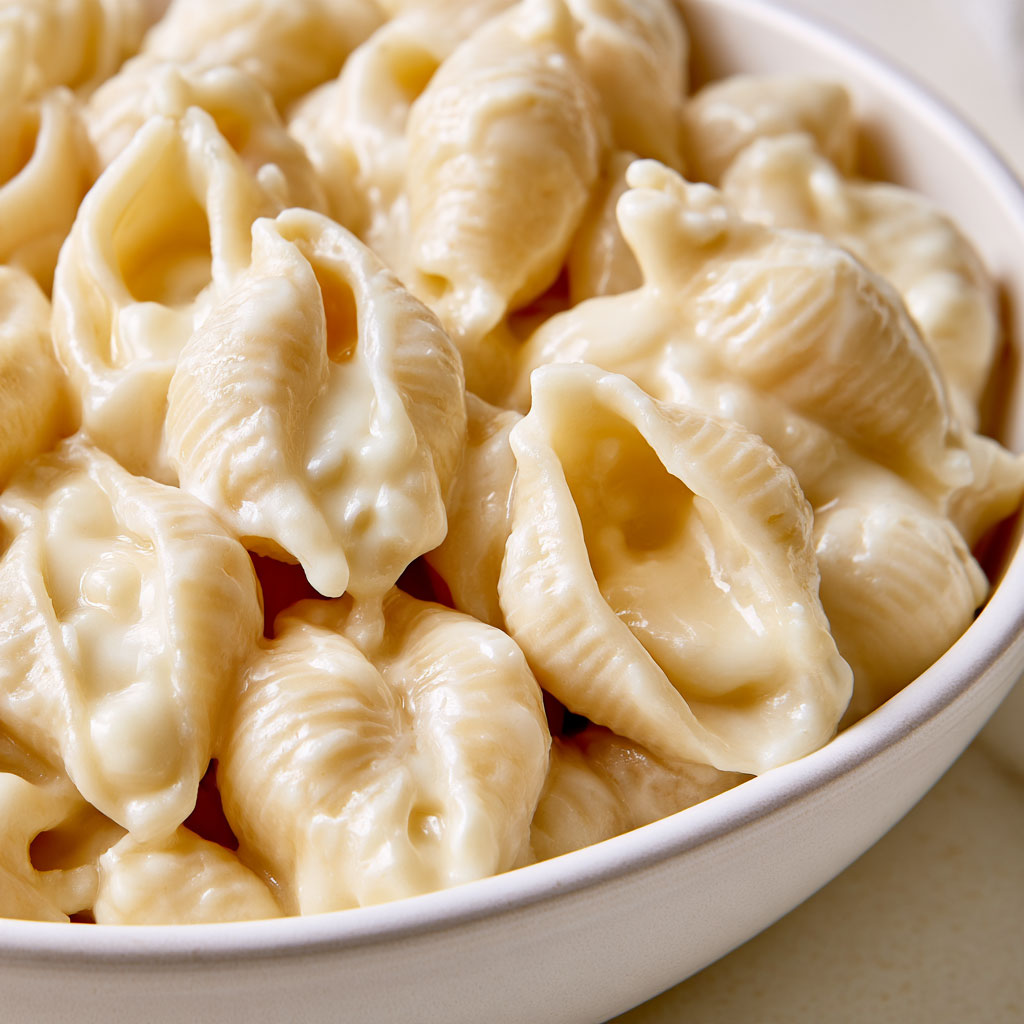
- Spoon the mac and cheese into a serving bowl, arranging the shells naturally to showcase their glossy, creamy coating.
- Serve immediately for the best texture and appearance, ensuring the sauce stays smooth, glossy, and rich.
Variations
- For a richer sauce, substitute ¼ cup of whole milk with extra heavy cream to increase creaminess.
- Use extra-sharp white cheddar for a bolder, more pronounced cheese flavor, keeping some white American cheese for smooth texture.
- Replace white American cheese with another smooth melting cheese like fontina or Gouda if unavailable, noting the texture will vary slightly.
- Make a lighter version by increasing the proportion of whole milk and reducing the heavy cream.
- For a kid-friendly version, reduce the Dijon mustard to soften the tang and use a milder white cheddar.
- Add a crispy breadcrumb topping and bake briefly for a crunchy finish, though this deviates from the classic creamy style.
Tips
- Cook the pasta just until al dente because it will continue to soften when mixed with the warm sauce, preventing mushy shells.
- Reserve some pasta cooking water before draining to adjust sauce thickness and help it cling perfectly.
- Warm the milk and cream before adding them to the roux to avoid lumps and ensure a silky sauce.
- Shred cheese fresh from a block for smoother melting; pre-shredded cheese often contains anti-caking agents that hinder melting.
- Store leftover mac and cheese in an airtight container in the refrigerator and consume within 3–4 days for best quality.
- Reheat leftovers gently on the stove over low heat with a splash of milk, stirring constantly to restore creaminess without separating.
- Freezing is possible but may slightly affect texture; thaw overnight in the fridge and reheat slowly with added milk to regain creaminess.