Skip to content
Instructions:
- Prepare a large, heavy-bottomed skillet and heat it over medium-high heat with 2 tablespoons of olive oil and 1 tablespoon of unsalted butter. The combination helps achieve a golden crust on the chicken.
- Season the boneless, skinless chicken thighs evenly on both sides with the prepared spice blend containing salt, black pepper, garlic powder, onion powder, smoked paprika, and Italian seasoning.
- Pat the chicken thighs dry before seasoning to ensure the surface crisps rather than steams during cooking.
- Place the chicken thighs smooth-side down in the hot skillet without overcrowding to maintain proper browning; cook in batches if needed.
- Sear the chicken undisturbed for 5–6 minutes to develop a deep golden crust, then flip and cook the other side for 4–5 minutes. The chicken won’t be fully cooked at this stage.
- Transfer the seared chicken to a plate, reserving any juices, and reduce heat to medium-low in the skillet.
- If there is excess rendered fat, remove all but about 1 tablespoon to avoid greasiness in the sauce.
- Add 2 tablespoons of unsalted butter to the skillet and melt gently over medium-low heat, then stir in 8 minced garlic cloves, cooking for about 45–60 seconds until fragrant but not browned to prevent bitterness.
- Sprinkle in dried thyme, oregano, and optional crushed red pepper flakes; stir for 20 seconds to release their aroma.
- Pour in 1 cup of low-sodium chicken broth and scrape the browned bits from the pan bottom with a wooden spoon to incorporate their deep flavor into the sauce.
- Bring the broth to a gentle simmer over slightly increased heat and reduce for 3–4 minutes to concentrate the flavors.
- Lower the heat and slowly stir in 1½ cups of heavy whipping cream, blending continuously to integrate smoothly without curdling.
- Add 1 teaspoon of Dijon mustard and whisk gently until fully incorporated to enhance the sauce’s complexity.
- Warm the sauce on low heat until small bubbles form at the edges—avoid boiling to prevent graininess.
- Gradually add 1 cup of freshly grated Parmesan cheese in small increments, stirring gently after each addition until smooth and velvety.
- Adjust the sauce consistency by adding a splash of chicken broth if too thick or simmering gently if too thin, aiming for a pourable sauce that coats the back of a spoon.
- Season the sauce with black pepper and hold off on additional salt as Parmesan adds saltiness; stir in 1 teaspoon of fresh lemon juice to brighten the flavors.
- Return the chicken thighs to the skillet, nestling them into the sauce, and pour in any collected juices from the plate.
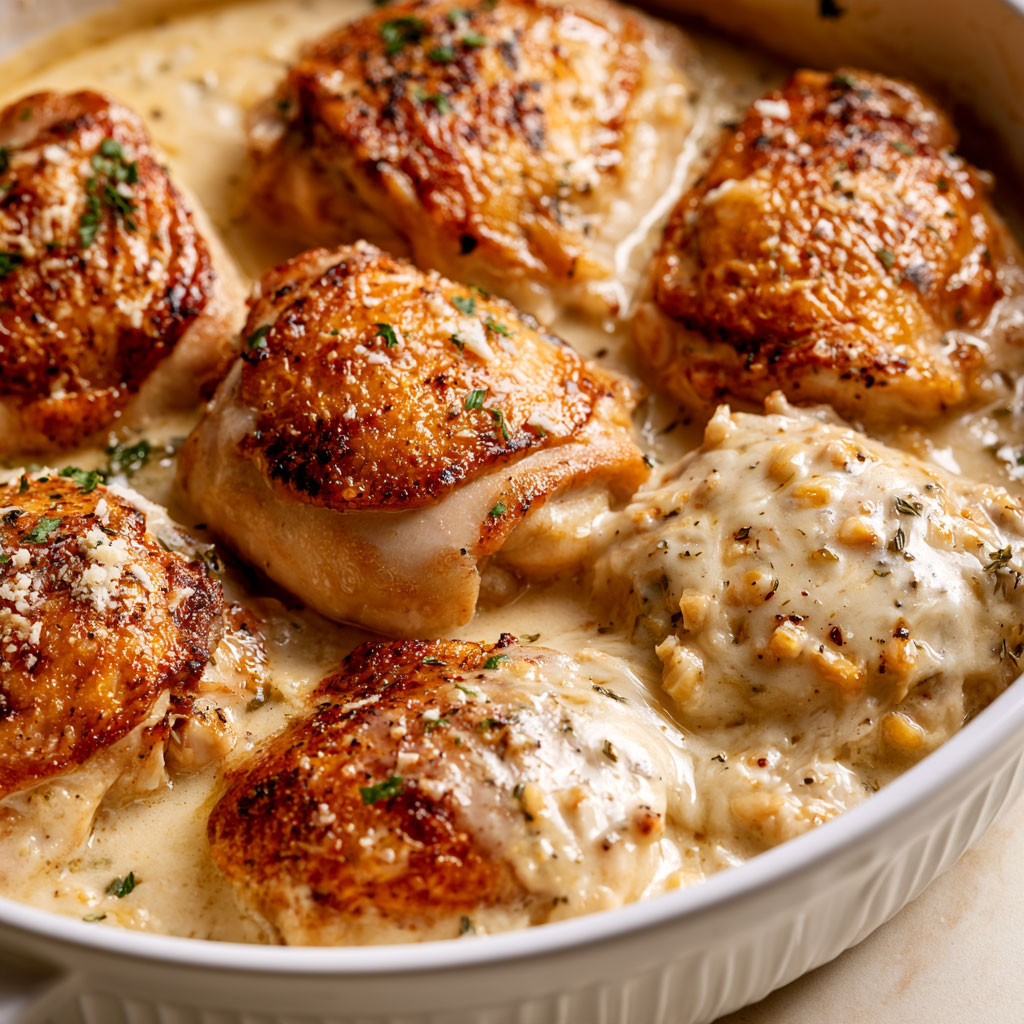
- Spoon sauce over the chicken tops lightly, leaving some golden crust exposed for an appealing presentation.
- Cover the skillet loosely and simmer gently on low heat for 6–10 minutes until the chicken reaches an internal temperature of 165°F (74°C), allowing it to finish cooking while absorbing the sauce flavors.
- Remove the lid and, if needed, simmer uncovered for 1–2 minutes to thicken the sauce slightly, stirring occasionally; thin with a little chicken broth if it becomes too thick.
- After cooking, let the chicken rest in the warm sauce for 3 minutes to allow the sauce to settle and cling better.
- Garnish with 2 tablespoons of finely chopped fresh parsley, 2 tablespoons of grated Parmesan, and a sprinkle of freshly ground black pepper before serving.
- Serve directly from the skillet with sides like creamy mashed potatoes, buttered noodles, or steamed vegetables for a complete meal.
Variations
- Use bone-in, skin-on chicken thighs for extra flavor and crispy skin; adjust cooking times accordingly to ensure doneness.
- Swap heavy cream for half-and-half or whole milk for a lighter sauce, but expect a thinner consistency.
- Add sautéed mushrooms or sun-dried tomatoes to the sauce for additional texture and depth.
- Replace dried Italian herbs with fresh basil and rosemary for a brighter herbal note.
- Introduce a splash of white wine before adding the broth to enhance the sauce’s complexity.
- For a spicy kick, increase crushed red pepper flakes or add a pinch of cayenne pepper.
Tips
- Patting the chicken dry before seasoning and cooking is essential for achieving that golden, crispy crust.
- Use freshly grated Parmesan instead of pre-shredded cheese, as it melts more smoothly and produces a creamier sauce.
- Leftovers keep well refrigerated in an airtight container for 3–4 days; reheat gently over low heat with a splash of broth or cream to restore sauce texture.
- Avoid boiling the sauce during reheating to prevent separation and graininess.
- Freeze any leftover portions in airtight containers for up to 2 months; thaw overnight in the fridge and reheat slowly with added cream if needed.
- When simmering the chicken in the sauce, maintain a low, steady heat to keep the meat juicy and the sauce smooth.
- Serve immediately after cooking for the best texture and flavor; prolonged simmering can make the chicken overly soft and reduce the sauce excessively.