Skip to content
Instructions:
- Remove the pork loin from the refrigerator about 15 minutes before cooking to let it come closer to room temperature, which helps it cook more evenly. Pat it dry with paper towels, then season all sides evenly with salt, black pepper, smoked paprika, thyme, rosemary, and sage for balanced flavor.
- Heat olive oil in a large skillet over medium-high heat. Sear the pork loin for 2–3 minutes on each side until it develops a golden-brown crust; this step adds a rich roasted flavor and seals in juices.
- Place the thick apple wedges and sliced onion evenly across the bottom of a 6-quart slow cooker. Sprinkle the minced garlic over the apples and onions to infuse the dish with aromatic depth.
- In a medium bowl, whisk together apple cider, Dijon mustard, maple syrup, apple cider vinegar, and Worcestershire sauce until smooth. This mixture creates a sweet and tangy braising liquid that tenderizes the pork.
- Set the seared pork loin on top of the apples and onions, fat side up if there’s a fat cap, allowing the fat to baste the meat during cooking.
- Slowly pour the apple cider mixture around the pork, making sure it collects around the apples and onions, and spoon a little over the top of the meat to keep it moist.
- Dot the pork with 2 tablespoons of butter, which enriches the cooking liquid and adds silkiness to the final sauce. Cover the slow cooker with its lid.
- Cook on LOW for 4–5 hours, checking the internal temperature starting at 4 hours. The pork is done when it reaches 145°F (63°C) internally, followed by a resting period of at least 3 minutes. Avoid overcooking to keep the lean pork loin juicy and tender.
- Transfer the pork loin carefully to a cutting board and cover loosely with foil. Let it rest for about 10 minutes to allow the juices to redistribute.
- Use a slotted spoon to remove the cooked apples and onions from the slow cooker, arranging them on a warm serving platter to keep them intact and visually appealing.
- Strain about 1 cup of the cooking juices into a small saucepan and bring to a gentle simmer over medium heat to prepare the gravy.
- Mix cornstarch and cold water until smooth, then slowly whisk this slurry into the simmering juices to thicken the gravy without lumps.
- Continue simmering and stirring for 2–3 minutes until the gravy becomes glossy and lightly caramel-colored. Stir in 1 tablespoon butter and season with salt and pepper to taste for a rich, balanced finish.
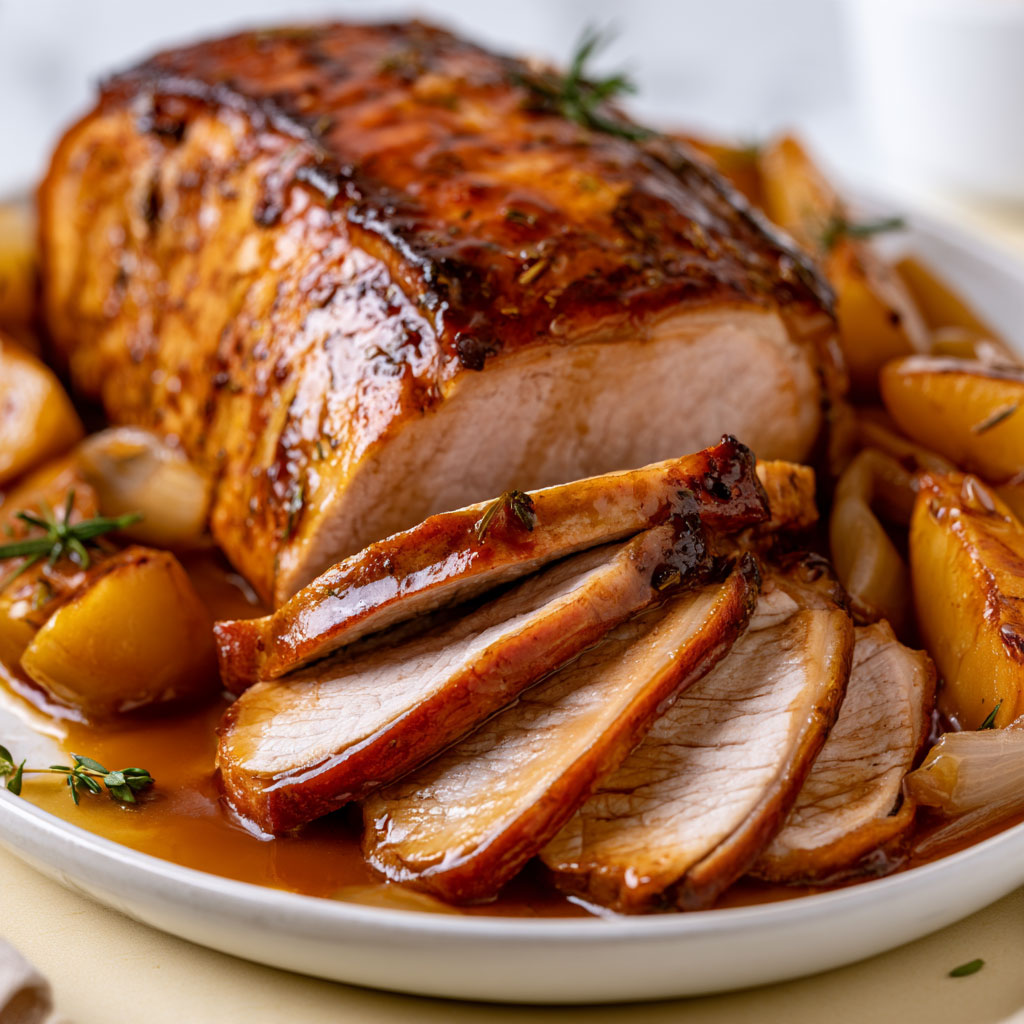
- Slice the rested pork into generous ½-inch thick slices using a sharp knife. The meat should be moist and tender, with a beautiful golden-brown exterior and delicate fibers.
- Arrange the sliced pork alongside the remaining roast on a large serving platter, surrounding it with the cooked apples and onions.
- Spoon the warm apple cider gravy generously over the pork slices and allow it to pool naturally around the meat and fruit.
- Garnish with fresh rosemary sprigs and thyme leaves for a festive, aromatic presentation. Serve immediately with extra gravy on the side.
Variations
- Replace maple syrup with 2 tablespoons honey for a sweeter, floral note in the apple cider sauce.
- Add 2 extra garlic cloves and fresh rosemary for a more intense garlic-herb flavor.
- Stir in ½ cup fresh cranberries during the last hour of cooking to introduce a festive tartness and bright color.
- Swap maple syrup for 2 tablespoons packed brown sugar to create a deeper, caramel-like sweetness.
- Increase Dijon mustard by one tablespoon and add a teaspoon of fresh thyme for a sharper, herbaceous tang.
- Use a 3–4 pound boneless pork shoulder instead of loin and cook on LOW for 8–10 hours to achieve a tender, fall-apart texture.
Tips
- Choose a boneless center-cut pork loin with a thin fat layer to keep the roast moist without excessive grease.
- Always use unsweetened apple cider—not apple cider vinegar—as the cooking liquid to maintain delicate fruit sweetness without overpowering acidity.
- Cut apples into thick wedges so they hold their shape and texture during slow cooking rather than disintegrating.
- Avoid lifting the slow cooker lid frequently, as this releases heat and prolongs cooking time.
- Use a meat thermometer to check doneness precisely; the pork is safe and juicy at 145°F (63°C) with a brief rest.
- Rest the roast before slicing to help the juices settle and prevent dryness.
- Store leftovers in shallow airtight containers in the refrigerator within 2 hours; they keep for 3–4 days. Reheat pork slices covered with gravy in a 300°F (150°C) oven until heated through to 165°F (74°C). Freeze for up to 2–3 months with gravy, thawing overnight before reheating.