Skip to content
Instructions:
- Sort through the dried beans carefully, discarding any stones or damaged beans, then rinse them thoroughly under cold running water to clean.
- Place the beans in a large pot and cover them with plenty of fresh water. Bring to a vigorous boil and maintain this rolling boil for 10 minutes. This step is crucial to begin softening the beans and ensuring safe slow cooking.
- Drain the boiled beans well and transfer them into your 6-quart slow cooker.
- Add the diced onion, carrots, celery, minced garlic, dried thyme, bay leaves, and freshly ground black pepper to the slow cooker, distributing the vegetables evenly over the beans.
- Place the leftover ham bone, with any attached meat, in the center of the slow cooker, nestling it among the beans and vegetables to maximize flavor infusion.
- Pour in the low-sodium chicken broth and 2 cups of water, making sure the beans and other ingredients are fully submerged. Add more water if needed, but do not exceed your slow cooker’s maximum fill line to avoid overflow.
- Cover the slow cooker and cook on LOW for 7 to 8 hours. This slow simmer allows the beans to become tender and the ham to release its smoky flavor and meat that will easily fall off the bone. Cooking times may vary slightly depending on your beans’ age and type.
- Carefully remove the ham bone from the slow cooker and set it on a cutting board to cool slightly. Remove and discard the bone, cartilage, skin, and excess fat, then chop or shred the remaining ham meat into bite-sized pieces.
- Return the chopped ham to the slow cooker and stir gently to combine with the beans and vegetables.
- Take out and discard the bay leaves to avoid any bitterness in the soup.
- Scoop about 1½ cups of cooked beans along with some broth into a bowl. Mash these beans until creamy using a fork or potato masher. Stir this mashed bean mixture back into the slow cooker to naturally thicken the soup without adding flour or cream.
- Cook the soup on HIGH for another 10 to 15 minutes, stirring occasionally, until the mashed beans fully blend into the broth, creating a rich, thick, and creamy texture.
- Taste the soup and add salt only if needed, as the leftover ham can already contribute significant saltiness.
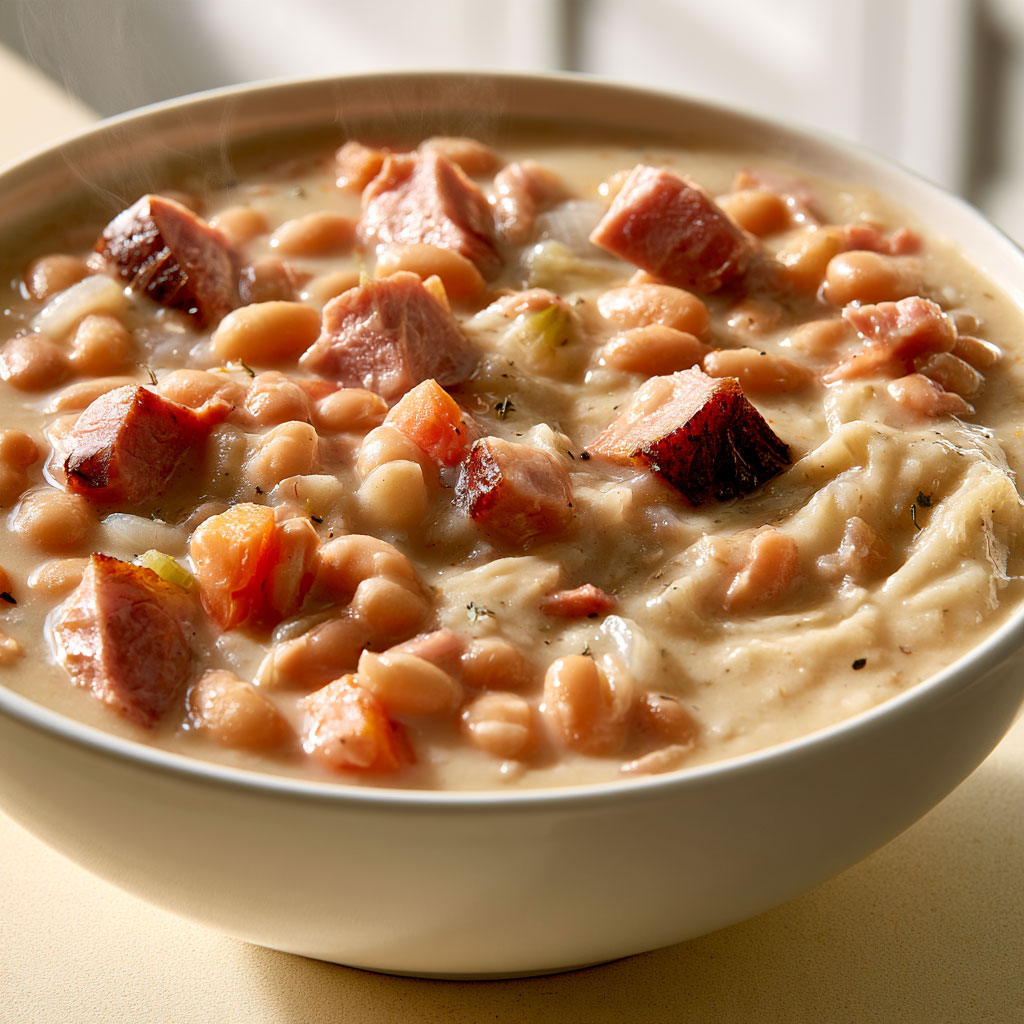
- Ladle the hot soup into bowls, ensuring each serving includes plenty of creamy beans, tender ham pieces, and soft vegetables. Serve immediately for the best flavor.
Variations
- Extra Smoky Ham Soup: Stir in a pinch of smoked paprika to enhance the smoky depth of the broth.
- Potato Ham & Bean Soup: Add 2 diced Yukon Gold potatoes during the last 2 to 3 hours of cooking for added heartiness.
- Ham & Kale Soup: Fold in 2 cups of chopped kale during the final 20 to 30 minutes to introduce a healthy green element.
- Spicy Ham & Bean Soup: Add a pinch of crushed red pepper flakes early in the cooking process for a gentle heat.
- Creamier White Bean Soup: Mash an extra cup of cooked beans before the final cooking to achieve an even thicker, creamier consistency.
Tips
- Use a leftover ham bone with plenty of meat attached to maximize flavor and texture in the soup.
- Navy beans are ideal for this recipe, as their creamy texture breaks down nicely when mashed for natural thickening.
- Always boil dried beans before slow cooking to ensure proper softening and food safety; do not rely on the slow cooker alone for this step.
- Keep the beans fully submerged in broth and water during cooking to promote even tenderness.
- Avoid adding salt until the end of cooking to prevent over-salting, since ham can be quite salty.
- Instead of flour or starch, mash some cooked beans to thicken the soup naturally and maintain a rustic, hearty texture.
- Remove all bones, cartilage, and excess fat carefully before serving to ensure a pleasant eating experience.
- Store leftovers in shallow, airtight containers and refrigerate promptly. The soup will keep well for 3 to 4 days.
- For longer storage, freeze the soup in individual portions for up to 3 months, then reheat gently, adding broth if it thickens too much.
- When reheating, warm the soup slowly over medium-low heat, stirring occasionally to prevent sticking and to redistribute flavors evenly.