Skip to content
Instructions:
- Gather all ingredients and prepare a large baking sheet by lining it with parchment paper, placing it on a heat-resistant surface near your stove for easy transfer.
- Heat a large, heavy-bottomed skillet or wide saucepan over medium heat to ensure even cooking and prevent burning.
- Add 1 cup granulated sugar, ⅓ cup water, 2 teaspoons ground cinnamon, and ¼ teaspoon kosher salt to the skillet; stir gently to combine the sugar and spices evenly with the water.
- If using optional spices like nutmeg or cloves, add them now to infuse the syrup with additional holiday flavors.
- Bring the mixture to a gentle boil over medium heat, stirring occasionally until the sugar dissolves and the liquid turns into a fragrant cinnamon-colored syrup.
- Add the 3 cups raw whole almonds with skins intact to the syrup and stir carefully to coat every almond in the cinnamon-sugar mixture.
- Continue cooking over medium heat, stirring frequently to prevent the sugar from burning and to help the syrup thicken and cling to the almonds.
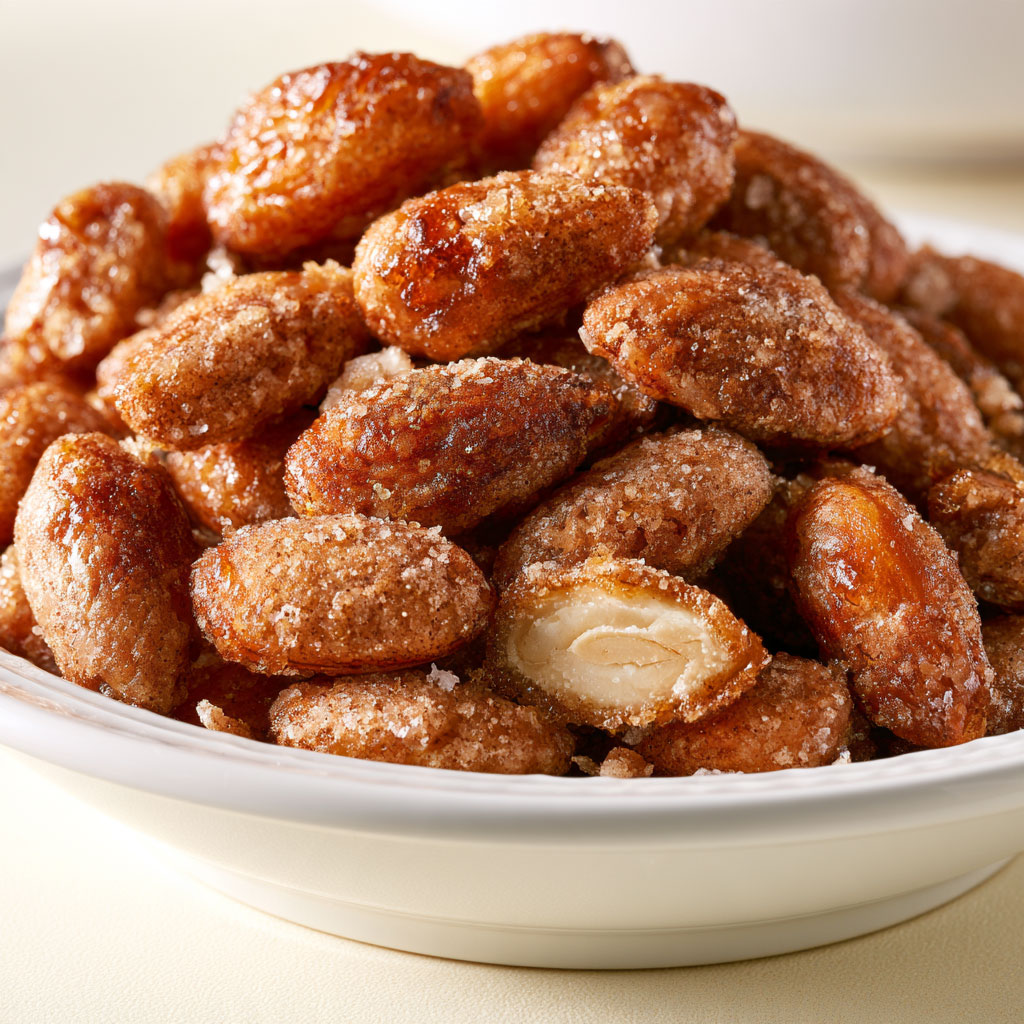
- Watch as the syrup goes through three stages: first glossy and syrupy, then crystallizing into a dry, sandy sugar coating, and finally partially melting again to create caramelized patches.
- When the sugar appears dry and sandy, do not stop; reduce heat slightly if needed and keep stirring so some sugar melts back, forming the signature crunchy, irregular caramelized coating typical of German Christmas market almonds.
- As the almonds develop a golden to warm cinnamon-brown color with tiny sugar crystals and caramelized ridges, add 1 teaspoon vanilla extract during the last minute of cooking and stir carefully to incorporate it without splattering.
- Immediately remove the skillet from heat once the coating is ready, then transfer the almonds to the prepared baking sheet, spreading them into a single layer.
- Use a wooden spoon or spatula to separate any clusters while the coating is still warm, avoiding direct contact to prevent burns from hot sugar.
- Allow the almonds to cool completely for about 15 minutes; during this time, the coating will harden into a crisp, crunchy texture.
- Once cooled, gently separate any almonds still stuck together, then transfer to a serving bowl or storage container.
Variations
- For a more intense vanilla flavor, increase vanilla extract to 1½ teaspoons or use vanilla bean paste instead.
- Add ¼ teaspoon ground nutmeg and a pinch of ground cloves for a spiced Christmas twist.
- Double the cinnamon to 1 tablespoon for extra cinnamon warmth and aroma.
- Substitute raw almonds with raw pecan halves or cashews for a different nutty profile; adjust cooking time slightly as needed.
- Mix equal parts almonds, pecans, and cashews for a festive nut medley with varied textures.
- After cooking, sprinkle ½ teaspoon finely grated orange zest over the warm almonds for a subtle citrus note.
Tips
- Use a large, wide skillet rather than a small saucepan to allow better evaporation and prevent burning of the sugar syrup.
- Stir frequently during cooking to ensure even coating and avoid hot spots that cause burning.
- Do not stop cooking when the sugar appears dry and sandy; continue stirring until some sugar melts again and forms caramelized patches for authentic texture.
- Allow the almonds to cool completely on parchment paper before storing; this hardens the coating and prevents stickiness.
- Store cooled almonds in an airtight container at room temperature, away from humidity and heat, to maintain freshness and crunch for up to 1–2 weeks.
- If the coating softens over time, briefly warm almonds in a preheated oven at 250°F (120°C) for 5–7 minutes, then cool before serving.
- Freezing is optional; if freezing, use an airtight container and thaw at room temperature while still sealed to avoid condensation that can soften the coating.