Skip to content
Instructions:
- Remove any remaining edible turkey meat from the carcass and refrigerate it until ready to add back into the soup for maximum flavor and texture.
- Break the turkey carcass into smaller pieces so it fits easily inside a large stockpot, ensuring even simmering.
- Place the turkey bones in the stockpot along with quartered onion, roughly chopped carrots, celery, smashed garlic cloves, bay leaves, dried thyme, and whole peppercorns to build a rich broth base.
- Add about 12 cups of cold water or just enough to cover the bones without overfilling the pot to avoid spills during simmering.
- Bring the mixture to a gentle boil over medium-high heat, then immediately lower the heat to maintain a gentle simmer, which extracts flavor without clouding the broth.
- Simmer the broth partially covered for 2 to 3 hours, allowing the turkey flavors to deepen gradually.
- Occasionally skim off any foam or excess fat that rises to the surface to keep the broth clear and clean-tasting.
- Once the broth has a golden color and a rich aroma, carefully remove the larger bones with tongs to prevent overcooking and bitterness.
- Strain the broth through a fine-mesh sieve into a clean pot or bowl, discarding the solids including bones, bay leaves, and vegetables for a smooth broth.
- Measure out about 10 cups of strained broth for the soup; add a little water if necessary to reach the desired volume.
- In a large soup pot, melt butter over medium heat to create a flavorful base for the soup vegetables.
- Add diced onions, sliced carrots, and celery; cook for 5 to 6 minutes, stirring occasionally until the vegetables soften and release their sweetness.
- Add minced garlic and cook for another 30 seconds until fragrant, enhancing the soup’s aroma.
- Pour the homemade turkey broth over the sautéed vegetables and bring to a gentle boil to combine flavors.
- Stir in dried parsley, thyme, and freshly ground black pepper to evenly distribute the herbs and spice.
- Reduce the heat to medium and simmer for 8 to 10 minutes, allowing the carrots and celery to become tender but not mushy.
- Add the wide egg noodles directly to the simmering soup and cook according to package instructions, typically 6 to 8 minutes, until al dente.
- During the last 3 to 4 minutes of noodle cooking, stir in the shredded leftover turkey, warming it thoroughly without drying it out.
- Taste the soup and season with salt as needed, mindful that the broth already contains natural seasoning from the roasted bones.
- Continue cooking until the vegetables are tender, noodles soft, and the turkey reaches a safe internal temperature of 165°F (74°C).
- Remove the soup from heat and stir in fresh chopped parsley for a bright, fresh finish.
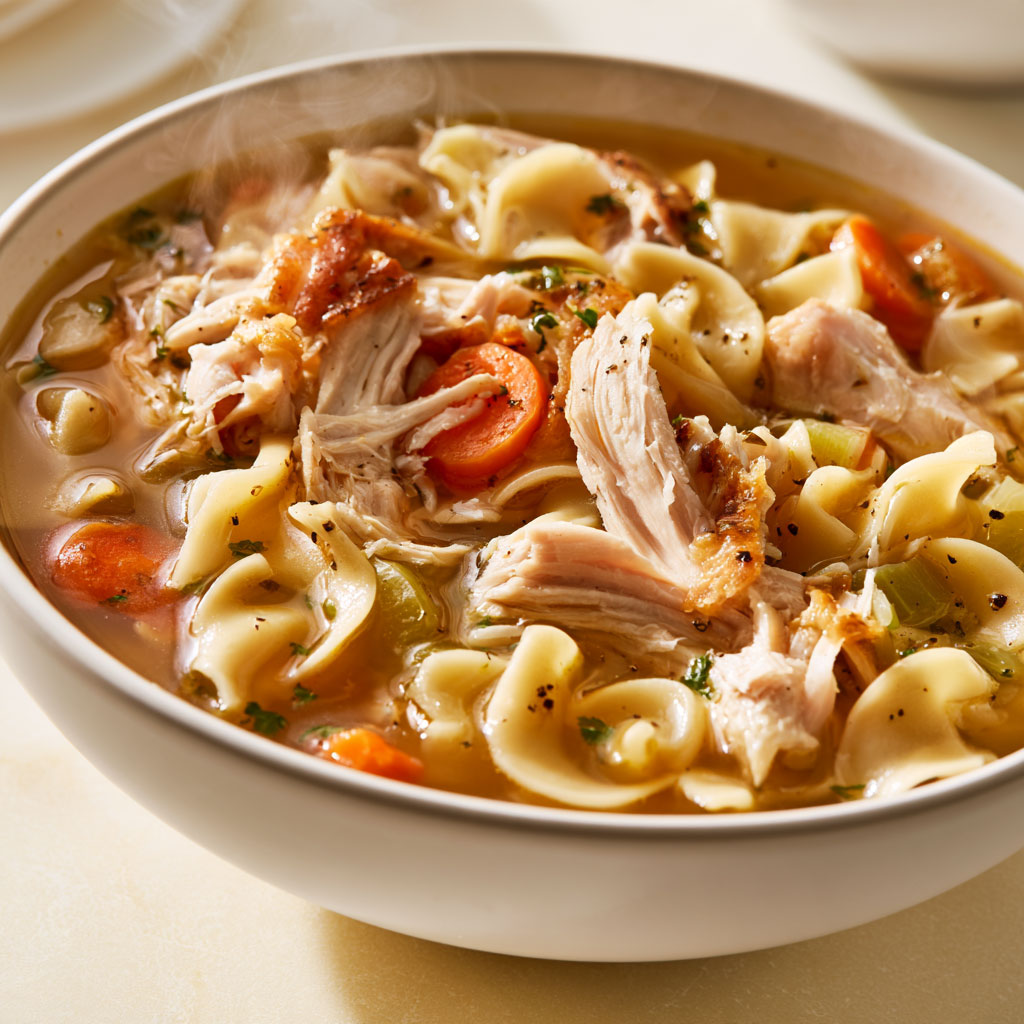
- Serve hot in deep bowls, ensuring each portion has plenty of tender turkey, wide noodles, carrots, celery, and rich golden broth.
Variations
- Use leftover chicken carcass instead of turkey for a lighter, milder flavor.
- Substitute wide egg noodles with rice noodles or orzo for a gluten-free or different texture option.
- Add a squeeze of fresh lemon juice or a splash of vinegar before serving to brighten the soup’s flavor profile.
- Include additional vegetables like peas, corn, or chopped kale for extra nutrition and color.
- Swap dried herbs for fresh thyme and parsley if available, adding them at the end for a more vibrant taste.
- For a spicier version, add a pinch of red pepper flakes during the sautéing stage.
Tips
- Store leftover soup in airtight containers in the refrigerator for up to 3 days to maintain freshness.
- Soup can be frozen in portion-sized containers for up to 3 months; thaw overnight in the fridge before reheating.
- Reheat soup gently on the stove over low to medium heat to avoid overcooking the noodles and turkey.
- If the soup thickens too much after refrigeration, add a splash of broth or water when reheating to restore the desired consistency.
- To avoid soggy noodles when storing, keep the noodles separate from the broth and combine them just before serving.
- Use a fine-mesh strainer to ensure a clear broth free from bone fragments and vegetable bits.
- Check the soup’s seasoning before serving, as homemade broth can vary in saltiness depending on the bones and cooking time.