Skip to content
Instructions:
- Preheat your oven to 350°F (175°C) and line a 9 × 13-inch baking pan with parchment paper, leaving an overhang on the sides to lift the bars out easily after baking.
- In a large bowl, beat the softened unsalted butter and powdered sugar together with a hand mixer for 2–3 minutes until the mixture is pale, smooth, and creamy; this aeration helps create a tender shortbread texture.
- Slowly add the all-purpose flour while mixing on low speed until a soft, thick dough forms that holds together but is slightly crumbly, the ideal consistency for shortbread.
- Transfer the dough into the prepared pan and press it evenly and firmly with your fingertips or the flat bottom of a measuring cup to create a uniform layer; even thickness ensures consistent baking throughout.
- Use a fork to gently prick the surface of the dough in several spots to prevent bubbles and excessive puffing as it bakes.
- Bake the shortbread base for 20–25 minutes, or until the edges are lightly golden and the center is set but not browned, which preserves tenderness.
- Remove the pan from the oven and let the base cool for about 10 minutes to avoid melting the chocolate topping when applied.
- Place the semisweet chocolate chips in a microwave-safe bowl and melt in 20-second intervals, stirring thoroughly between each until smooth and glossy to prevent burning and ensure even melting.
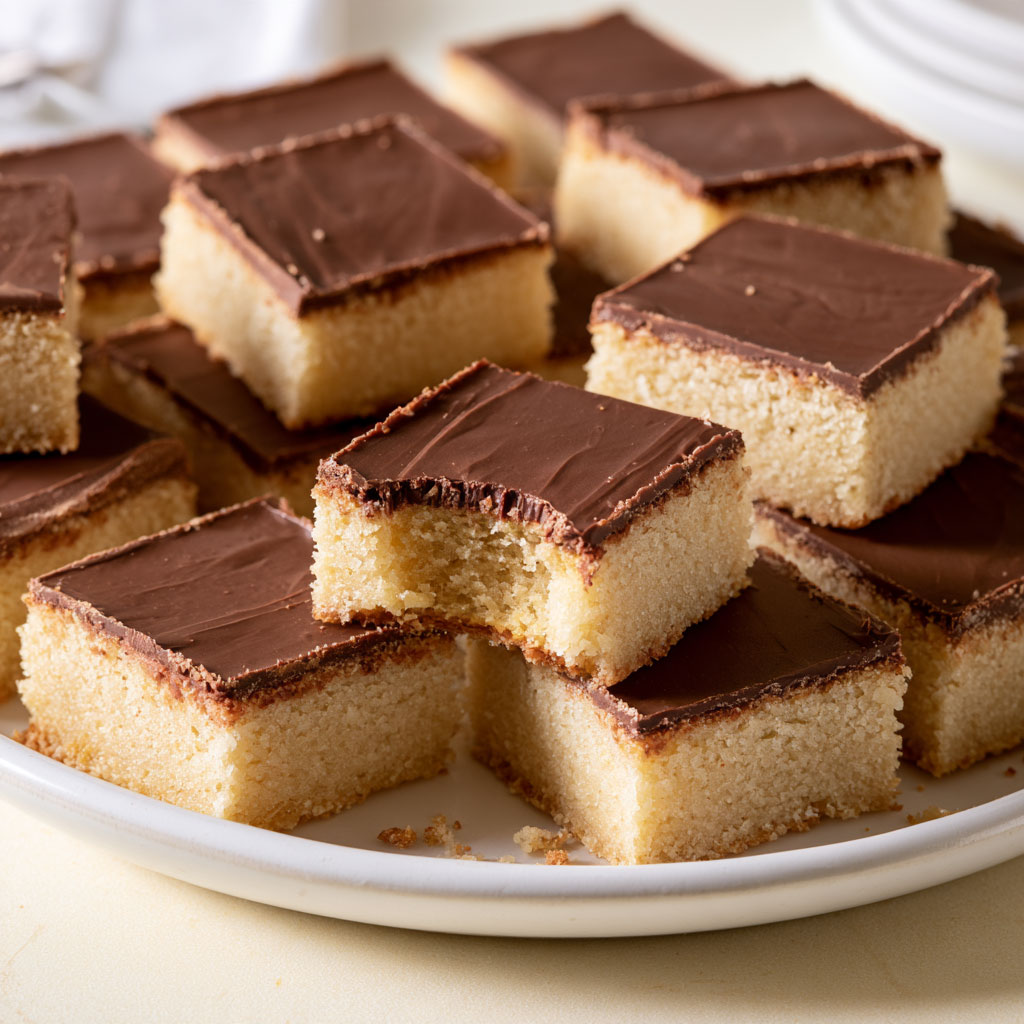
- Immediately pour the melted chocolate over the warm, slightly cooled shortbread base and spread evenly with an offset spatula, covering from edge to edge in a thick, smooth layer.
- Allow the pan to cool at room temperature for 15 minutes, then refrigerate for 30–45 minutes until the chocolate is firm enough to slice without cracking excessively but still soft enough for clean cuts.
- Use the parchment paper overhang to lift the entire cookie slab from the pan, then cut into 24 even bars with a sharp knife, wiping the blade clean between cuts for neat edges.
- Let the chocolate topping finish setting at room temperature before serving or storing.
Variations
- Swap semisweet chocolate chips for dark chocolate to create a more intense, richer topping.
- Use milk chocolate chips instead for a sweeter, creamier chocolate layer that pairs well with the buttery base.
- Replace the chocolate with white chocolate melting wafers for a festive twist and a lighter flavor profile.
- For thicker bars, bake the dough in an 8 × 8-inch pan and extend baking time as needed to ensure the base is cooked through.
- Create a decorative chocolate swirl by reserving a small amount of melted chocolate, dotting it on the topping, and swirling gently with a toothpick or skewer before chilling.
Tips
- Always use softened butter—not melted—to achieve the ideal creamy texture when creaming with powdered sugar.
- Measure flour carefully using the spoon-and-level method to avoid a dry, crumbly shortbread base.
- Cream the butter and powdered sugar until pale and fluffy; this step helps produce a tender, melt-in-your-mouth texture.
- Press the dough evenly and firmly into the pan to ensure uniform baking and prevent thin spots that cook too quickly.
- Do not overbake the shortbread; it should be lightly golden at the edges and set but still pale in the center for the perfect tender crumb.
- Allow the baked base to cool slightly before spreading the chocolate to prevent it from melting too thinly or running.
- Melt chocolate slowly in short bursts, stirring often to avoid overheating which can cause graininess or burning.
- Refrigerate the bars until the chocolate topping firms enough to slice cleanly without cracking or smudging.
- Use a warm, dry knife for slicing; warming the blade slightly under hot water and drying it helps clean cuts without dragging chocolate.
- Store bars in an airtight container at room temperature for up to 5 days or refrigerate for up to one week, separating layers with parchment paper to prevent sticking.
- For longer storage, freeze the bars for up to 2 months in a freezer-safe container, thawing in the refrigerator before serving.