Skip to content
Instructions:
- Preheat your oven to 350°F (175°C) and thoroughly grease a 10–12 cup Bundt pan, ensuring every crevice including the center tube is coated to prevent sticking.
- Open the refrigerated biscuit cans and separate the biscuits onto a clean surface.
- Cut each biscuit into four equal pieces to create bite-sized portions, which helps the pieces bake evenly and become perfectly pull-apart.
- Mix granulated sugar, ground cinnamon, and nutmeg in a large resealable bag or bowl.
- Coat the biscuit pieces in the cinnamon sugar mixture by tossing them gently in batches until each piece is evenly covered, enhancing the flavor and stickiness.
- Place the coated biscuit pieces loosely and evenly into the prepared Bundt pan, leaving small gaps so they can expand while baking without sticking together excessively.
- In a medium saucepan over medium-low heat, melt the unsalted butter, then stir in the packed brown sugar and salt until the mixture turns smooth and caramel-colored.
- Simmer the butter and brown sugar mixture gently for 1–2 minutes, stirring frequently to dissolve the sugar completely into a rich caramel sauce.
- Remove the caramel sauce from heat and stir in the vanilla extract for added depth of flavor.
- Pour the warm caramel sauce evenly over the biscuit pieces in the Bundt pan, allowing it to seep between the layers for maximum gooeyness.
- Tap the Bundt pan gently on the countertop to help the caramel settle naturally among the dough pieces.
- Place the Bundt pan on the middle oven rack, preferably on a baking sheet to catch any caramel that might bubble over during baking.
- Bake the monkey bread for 35–45 minutes until it turns deeply golden brown and caramelized, with the biscuit pieces fully cooked in the center.
- If the surface browns too quickly, cover the Bundt pan loosely with foil for the last 10 minutes to prevent burning.
- Once baked through, remove the monkey bread from the oven and allow it to cool in the pan for about 5 minutes; this brief resting prevents the caramel from hardening and makes removal easier.
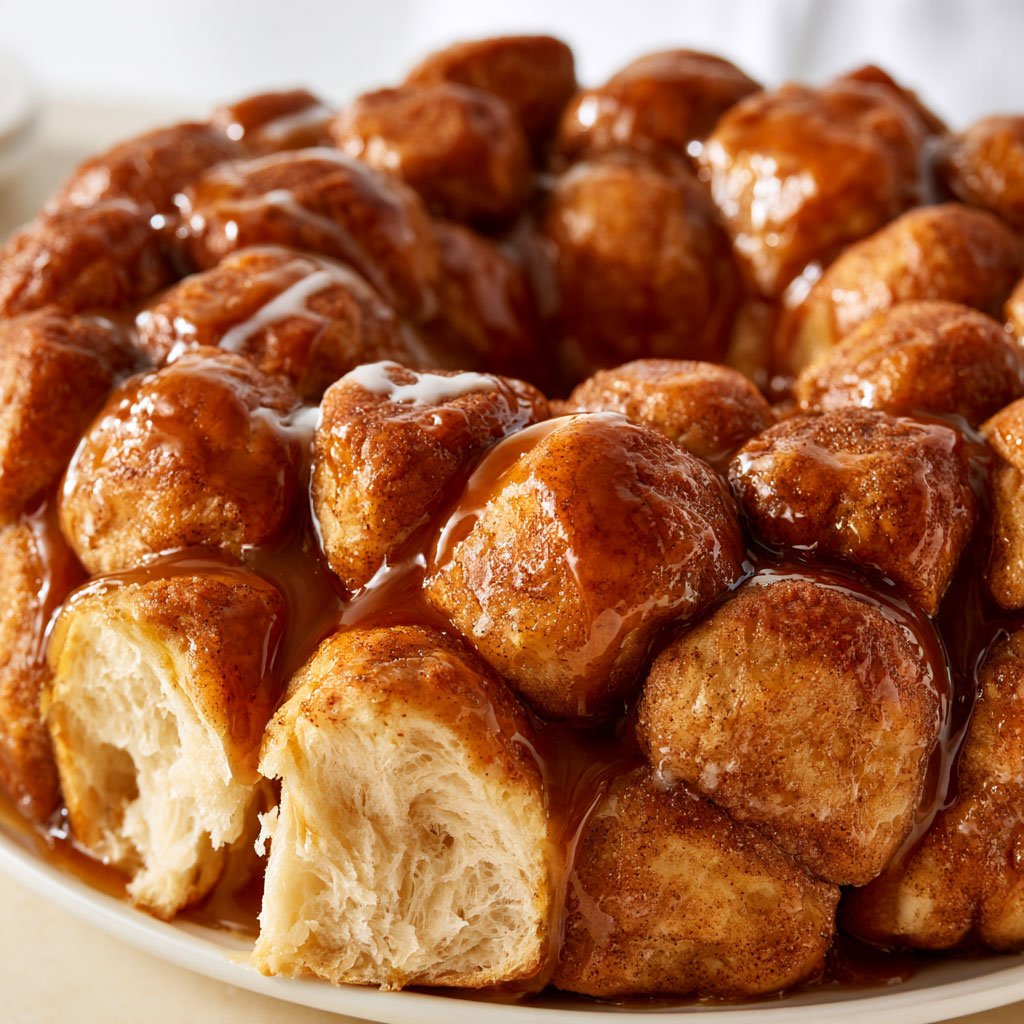
- Invert the Bundt pan onto a large serving platter while wearing oven mitts, then slowly lift the pan away to reveal the golden, sticky pull-apart bread.
- Let any remaining caramel inside the pan drizzle over the warm bread for extra sweetness.
- For the optional vanilla glaze, whisk powdered sugar, whole milk, and vanilla extract until smooth, then drizzle lightly over the warm monkey bread to add a delicate sweetness.
- Serve the monkey bread immediately to enjoy the soft, buttery, and sticky texture at its best.
Variations
- Replace the cinnamon and nutmeg with pumpkin pie spice or cardamom for a different warm spice profile.
- Swap buttermilk biscuits for homemade yeast dough pieces for a chewier texture and richer flavor.
- Add chopped nuts like pecans or walnuts between biscuit layers to provide a crunchy contrast.
- Mix mini chocolate chips into the coated biscuit pieces before layering for a chocolatey twist.
- Use maple syrup in place of some of the brown sugar in the caramel sauce for a deeper, woodsy sweetness.
- Omit the vanilla glaze and instead dust the finished monkey bread with powdered sugar for a lighter finish.
Tips
- For easier preparation, cut and coat the biscuit pieces the night before, arrange in the Bundt pan, cover tightly, and refrigerate. Add the caramel sauce and bake fresh in the morning.
- Store leftover monkey bread in an airtight container at room temperature for up to 2 days to maintain softness.
- To reheat, warm individual portions in a microwave for about 15 seconds or in a 300°F oven for 5–7 minutes to restore gooeyness.
- Check the center of the bread before removing from the oven to ensure no raw dough remains, which can happen if pieces are packed too tightly.
- Use a baking sheet under the Bundt pan to catch any caramel that bubbles over and prevent oven messes.
- Remove the bread from the pan while still warm to avoid hardened caramel making it difficult to release.
- Be gentle when tossing biscuit pieces in sugar to avoid tearing or compressing the dough, which can affect texture.