Skip to content
Instructions:
- Start by heating a large deep skillet over medium-high heat and add 2 tablespoons of olive oil until it shimmers, ensuring a hot pan for searing.
- Place the seasoned chicken pieces in a single layer with some space between them to avoid overcrowding, allowing them to brown evenly.
- Cook the chicken undisturbed for about 2 to 3 minutes until the bottoms develop a golden crust, then turn and cook for another 1 to 2 minutes; the chicken will finish cooking with the pasta, so it does not need to be fully done now.
- Reduce heat to medium and add 1 tablespoon of unsalted butter, letting it melt and coat the chicken pieces to enrich flavor and prevent sticking.
- Add the minced garlic and stir for about 30 seconds just until fragrant, taking care not to brown it to avoid bitterness.
- Pour in ½ cup chicken broth and use a wooden spoon to scrape up the browned bits from the skillet bottom; these add deep savory notes to the sauce.
- Add the remaining chicken broth and ¾ cup whole milk, stirring gently to combine all liquids evenly.
- Stir in the uncooked penne pasta, pressing it gently into the liquid so most pieces are submerged for even cooking.
- Bring the mixture to a gentle boil, then reduce the heat to medium-low and cover the skillet to simmer.
- Let the pasta cook for 10 to 13 minutes, stirring every 2 to 3 minutes to prevent sticking and ensure even cooking; add a splash of warm chicken broth if the liquid evaporates before the pasta is tender.
- Check that the chicken reaches a safe internal temperature of 165°F (74°C) during the last few minutes of cooking.
- Once the pasta is tender and the chicken is cooked through, lower the heat to low and pour in 1 cup of heavy whipping cream.
- Stir gently for about 1 minute to warm the cream without boiling, preserving its smooth texture.
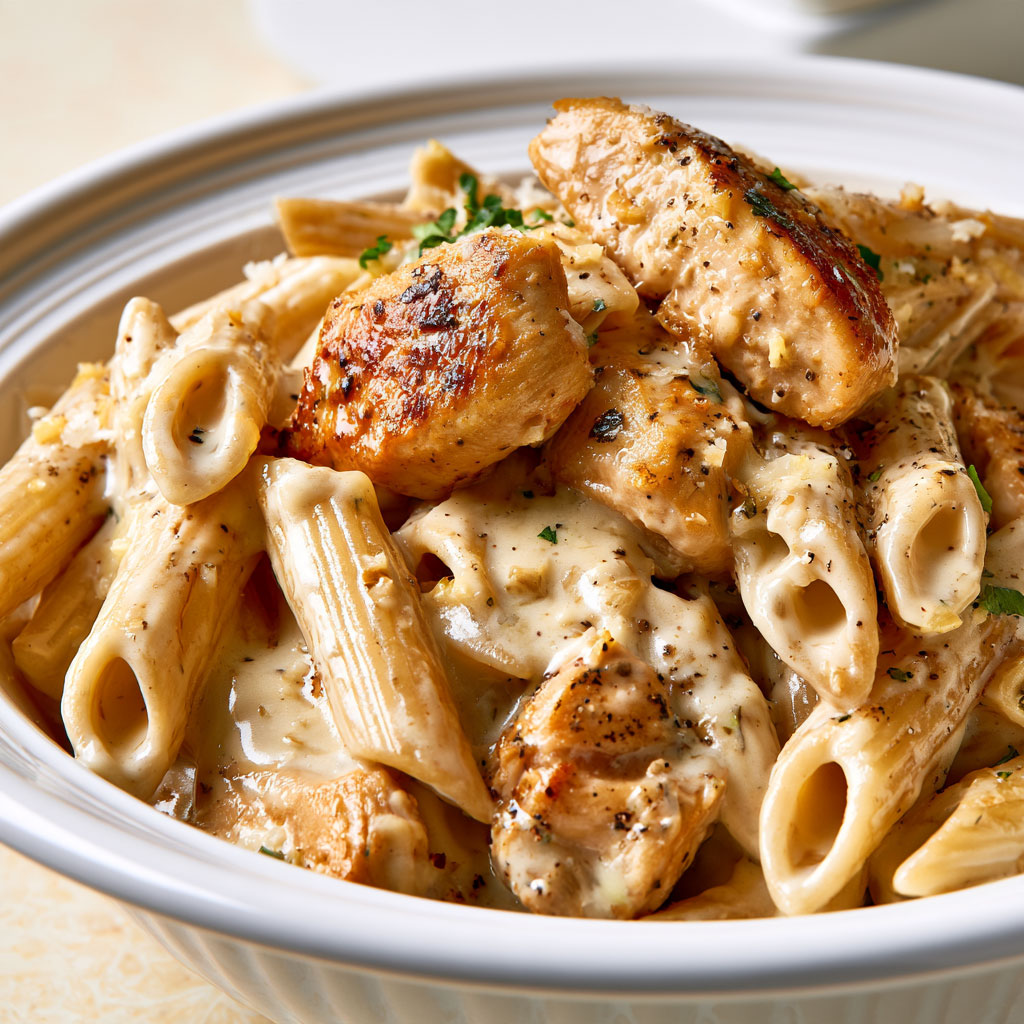
- Gradually sprinkle in the freshly grated Parmesan cheese, stirring continuously to melt it into a glossy, velvety sauce that coats the pasta and chicken thoroughly.
- If the sauce becomes too thick, add 1 to 2 tablespoons of warm chicken broth to loosen it, or if it’s too thin, let it rest over low heat for a minute; avoid boiling to prevent cheese separation.
- Taste and adjust seasoning with salt, black pepper, and optionally crushed red pepper flakes for a mild heat.
- Turn off the heat and stir in half of the chopped fresh parsley to add brightness and fresh herb flavor.
- Allow the pasta to rest for 1 to 2 minutes so the sauce thickens slightly and flavors meld.
- Serve garnished with extra Parmesan cheese and the remaining parsley, either directly from the skillet or plated in deep bowls.
Variations
- Swap penne for fettuccine to create a creamy garlic Parmesan chicken Alfredo, adjusting liquid and cooking time as needed.
- Add 8 ounces of sliced cremini mushrooms after searing the chicken for an earthy mushroom twist.
- Stir in 2 cups of fresh baby spinach during the last 2 minutes of cooking for a pop of color and nutrition.
- Include 1½ cups of small broccoli florets in the last 5 minutes of pasta cooking for added texture and green veggies.
- Increase crushed red pepper flakes to ½ teaspoon for a spicier kick.
- Finish with 1 teaspoon fresh lemon zest for a bright, citrusy variation.
- Mix in ¼ cup shredded mozzarella cheese along with Parmesan for a more indulgent, cheesy sauce.
Tips
- Cook the chicken in bite-sized pieces evenly seasoned to ensure tender, flavorful bites throughout.
- Use freshly grated Parmesan cheese rather than pre-shredded to achieve a smoother, creamier sauce.
- Store any leftovers in an airtight container in the refrigerator within 2 hours of cooking; they keep well for 3 to 4 days.
- Reheat leftovers gently in a skillet over medium-low heat, adding 2 to 3 tablespoons of milk or chicken broth per serving to loosen the sauce while heating to 165°F (74°C).
- Avoid reheating on high heat or boiling the sauce after cheese is added to prevent it from becoming oily or grainy.
- For microwave reheating, cover loosely and heat in short intervals, stirring between to promote even warming.
- Although freezing is possible, creamy Parmesan sauces can separate after thawing; for best texture, enjoy fresh or refrigerated rather than frozen.