Skip to content
Instructions:
- Heat a large, deep skillet or heavy-bottomed Dutch oven over medium heat. Use a pot large enough to accommodate the ground beef, pasta, and sauce without spilling.
- Add the olive oil and heat it for about 30 seconds to prepare for sautéing.
- Cook the finely diced yellow onion for 3 to 4 minutes, stirring occasionally, until it becomes soft and translucent, which builds flavor.
- Add the minced garlic and cook for 30 seconds until fragrant, being careful not to burn it.
- Add the ground beef, breaking it into small pieces with a wooden spoon to ensure even cooking.
- Cook the beef for 5 to 7 minutes, stirring occasionally, until browned and no pink remains to guarantee it’s fully cooked.
- If there’s excess grease, drain most of it off but leave a little for flavor.
- Mix in the tomato paste and spices: smoked paprika, garlic powder, onion powder, dried oregano, black pepper, and salt.
- Cook for 1 minute, stirring constantly so the tomato paste caramelizes slightly and coats the beef well.
- Pour in the beef broth, whole milk, and water, scraping the skillet’s bottom to release flavorful browned bits.
- Add Worcestershire sauce and Dijon mustard if using, then stir to combine.
- Bring the mixture to a gentle simmer over medium heat, stirring occasionally to prevent sticking.
- Stir in the uncooked elbow macaroni directly into the skillet; no need to pre-boil the pasta.
- Distribute the pasta evenly and ensure most pieces are submerged in the liquid for even cooking and flavor absorption.
- Lower the heat to medium-low and cover the skillet with a lid left slightly ajar to avoid overflow while allowing steam to escape.
- Simmer for 10 to 13 minutes, stirring every 2 to 3 minutes to prevent the macaroni from sticking to the pan.
- If the pasta absorbs the liquid before it’s tender, add warm water or beef broth, about ¼ cup at a time, to maintain moisture.
- Cook until pasta is tender but still firm to the bite, with a bit of thickened starchy liquid remaining.
- Reduce heat to low, then stir in the cream cheese, allowing it to melt smoothly into the mixture.
- Gradually add shredded sharp cheddar cheese, stirring gently to melt it without overheating.
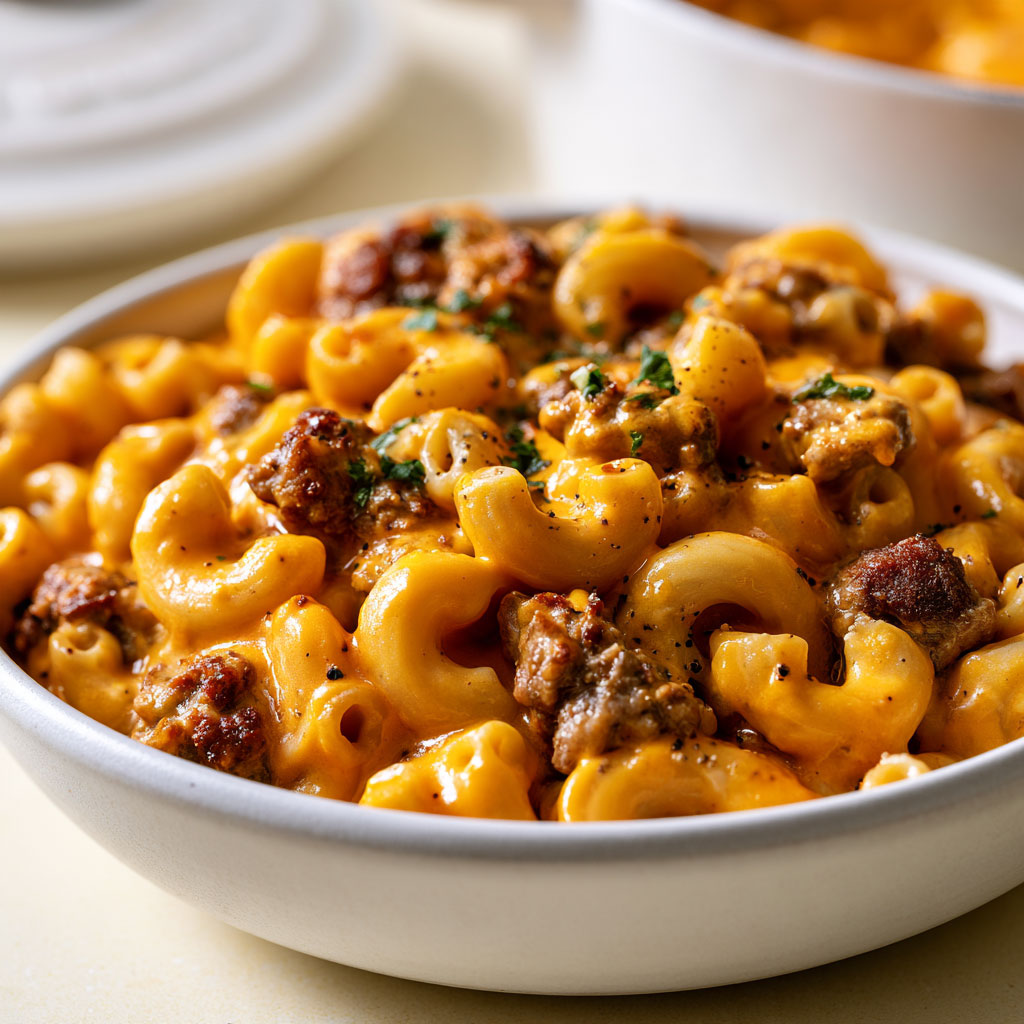
- Add Monterey Jack cheese and continue stirring until the sauce is thick, creamy, and glossy.
- Avoid boiling after adding cheese to prevent the sauce from becoming grainy or separating.
- Stir gently for another minute, coating every macaroni piece with the rich cheddar sauce.
- Taste and adjust salt, pepper, or other seasonings as desired.
- If the sauce is too thick, add a splash of warm milk to reach your preferred creaminess.
- Remove from heat and let rest for 2 to 3 minutes; this allows the sauce to thicken and flavors to meld.
- Sprinkle freshly chopped parsley and extra shredded cheddar on top if desired.
- Serve hot directly from the skillet or in bowls, enjoying the tender pasta, flavorful beef, and creamy sauce.
Variations
- Swap ground beef for ground turkey or chicken for a leaner option.
- Use whole wheat or gluten-free pasta to suit dietary preferences.
- Stir in sautéed mushrooms or bell peppers for added vegetables and texture.
- Add a pinch of cayenne pepper or hot sauce for a spicy kick.
- Replace the sharp cheddar with smoked gouda or mozzarella for a different cheese flavor.
- Top with crispy bacon bits or caramelized onions for extra richness.
Tips
- Store leftovers in an airtight container in the refrigerator for up to 3 to 4 days.
- Reheat gently on the stovetop or microwave with a splash of milk to restore the creamy texture.
- For the best sauce consistency, shred cheese fresh from blocks instead of using pre-shredded cheese.
- Avoid boiling the sauce after adding cheese to prevent it from becoming grainy.
- Keep the lid slightly ajar while simmering to avoid boil-overs but retain enough moisture for the pasta to cook properly.
- Stir frequently during pasta cooking to prevent sticking and ensure even cooking.
- Adjust seasoning at the end to suit your taste, especially salt and pepper, since broth and cheese add varying salt levels.