Skip to content
Instructions:
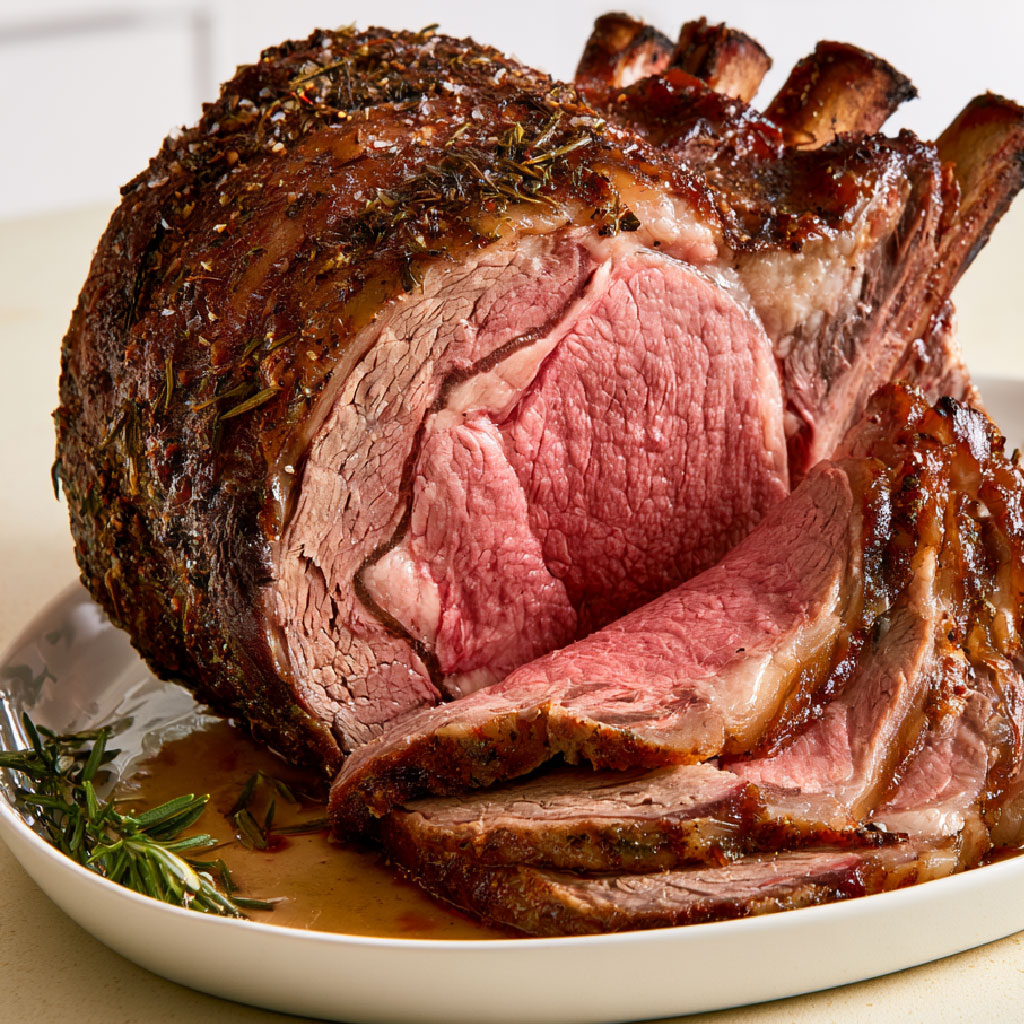
- Choose a high-quality bone-in prime rib roast with good marbling and a visible fat cap, then dry-brine it overnight by seasoning generously with kosher salt and refrigerating uncovered for 12–24 hours. This enhances flavor and helps achieve a better crust.
- On the day of cooking, preheat your oven to 500°F (260°C) and position the rack low enough to fit the roast comfortably without touching the heating elements.
- Prepare a garlic-herb butter by mixing softened unsalted butter and olive oil with minced garlic, chopped rosemary, thyme, black pepper, onion powder, and optional Dijon mustard. If you dry-brined the roast, do not add salt to the butter.
- Pat the roast dry to remove any surface moisture, then spread the garlic-herb butter evenly over the fat cap, sides, and ends, pressing gently so it adheres well.
- Place the roast bone-side down in a sturdy metal roasting pan or on a roasting rack if bones have been removed. Insert an oven-safe probe thermometer into the thickest part of the meat, avoiding bones and large fat pockets.
- Put the roast in the preheated oven and sear at 500°F for 10–15 minutes. This high heat renders fat and creates the signature golden-brown crust but watch carefully to prevent burning.
- Reduce the oven temperature to 325°F (163°C) without opening the door more than necessary, then continue roasting until the internal temperature approaches your desired doneness.
- Use the thermometer to monitor temperature closely, avoiding reliance on general cooking times; a 5–6 lb roast usually takes 1½–2½ hours after searing but varies widely.
- Once the roast reaches your target temperature (e.g., 120–125°F for medium-rare pull temperature), remove it from the oven and tent loosely with foil.
- Let the roast rest for 25–30 minutes; this carryover cooking raises the temperature several degrees and allows juices to redistribute for moist, tender slices.
- While resting, prepare the au jus by skimming fat from the pan drippings, then simmering the defatted juices with beef broth, red wine (optional), Worcestershire sauce, and fresh thyme until slightly reduced and flavorful.
- Carve the roast by slicing across the grain into ½–¾-inch thick pieces, serving with warm au jus and garnishing with fresh herbs as desired.
Variations
- Garlic-Rosemary Prime Rib: Double the rosemary and increase garlic for a more intense herbal and garlicky flavor.
- Peppercorn-Crusted Prime Rib: Add 1 tablespoon of coarsely cracked black pepper to the herb butter for a spicy crust.
- Dijon-Herb Prime Rib: Increase Dijon mustard to 1 tablespoon in the butter mixture for a tangier, richer crust.
- Classic Salt-and-Pepper Prime Rib: Skip the garlic-herb butter and season solely with kosher salt and freshly cracked black pepper for a simpler traditional roast.
- Richer Butter Crust: Replace olive oil with an extra tablespoon of softened butter for a more decadent crust texture.
- Boneless Prime Rib Roast: Use the same temperature method on a boneless roast placed on a roasting rack, monitoring temperature carefully since cooking times may differ.
Tips
- Always use a reliable oven-safe probe thermometer to monitor internal temperature rather than relying on cooking times alone; this prevents overcooking and ensures perfect doneness.
- Dry-brine the roast uncovered in the refrigerator overnight to enhance flavor and develop a superior crust during roasting.
- Rest the roast loosely tented with foil for at least 25–30 minutes after cooking to allow juices to redistribute and finish cooking via carryover heat.
- Store leftover prime rib in airtight containers in the refrigerator within 2 hours of cooking; it keeps well for 3–4 days.
- For best texture, reheat sliced leftovers gently in a covered oven-safe dish with a splash of beef broth, warming to an internal temperature of 165°F (74°C) to ensure food safety.
- Keep any remaining roast in larger pieces rather than slicing all at once to retain moisture and tenderness.
- Leftover prime rib is excellent for sandwiches, hearty soups, or breakfast hash, making it a versatile holiday meal component beyond the initial serving.