Skip to content
Instructions:
- Pat dry the chicken thighs thoroughly to ensure the seasoned flour adheres well and creates a crispy crust when browned.
- Combine the flour, kosher salt, black pepper, garlic powder, onion powder, smoked paprika, dried thyme, and optional cayenne pepper in a shallow dish and whisk until evenly mixed.
- Coat each chicken thigh evenly with the seasoned flour, pressing lightly to adhere and shaking off excess to maintain a thin, crisp coating.
- Heat 3 tablespoons of vegetable oil in a large skillet or Dutch oven over medium-high heat until shimmering but not smoking.
- Place the chicken thighs skin-side down in the hot oil, leaving space between pieces to avoid steaming, and cook undisturbed for 4–5 minutes until the skin is deep golden-brown and crisp.
- Turn the chicken and brown the other side for 3–4 minutes; the chicken need not be fully cooked at this stage as it will finish simmering in the gravy.
- Transfer the browned chicken to a clean plate and repeat the browning process with remaining pieces, adding more oil if necessary.
- Reduce the heat to medium and pour off excess fat, leaving about 2 tablespoons of drippings in the skillet.
- Add the butter to the skillet and allow it to melt, then add the sliced onions, stirring to coat them in the drippings; cook for 7–9 minutes until softened, translucent, and lightly golden.
- If using bell pepper, add it after the onions have cooked for 3 minutes and continue cooking until softened.
- Add minced garlic and cook for 30–60 seconds until fragrant, taking care not to burn it.
- Sprinkle the flour over the onion mixture and stir constantly for 2–3 minutes until the flour is absorbed and turns a warm golden color, forming a roux that will thicken the gravy.
- Gradually whisk in the chicken broth in increments, scraping up the browned bits from the pan to incorporate into the sauce and prevent lumps.
- Add Worcestershire sauce, poultry seasoning, dried thyme, black pepper, and smoked paprika, stirring well to combine.
- Bring the gravy to a gentle simmer and cook for 3–4 minutes until it thickens and develops a glossy sheen.
- If using, reduce heat to medium-low and stir in the heavy cream slowly to enrich the gravy and give it a velvety texture.
- Taste and adjust salt as needed, remembering that the chicken and flour coating will add more flavor during simmering.
- Return the browned chicken thighs to the skillet, placing them skin-side up over the onions and gravy, and spoon some gravy over the chicken without fully submerging it to preserve the crispy skin.
- Cover the skillet with a tight-fitting lid, reduce heat to low, and simmer gently for 25–35 minutes until the chicken reaches an internal temperature of at least 165°F (74°C) and is tender.
- Check occasionally to maintain a gentle simmer; add warm chicken broth if the gravy thickens too much before the chicken is cooked.
- Once cooked, remove the lid and simmer uncovered for 3–5 minutes if the gravy needs thickening, or add a splash of broth if it is too thick.
- Remove from heat and let the chicken rest in the gravy for 5 minutes to allow flavors to meld.
- While the chicken simmers, rinse the rice thoroughly under cool water until clear to remove excess starch.
- Cook the rice with water, salt, and butter according to package directions, generally bringing to a boil then simmering covered for 15–20 minutes without lifting the lid.
- Let the rice rest covered for 5 minutes after cooking, then fluff gently with a fork.
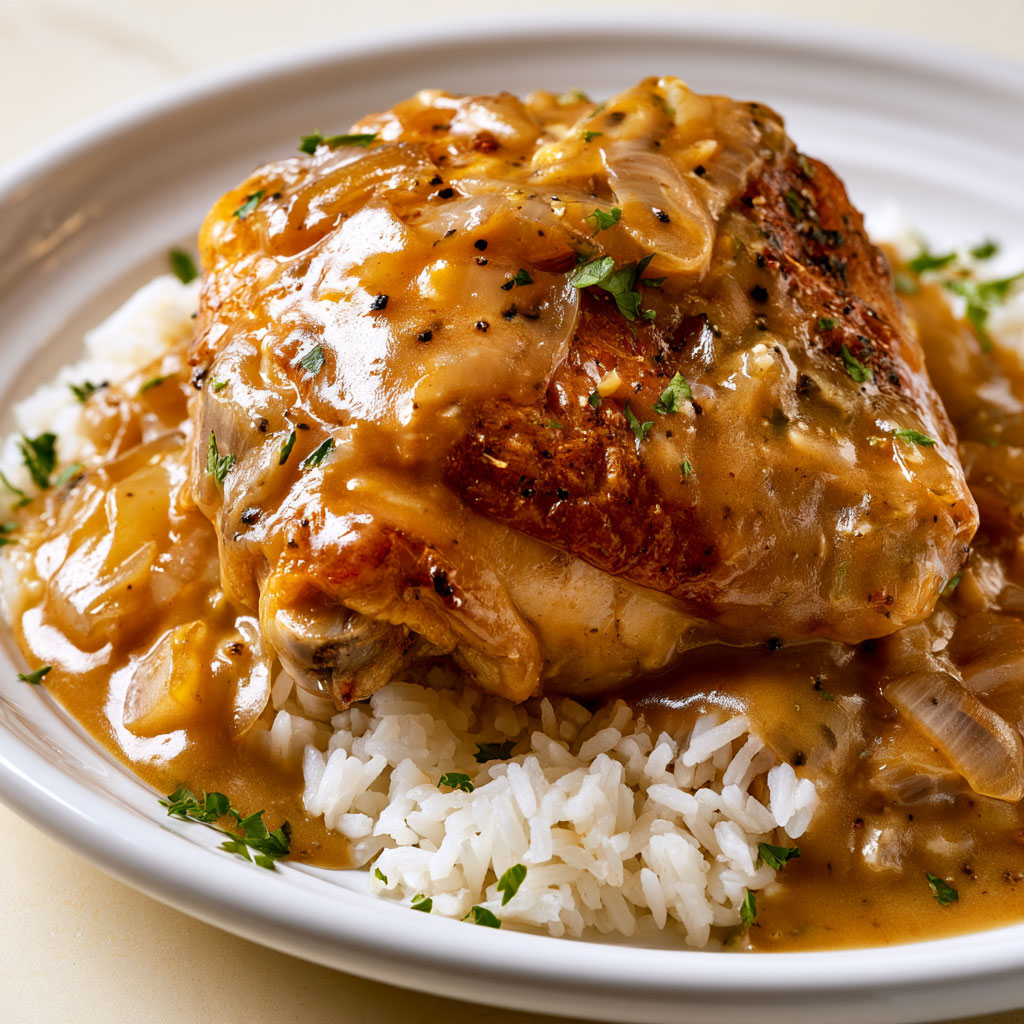
- Serve by spooning a generous mound of rice onto plates, placing a chicken thigh skin-side up on top or beside the rice, and ladling thick onion gravy over the chicken and rice, garnishing with fresh parsley and optional black pepper.
Variations
- Substitute boneless, skinless chicken thighs for a quicker cook time; reduce simmering to 15–20 minutes and monitor for doneness carefully.
- Use boneless chicken breasts instead, adjusting simmering time to prevent drying out the meat, and ensure internal temperature reaches 165°F.
- Add an extra medium yellow onion for a more pronounced onion flavor and sweeter gravy.
- Omit the heavy cream for a traditional brown onion gravy, or add it for a richer, creamier texture.
- Include diced green bell pepper for a subtle vegetal note and additional color in the gravy.
- Add a pinch of cayenne pepper or crushed red pepper flakes to the flour mix or gravy for a mild heat boost, or omit for a family-friendly version.
Tips
- Store leftovers in shallow airtight containers and refrigerate within 2 hours of cooking; consume within 3–4 days for best quality.
- When reheating, gently warm chicken and gravy in a skillet over medium-low heat with a splash of chicken broth to restore consistency, stirring carefully to avoid breaking the chicken apart.
- Prepare fresh rice when serving leftovers for the best texture; if reheating rice, ensure it was cooled and stored properly and heat thoroughly to 165°F.
- For freezing, cool chicken and gravy promptly, store in freezer-safe containers, and use within 2–3 months; thaw overnight in the fridge and reheat gently with broth to maintain gravy texture.
- Do not stir aggressively once the chicken is tender to prevent meat separating from the bones.
- Brown the chicken in batches without overcrowding to achieve an even, crispy crust and preserve flavorful browned bits for the gravy base.
- Allow the chicken skin to remain partially visible when simmering in gravy to maintain its appealing golden-brown appearance.