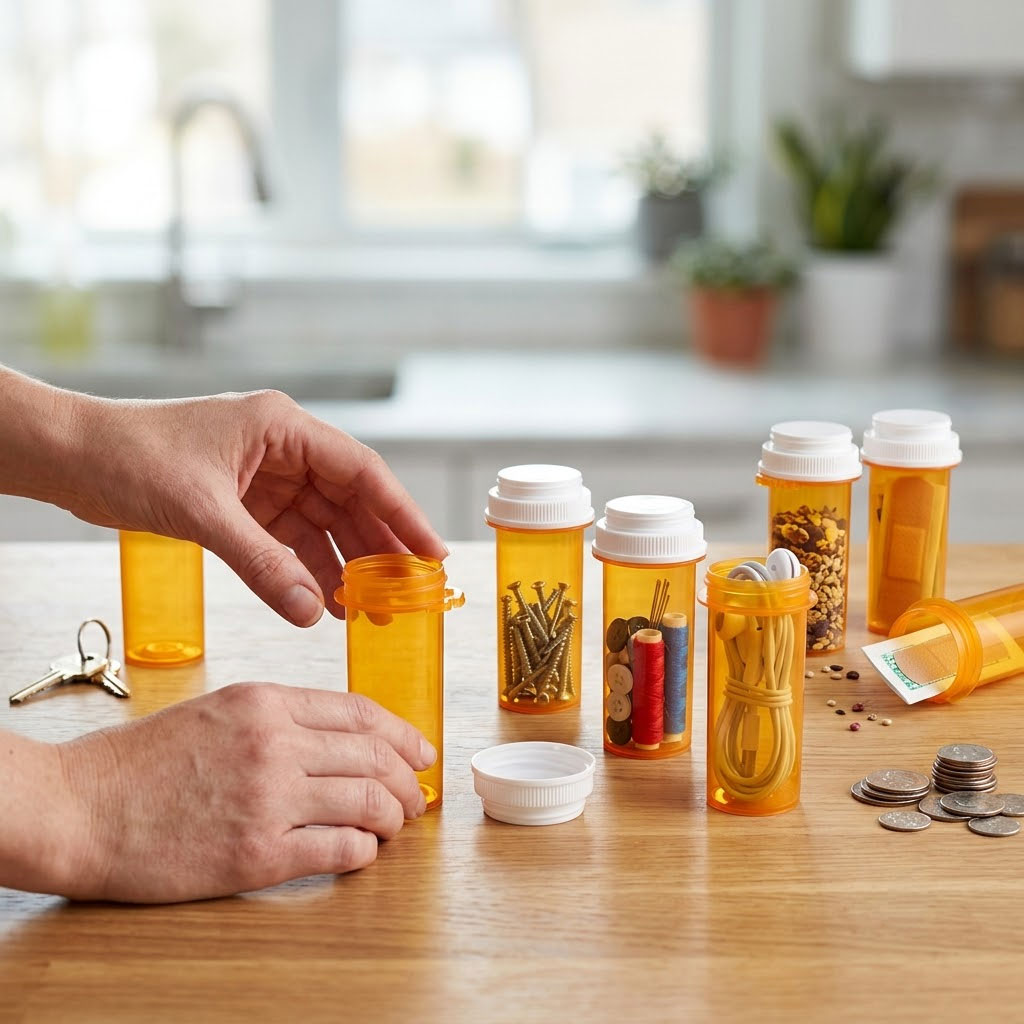
There’s a drawer in most houses with four or five of them rolling around in it. Small, orange, translucent, child-resistant cap. The medication ran out months ago and the bottle just… stayed.
Most people eventually sweep them into the trash without a second look. That’s the part worth slowing down on — not because the bottle matters, but because of what’s printed on the side of it.
Turn one over and read it properly. A standard pharmacy label carries your full legal name, your home address, your prescription number, the drug name and strength, the quantity dispensed, your prescriber’s name, the pharmacy and its phone number, the date filled, and how many refills remain. On a lot of labels, your date of birth as well.
That is a remarkably complete picture of a person, and you’re putting it in a bin at the curb.
Why That Information Is Worth Something
Medical identity theft is the version of this crime almost nobody plans for, and it’s the one that’s hardest to undo.
The scale of it has moved fast. AARP reports that cases filed with the Federal Trade Commission climbed from roughly 6,800 in 2017 to nearly 43,000 by 2021. A frequently cited Ponemon Institute study found that among victims who ended up out of pocket, the average cost of clearing it up ran to about $13,500 — covering providers, insurers, and legal help. Researchers have put the typical cleanup at 200-plus hours of a victim’s own time.
Here’s the detail that catches people, and it’s the one worth remembering: if someone runs up fraudulent charges on your credit card, federal law caps what you can be held responsible for at $50. There is no equivalent protection for a stolen medical identity. None. The card networks built fraud detection and absorbed the losses decades ago. Healthcare never did. When a medical identity is used, the person it belonged to is largely the one left sorting it out — and it takes months to even surface, because nobody sends you a statement.
ADVERTISEMENT
Worse, the damage isn’t only financial. Someone else’s treatment recorded under your name can corrupt your actual medical file — their blood type, their allergies, their diagnoses, sitting in your record where a doctor will one day rely on it.
The Scam That Uses Your Own Prescription Against You
This is the one to actually watch for, and it’s the reason the label matters more than the bottle.
Most scam calls fail because they’re generic. You know instantly that no one from “your bank” is calling about an account you don’t have. But a caller who already knows your name, your address, your pharmacy, your prescriber’s name, and the fact that you take metoprolol — that call doesn’t sound like a scam. It sounds like admin.
That’s exactly what a discarded label hands over. It tells a stranger what conditions you have, who treats you, where you fill your prescriptions, and what to say to sound legitimate. Fake pharmacy calls, fake Medicare calls, bogus “your coverage is changing” calls, phony refill confirmations that just need you to verify a few details — all of them get dramatically more convincing with a prescription label as the script.
And there’s a plainer version of the risk. A bottle in the trash announces which medications are inside the house. For anything controlled, that’s information you’d rather not publish.
Removing the label is a two-minute job. The adhesive on most pharmacy labels gives up under a hot soak — ten minutes in hot water and it usually peels in one piece. Whatever won’t budge, a hairdryer softens or a little cooking oil or rubbing alcohol lifts. If it’s laminated and refuses (some are), scratch out the identifying lines with a permanent marker until they’re genuinely unreadable, or take scissors to that section of the bottle. Don’t just cross it out lightly — held to the light, a single line through your name hides nothing.
Then wash the bottle, dry it fully, and you’ve got a sturdy, sealed, moisture-proof little container that cost you nothing.
Which is where these things earn their keep — there are twelve jobs they do better than the organizers people pay money for. Though two of the twelve come with a genuine catch worth knowing before you try them.