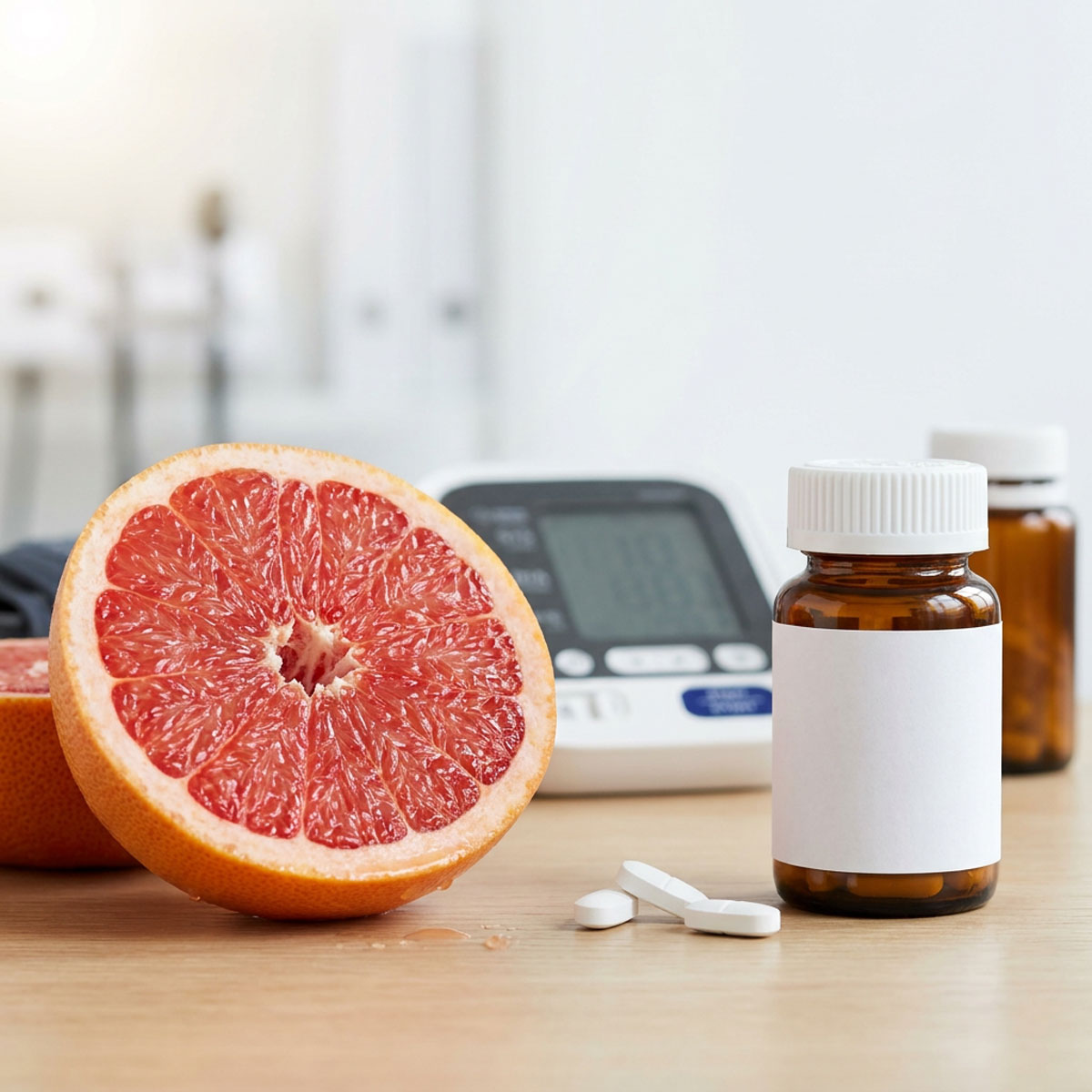
Imagine Helen, age 71.
Every morning she enjoys half a grapefruit with breakfast.
Later, she begins taking a new cholesterol medication.
She never thinks to mention her breakfast because fruit seems completely unrelated to prescription medicine.
During a routine refill, the pharmacist asks whether she eats grapefruit.
Helen is surprised.
The pharmacist isn’t worried about the fruit itself.
They’re simply checking whether Helen’s specific medication happens to be one of the drugs that interacts with it.
Helen’s story is fictional, but conversations like this happen every day in pharmacies.
Another example
Imagine Robert, age 68.
He reads online that grapefruit “cancels out heart medicine.”
Concerned, he decides he’ll never eat citrus fruit again.
Instead, he brings his medication bottles to his pharmacist.
After reviewing the list, the pharmacist explains that only one medicine deserves discussion.
The others have little or no meaningful grapefruit interaction.
Robert leaves with accurate information instead of unnecessary worry.
His story is fictional, but it illustrates why personalized advice is far more valuable than generalized internet warnings.
Call your doctor if…
While grapefruit interactions often happen quietly, certain symptoms deserve prompt medical attention.
Call your doctor if you develop:
- Unusual muscle pain or weakness
- Dizziness or fainting
- Unusual bruising or bleeding
- A racing or irregular heartbeat
These symptoms can have many causes, but they should never be ignored.
The two-minute conversation that can give you peace of mind
If you’re ever unsure, your pharmacist is one of the best people to ask.
Bring your medication bottles—or an up-to-date medication list—and ask one simple question:
“Do any of my medications interact with grapefruit or similar citrus fruits?”
Pharmacists answer questions like this every day.
It usually takes only a couple of minutes.
No appointment is necessary.
Because medication information changes over time, pharmacists also have access to the latest prescribing information and interaction resources.
The bottom line
Grapefruit remains a healthy fruit for most people.
What makes it unusual is that it can meaningfully change how certain medications behave inside the body.
For many medicines, grapefruit blocks an enzyme in the small intestine, allowing more of the drug to reach the bloodstream and making it stronger than intended.
For a smaller group, it reduces absorption, making the medicine weaker instead.
The interaction depends on the specific drug—not simply the medication category.
That’s why two people taking medicines for the same condition may receive completely different advice.
The safest next step isn’t to fear grapefruit or question your prescription.
It’s to ask your pharmacist whether your particular medication belongs on the grapefruit interaction list.
A brief conversation can quickly separate internet myths from genuine concerns, helping you protect both your treatment and your peace of mind.