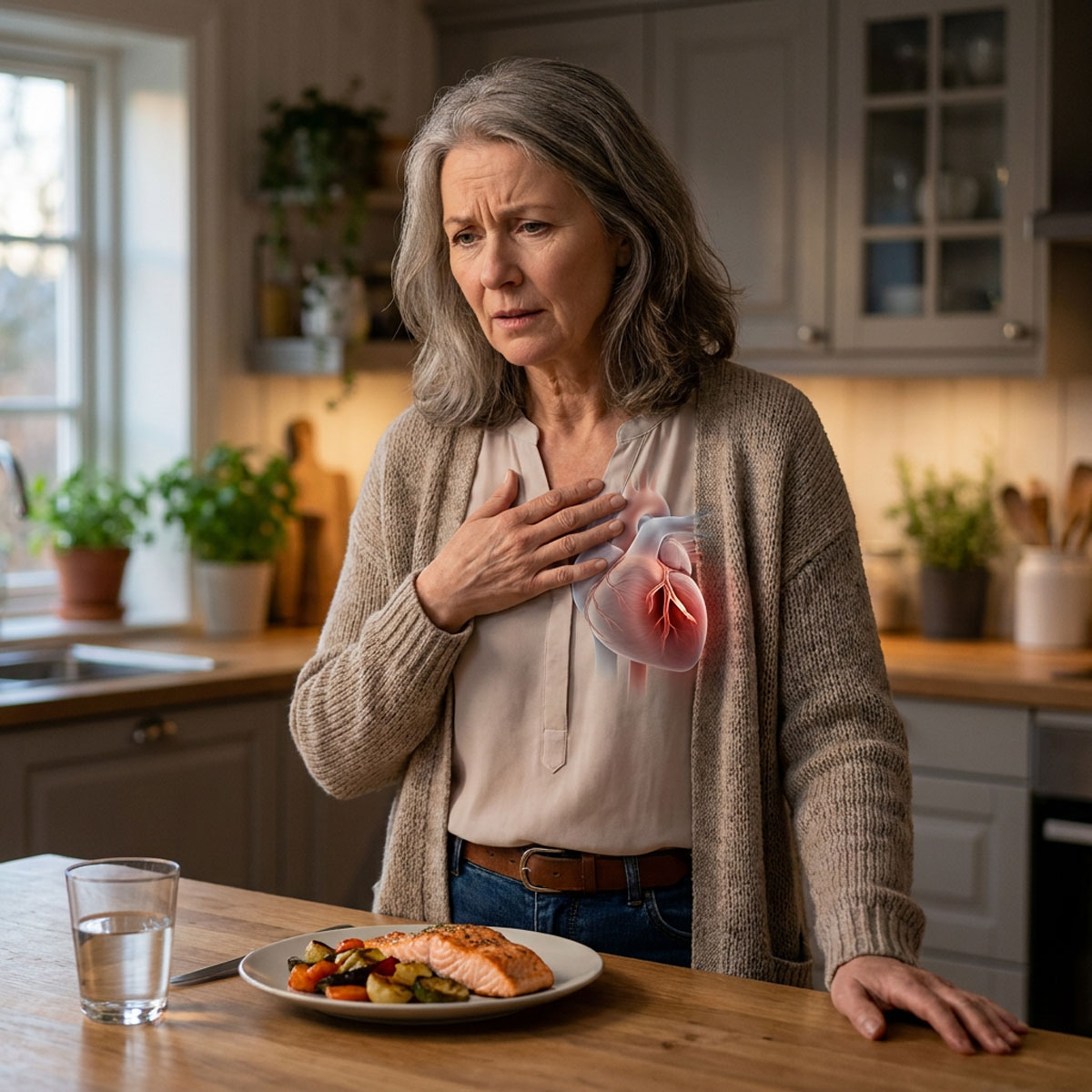
She thought it was indigestion.
She had eaten a heavier dinner than usual, and the discomfort seemed to sit high in her chest. It wasn’t the dramatic, crushing pain she had always imagined a heart attack would feel like. She told herself it would settle. She didn’t want to wake anyone or make a fuss over what was probably heartburn.
She was wrong.
The important part of this story isn’t that she mistook the symptoms. It’s that her explanation made perfect sense. That’s exactly why so many heart attacks are missed—not because people ignore obvious danger, but because the symptoms are often easy to explain in ordinary ways.
This article provides general information and is not medical advice. If you think you or someone else may be having a heart attack, the safest response is to seek emergency medical care immediately.
Call Emergency Services Now—Don’t Wait to Be Sure
If you develop chest pressure, tightness, discomfort, squeezing, fullness, burning, or an ache that concerns you—especially if it comes with shortness of breath, pain or discomfort in the jaw, neck, upper back, shoulder, or one or both arms, nausea, vomiting, a cold sweat, lightheadedness, or simply a sudden feeling that something is badly wrong, call emergency services immediately.
You do not have to know whether it is a heart attack before calling.
It is far better to be wrong than to be late.
Emergency dispatchers would rather send help for a false alarm than have someone wait until heart muscle has been permanently damaged.
The Heart Attack That Doesn’t Look Like the Movies
Many of us picture a heart attack the same way.
Someone suddenly clutches their chest, collapses, and everyone immediately knows what is happening.
Real life is often much quieter.
That doesn’t mean the danger is any less real.
One of the biggest misunderstandings is that women don’t get chest pain during a heart attack.
They absolutely do.
In fact, chest discomfort remains the most common symptom in women, just as it is in men.
The difference is that women are somewhat more likely to have a heart attack without chest pain, and they are also more likely to experience other symptoms alongside whatever is happening in the chest.
Believing that women never have chest pain can be just as dangerous as believing every heart attack causes dramatic agony.
The truth is somewhere in between.
It May Not Feel Like “Pain”
Another reason heart attacks are missed is that many people never describe the feeling as pain.
They use different words.
Pressure.
Tightness.
A squeezing feeling.
Fullness.
Burning.
A heavy weight sitting on the chest.
An ache that simply feels unusual.
Many women later say something like, “It wasn’t pain exactly.”
That sentence is important.
It is often the reason they waited.
If what you are feeling is new, unusual, or difficult to explain, the exact word you choose does not matter. What matters is getting medical help quickly.