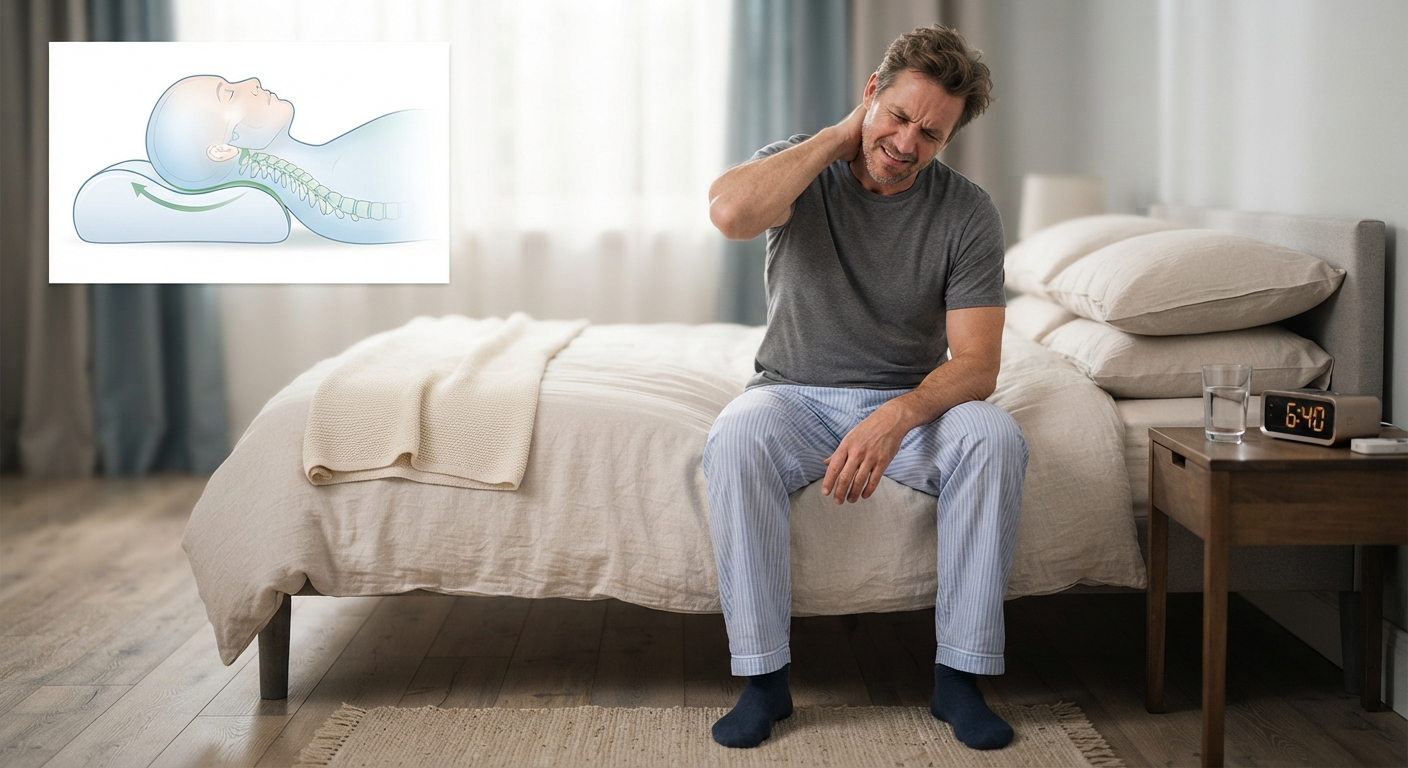
When to Seek Immediate Help for Neck Stiffness
While most cases of waking up with a stiff neck are harmless and temporary, certain symptoms require prompt medical attention. If you experience severe neck pain following trauma, numbness or weakness in your arms or legs, fever with neck stiffness, or difficulty moving your head, seek emergency care immediately.
Understanding Your Stiff Neck: Is It Mechanical or Medical?
Before diving into causes, it’s important to distinguish between mechanical stiffness—caused by muscles and joints—and stiffness linked to medical conditions. Mechanical stiffness typically stems from how you sleep, your pillow choice, or muscle stress. Medical causes might include infections, arthritis, or nerve issues and often present with additional symptoms like fever or radiating pain.
Ask yourself: Does your stiffness improve with gentle movement or stretching? If yes, it’s likely mechanical. If stiffness persists or worsens, or is accompanied by other concerning symptoms, consult your healthcare provider.
Check Your Medicine Cabinet: Could Medications Be a Factor?
Some medications can contribute to muscle stiffness or cramps, including certain blood pressure drugs, statins, or diuretics. If you’ve recently started a new medication and notice neck stiffness, discuss this with your prescribing doctor before making any changes. They can determine if the medication might be the culprit and adjust your treatment safely.
Cost and Impact of Untreated Neck Stiffness
Ignoring persistent neck stiffness can lead to chronic pain, reduced mobility, and increased healthcare costs. Physical therapy alone can range from $50 to $350 per session, depending on location and insurance coverage. Early identification and correction of causes like poor sleep posture or improper pillow use can often prevent these expenses.
Quick Self-Test: How Is Your Neck Alignment?
Lie on your back and place your hand under the curve of your neck. If there’s a large gap or your neck feels unnaturally bent, your pillow or sleeping position might be causing strain. Proper neck alignment maintains the natural curve without excessive bending or extension.
Correcting neck alignment during sleep is often the first step in resolving morning stiffness, but as you will see, other factors may also play a role.
Here are the 7 possible reasons it happens after sleeping. Number 3 is the one most people don’t expect — and it has nothing to do with their pillow.