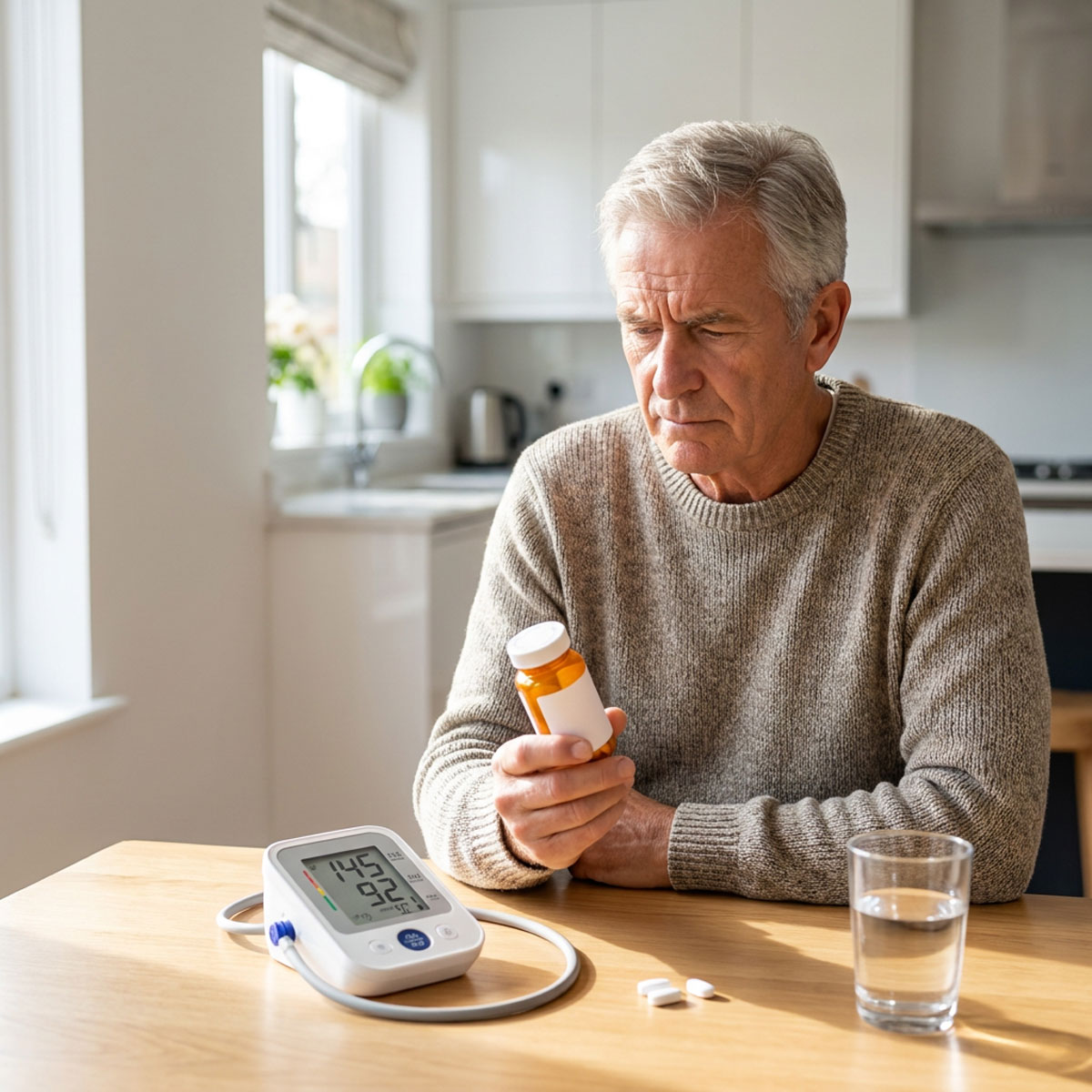
Your body is always trying to maintain balance.
When you take a blood pressure medicine regularly, your heart and blood vessels adjust to having that medication on board.
If the medication disappears suddenly, your body doesn’t instantly reset.
Instead, it can temporarily overreact.
This is one reason blood pressure can rise quickly after abrupt discontinuation. In some people, it may even climb higher than it was before treatment.
Doctors call this rebound hypertension.
Think of it like taking your foot off a brake all at once instead of easing off gradually. The body can briefly overshoot before it settles down.
That temporary overshoot is what creates concern.
Why beta blockers deserve special attention
All blood pressure medicines should be discussed with a healthcare professional before any changes are made.
But beta blockers deserve particular attention because stopping them abruptly carries unique risks.
Common beta blockers include medications such as metoprolol, atenolol, and propranolol.
These medicines slow down some of the effects of stress hormones on the heart.
Over time, your body adapts to that slower, calmer environment.
One way to picture it is this:
Imagine your heart has many tiny “listening stations” that respond to signals telling it to beat faster.
While you’re taking a beta blocker, those signals are being partially blocked.
Your body gradually compensates by making those listening stations more sensitive or increasing how many are available.
This adjustment helps keep things balanced while the medication is present.
Now imagine the medication suddenly disappears.
Those extra-sensitive listening stations are still there.
Suddenly, stress hormones can reach them without anything getting in the way.
The result can be a heart that races faster than expected.
Some people notice pounding heartbeats or a rapid pulse.
Others may develop chest discomfort.
People who already have coronary artery disease may face a higher risk of serious heart problems during this period because the heart suddenly needs more oxygen while its blood supply may already be limited.
Importantly, this increased risk is greatest during the days after the medication is stopped—not months later.
That is why healthcare professionals take beta blocker withdrawal seriously.
An example: John’s story
Imagine John, age 68.
His metoprolol leaves him feeling tired every afternoon.
He reads online that “blood pressure medicine is dangerous” and decides to stop taking it.
For the first day, nothing seems unusual.
Then his heart starts racing.
Walking across the driveway leaves him uncomfortable.
He develops chest pressure that he has never noticed before.
John’s story is fictional, but it illustrates why the danger isn’t always the original side effect.
Sometimes the greatest risk comes from stopping suddenly rather than working with the prescribing clinician to solve the problem safely.
Not every side effect lasts forever
Another important point is that some medication side effects improve as the body adjusts.
For some people, mild tiredness, lightheadedness, or similar symptoms become less noticeable after the first few weeks.
That doesn’t happen for everyone.
Some side effects continue and deserve attention.
The key difference is that the decision about what to do next belongs in a conversation with your healthcare professional rather than becoming a solo experiment.