Who’s Most at Risk
Pulling the risk factors together — worth extra attention if you recognize yourself:
- Long-term PPI use (omeprazole, esomeprazole and similar reflux drugs)
- Diuretics for blood pressure or heart conditions
- Type 2 diabetes or insulin resistance
- Poor diet — heavily processed food is stripped of magnesium
- Gut conditions — Crohn’s, celiac, chronic diarrhea
- Regular alcohol use
- Older age
- Chronic stress
The more of these that apply, the more the symptom list is worth taking seriously.
Food First
For most people, food is the best and safest source — and it’s not hard to eat well here:
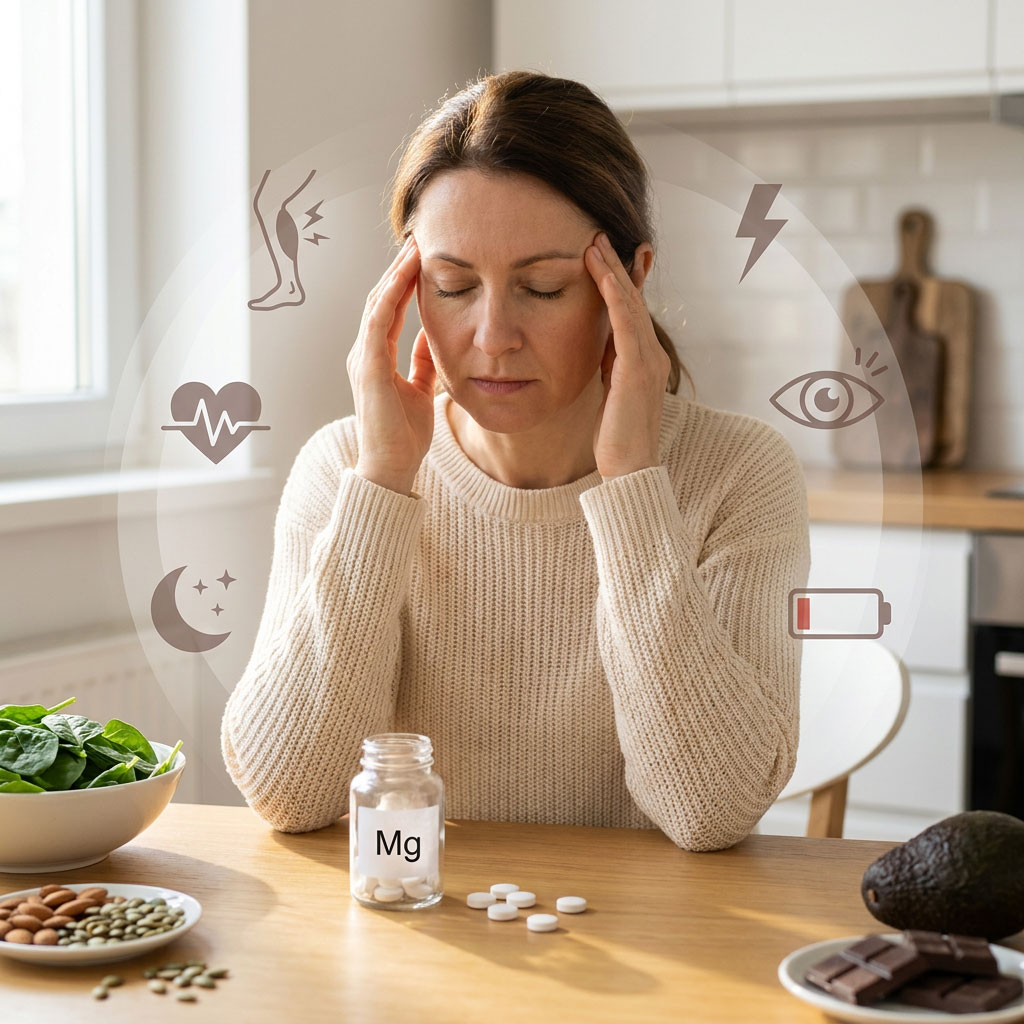
Seeds and nuts: pumpkin seeds (one of the richest sources there is), almonds, cashews. Leafy greens: spinach, Swiss chard. Legumes: black beans, lentils. Also: avocados, whole grains, salmon, tofu, and dark chocolate — real dark chocolate, in moderation, genuinely counts.
Build meals around these regularly and most people can maintain healthy levels without a pill.
About Supplements — Read Before You Buy
Supplements have a real role, but the internet oversells them, so a few honest points:
Not everyone needs one. If your intake is decent and you have no risk factors, food is enough.
Form matters, and the cheapest is the worst. Magnesium oxide — the most common bargain-bin form — is poorly absorbed and the most likely to send you running to the bathroom. Better-absorbed forms include magnesium glycinate (gentle, good for sleep), citrate (decent, mildly laxative), and malate. It’s the single most useful thing to know before buying, and most labels bury it.
More is not better. Too much causes diarrhea, cramps, and nausea — the very things you were trying to fix.
Kidney disease is the real caution. If your kidneys are impaired, magnesium can build to dangerous levels. Don’t supplement without medical guidance.
And if you take other medications, check for interactions — magnesium can interfere with the absorption of some antibiotics and thyroid medication, so timing matters.
The Bottom Line
Magnesium underpins muscles, nerves, energy, sleep, mood, and heart rhythm — so when it runs low, the effects scatter across all of them and rarely announce their source. Cramps, fatigue, palpitations, poor sleep, twitches, headaches, anxiety: any one has other explanations, but several together are a real pattern.
Two things to carry away. A normal blood test doesn’t fully rule it out, because the standard test only sees the 1 percent of your magnesium that’s in your blood. And some of the most common causes are medications — long-term reflux drugs and diuretics especially — not diet.
If several signs fit and any risk factors apply, don’t self-diagnose and don’t just grab the cheapest bottle on the shelf. Talk it through with your provider, start with food, and if you supplement, choose a form your body can actually use.
This article is for general information and isn’t a substitute for advice from a qualified healthcare professional.