9. Pet Grooming
Old toothbrushes can be repurposed for gentle pet grooming, particularly for cleaning teeth or brushing small areas with delicate fur. The small head allows you to reach tricky spots around your pet’s mouth or face.
For dental care, use a soft-bristled toothbrush designed for pets or one dedicated solely to this task, applying pet-safe toothpaste. Gently brush your pet’s teeth to help reduce plaque and tartar buildup. For fur grooming, the toothbrush can help remove dirt and loose hair from sensitive areas like around the eyes or ears.
10. Paint Touch-Ups
When you need to fix small paint chips or scratches on walls, furniture, or crafts, an old toothbrush can serve as a precise applicator. Dip the brush lightly into matching paint and use its bristles to carefully dab and blend the touch-up paint into the affected area.
The fine bristles provide more control than a large brush or roller, helping you avoid drips and uneven coverage. This method works especially well for textured surfaces where a smooth finish is unnecessary.
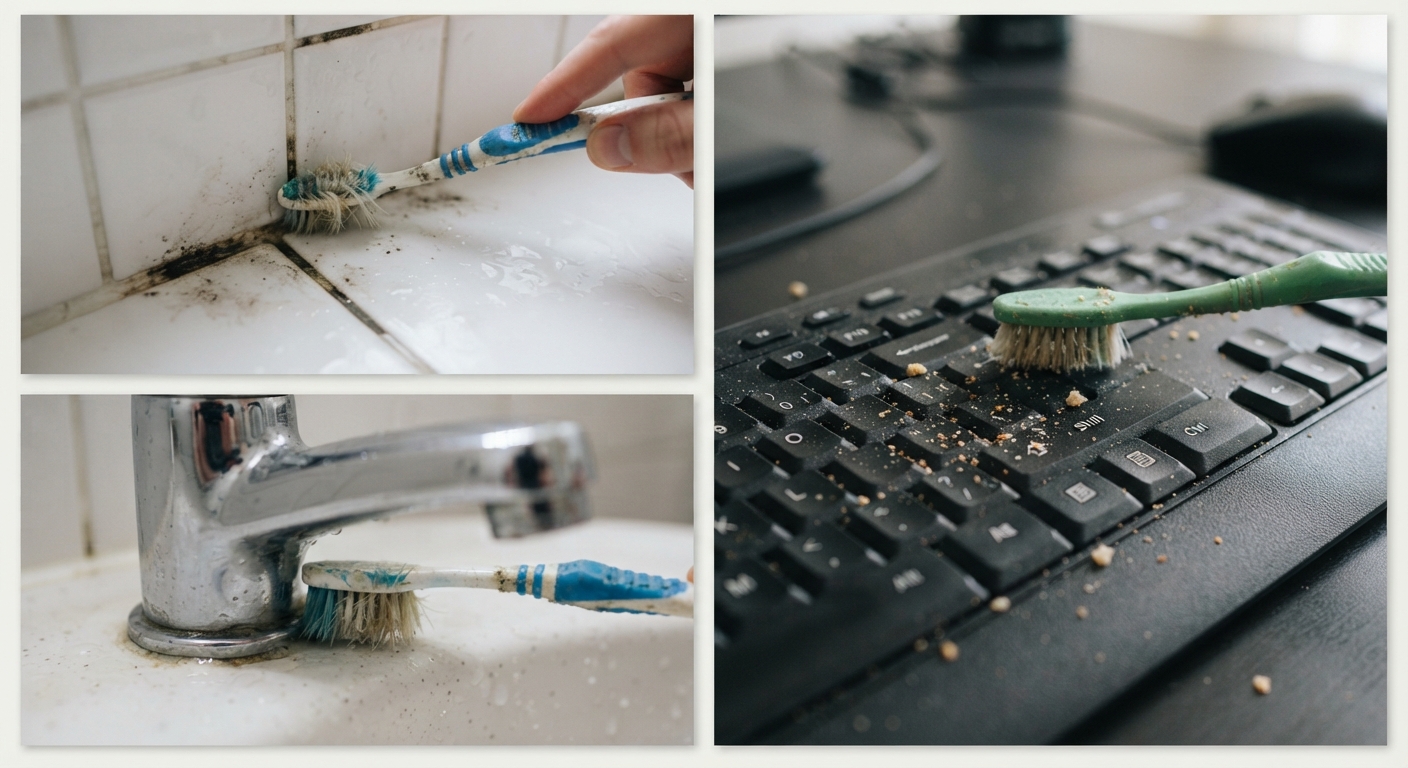
11. Cleaning Small Crevices
Household items like remote controls, jewelry boxes, and intricate decorations often have tiny crevices that trap dust and debris. An old toothbrush is perfect for cleaning these spaces without disassembling the item.
Use the toothbrush dry or slightly moistened with a mild cleaning solution to brush out dirt from grooves, seams, and carved details. This technique helps maintain the item’s appearance and hygiene without damage.
12. Removing Lint and Fuzz
Old toothbrushes can also help remove lint, fuzz, and pet hair from fabric surfaces such as upholstery, sweaters, or blankets. Brushing gently in one direction lifts unwanted fibers without stretching or damaging the fabric.
This is a handy alternative to lint rollers or tape, especially for delicate materials where adhesive products might cause harm.
When to See a Doctor
While repurposing old toothbrushes for cleaning and grooming is generally safe, be cautious when using them near sensitive areas such as facial skin or pets’ mouths. If you notice skin irritation, allergic reactions, or signs of infection after using a toothbrush for grooming or cleaning, consult a healthcare professional promptly.
For dental concerns in pets, a veterinarian’s advice is essential before starting any oral care routine. Avoid using toothbrushes for multiple purposes to reduce cross-contamination risks.
Conclusion
Reusing old toothbrushes around the house is a practical, eco-friendly way to tackle detailed cleaning tasks that larger tools can’t manage. From grout to gadgets, shoes to plants, their small size and firm bristles make them versatile helpers for maintaining cleanliness and care in your home and belongings.
Keep a few designated toothbrushes for specific uses, clean them regularly, and replace them when bristles wear down to get the best results safely.
Disclaimer: This article is for informational purposes only and does not substitute professional advice. Always follow safety guidelines and consult experts when needed.