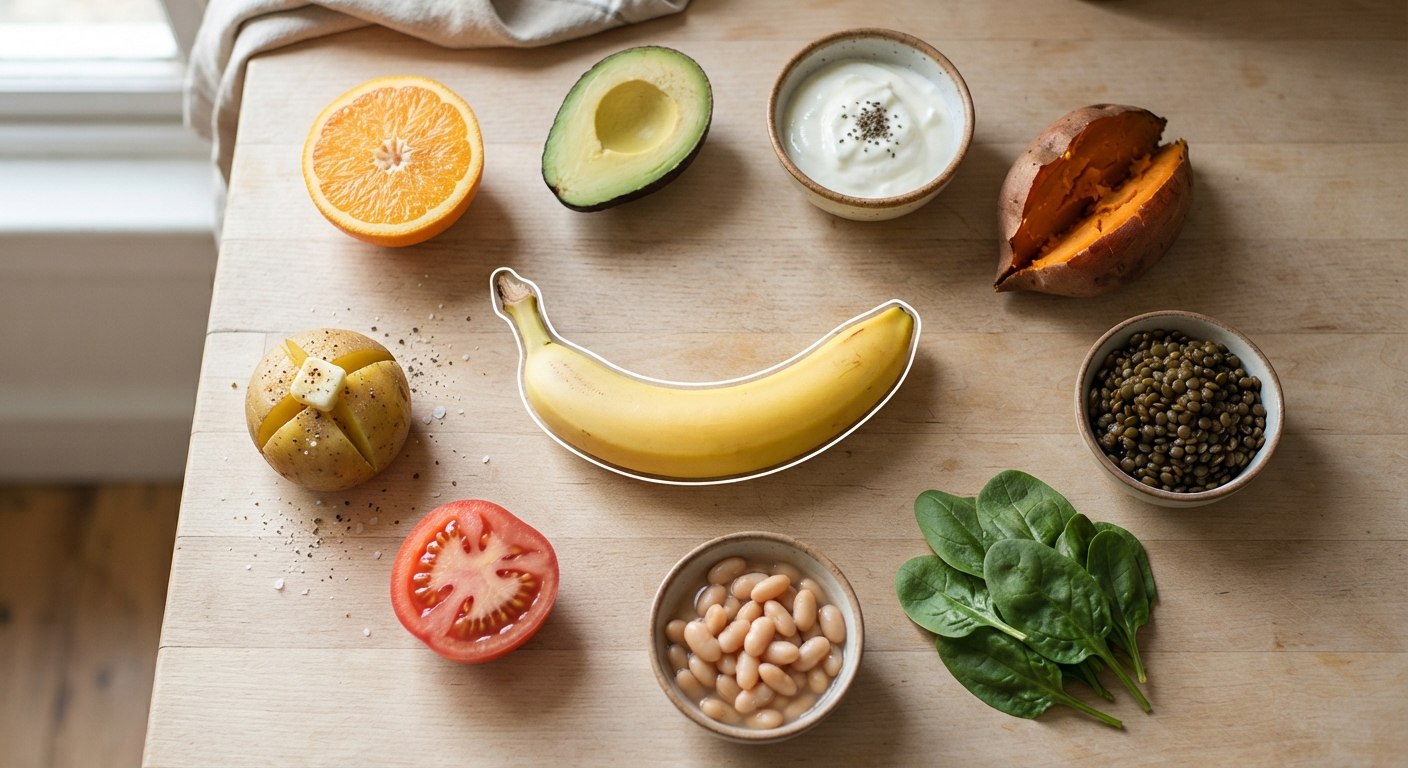
7. Tomatoes
Tomatoes provide a moderate amount of potassium, roughly 290 mg per medium tomato. They are also rich in lycopene, an antioxidant linked to reduced risk of heart disease and certain cancers. Tomatoes can be consumed fresh, cooked, or as juice or sauce.
Incorporate tomatoes into meals by adding sliced tomatoes to sandwiches, blending them into sauces, or roasting them with herbs. Cooking tomatoes actually increases the bioavailability of lycopene, enhancing their health benefits.
Tomatoes’ potassium content, while lower than some other items on this list, still contributes meaningfully to daily intake, particularly when consumed regularly.
8. Oranges
Oranges are well-known for their vitamin C, but they also provide about 237 mg of potassium per medium fruit. The natural sugars and hydration they offer make them a refreshing snack or juice base.
Eating whole oranges rather than just drinking juice helps retain fiber, promoting digestive health. Oranges can be eaten as is, added to fruit salads, or used as a flavor enhancer in dressings and marinades.
Oranges support immune function and electrolyte balance, making them a valuable complementary potassium source.
9. Yogurt
Yogurt, particularly plain low-fat or Greek varieties, can supply around 240 to 300 mg of potassium per serving (about 6 ounces). It also provides calcium, protein, and probiotics that support gut health. The potassium in yogurt helps balance sodium intake, which is important for blood pressure management.
Choose unsweetened or lightly sweetened yogurts to avoid excess added sugars. Use yogurt as a snack, breakfast base with fruit and nuts, or in smoothies and dressings.
For those with lactose intolerance or dairy allergies, potassium-fortified plant-based yogurts are an alternative but be sure to check nutrition labels.
When to See a Doctor
While increasing dietary potassium is generally beneficial, some health conditions require caution. People with chronic kidney disease, certain heart conditions, or those taking potassium-sparing medications should consult their healthcare providers before making significant changes to potassium intake.
If you experience symptoms such as muscle weakness, irregular heartbeat, or persistent fatigue, seek medical evaluation promptly, as these can indicate abnormal potassium levels.
Conclusion
Potassium is essential for maintaining healthy blood pressure, muscle function, and overall cellular health. Beyond bananas, a variety of everyday foods like avocados, potatoes, white beans, lentils, spinach, sweet potatoes, tomatoes, oranges, and yogurt provide ample potassium in delicious and versatile forms. Incorporating these options into your diet can support heart health and electrolyte balance effectively.
Always speak with your healthcare provider before making dietary changes, especially if you have underlying health conditions or take medications affecting potassium levels.