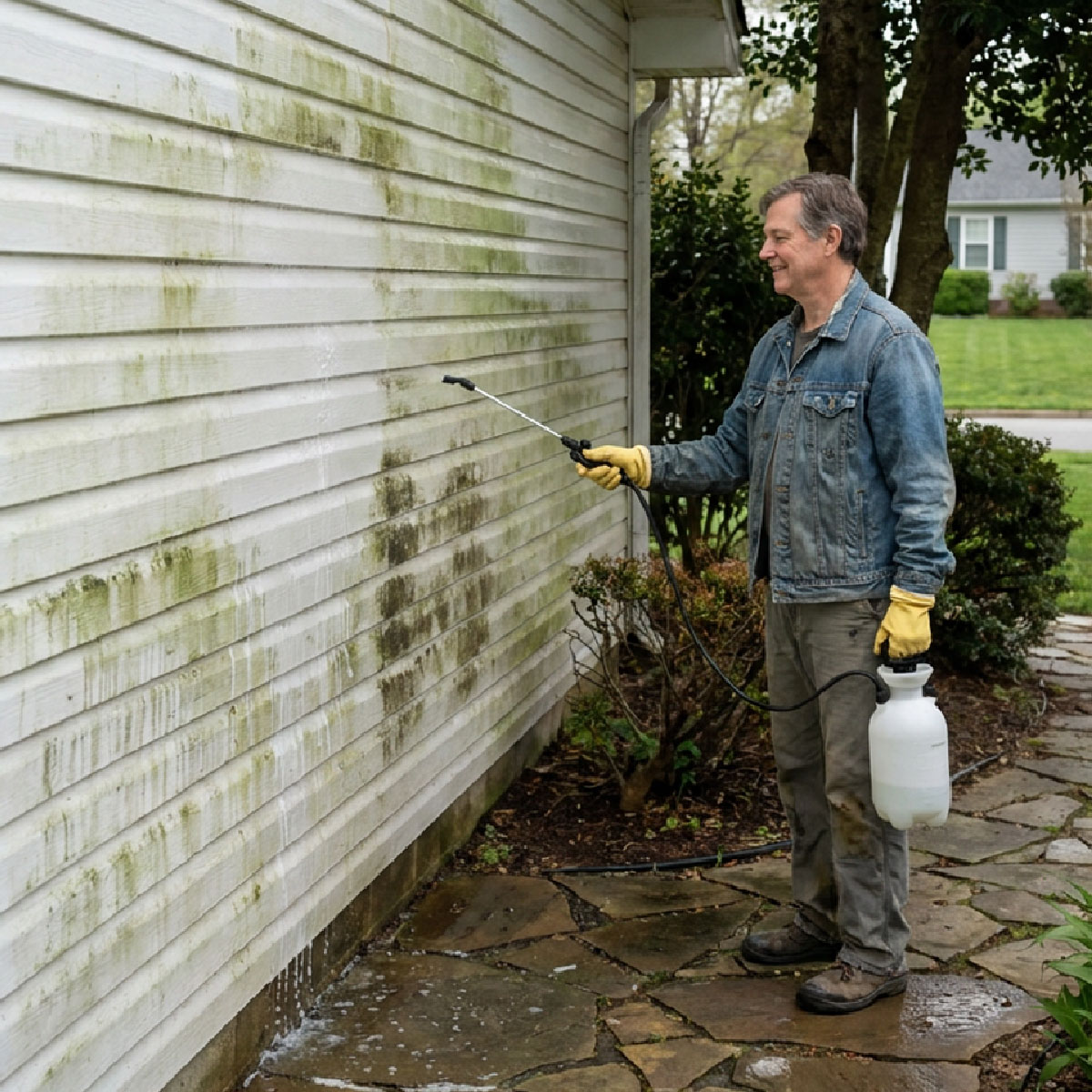
You step outside one morning and notice it again.
Those green streaks running down the side of your house seem to have appeared overnight.
At first, it’s just a few patches. Before long, the siding starts looking dull, stained, and older than it really is.
Many homeowners assume the siding needs repainting or expensive pressure washing.
Often, neither is true.
One of the simplest ways to deal with green algae is something many experienced homeowners have known for years. The trick isn’t about scrubbing harder—it’s about letting the right cleaner do most of the work.
This article explains why algae grows on siding, why it keeps coming back, and how a simple cleaning method can make the job much easier.
Why Green Algae Appears in the First Place
That green film isn’t dirt.
It’s usually algae.
Algae love moisture, shade, and warm weather.
If one side of your house spends much of the day in the shade, especially under trees or near shrubs, it often stays damp longer after rain.
That creates ideal conditions for algae to grow.
North-facing walls are especially common places to see it.
Vinyl siding, painted siding, and even fiber cement siding can all develop green algae over time.
It doesn’t necessarily mean anything is wrong with your home.
Why It Always Seems Worse Near Trees
Trees create shade.
They also reduce airflow.
Leaves drip water long after rain has stopped.
All of that keeps siding damp for longer periods.
Even if two sides of the same house receive identical rainfall, the shaded side usually develops algae much faster.
Why Pressure Washing Isn’t Always the Best First Choice
Many people immediately think of renting a pressure washer.
While pressure washing certainly has its place, it isn’t always the gentlest option.
Too much pressure can:
- Force water behind siding
- Damage older vinyl
- Remove paint
- Leave streaks
- Etch softer materials
In many situations, strong chemicals and time do more of the work than high pressure.