3. Balance and fall risk
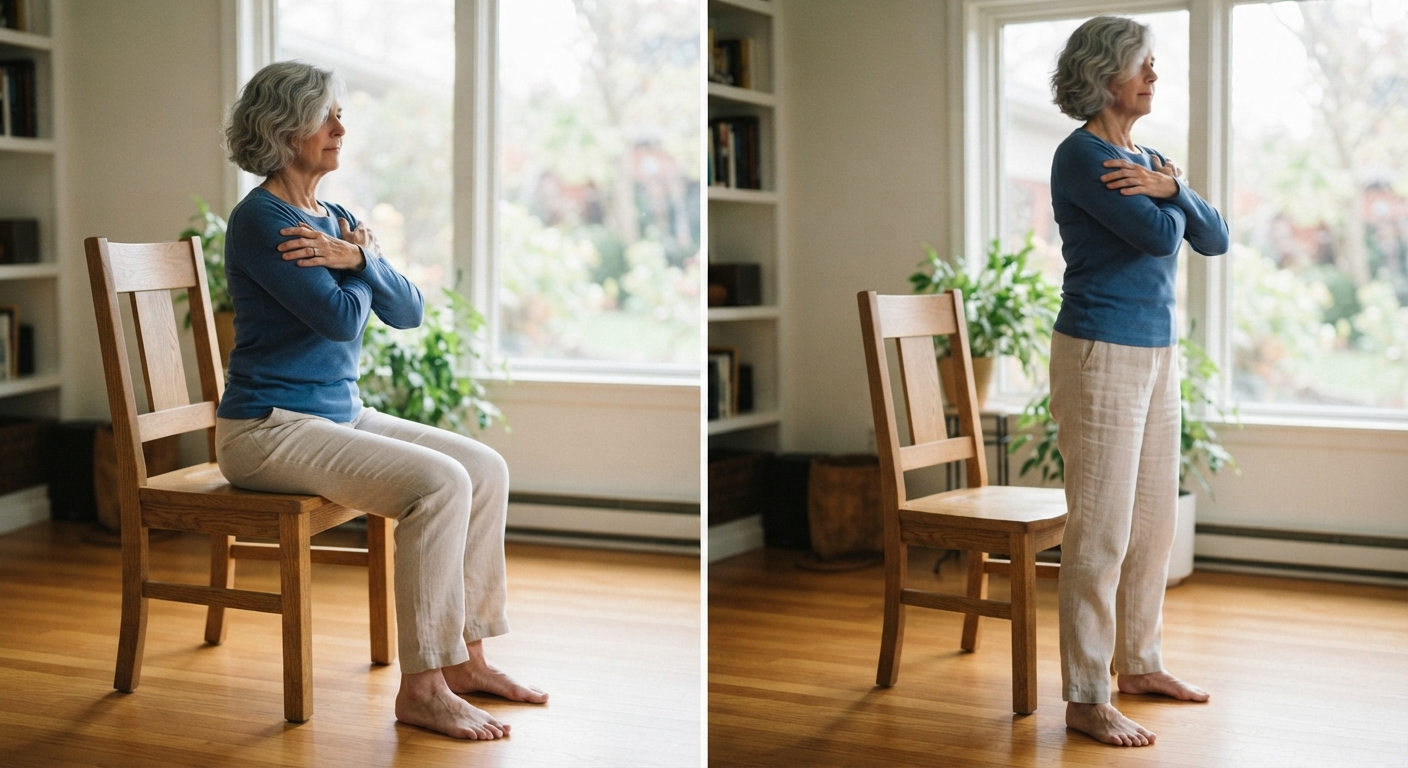
Balance plays a critical role in standing up without using your hands. As we age, the sensory systems that help maintain balance—vestibular, visual, and proprioceptive—may deteriorate, making it harder to stabilize while transitioning from sitting to standing. Poor balance increases the risk of falls during this seemingly straightforward movement.
In practice, difficulty standing without hand support often signals impaired postural control. This can lead to hesitation, slower movements, or reliance on external support, all of which increase fall risk. Falls are a leading cause of injury and hospitalization in older adults, making balance assessment and training a priority.
4. Joint health issues
Joint problems such as osteoarthritis in the knees, hips, or spine can cause pain and stiffness that limit your ability to stand up without assistance. Degeneration of cartilage and inflammation reduce joint range of motion and strength, making the sit-to-stand movement difficult or painful.
Common symptoms that interfere with this task include:
- Joint pain during weight-bearing
- Reduced flexion or extension mobility
- Swelling or instability in affected joints
Managing joint health through physical therapy, anti-inflammatory medications, and weight management is essential. In advanced cases, joint replacement surgery may be recommended to restore function.
5. Neurological factors
Effective standing requires intact neurological function to coordinate muscle activation and balance reflexes. Neurological conditions such as peripheral neuropathy, Parkinson’s disease, stroke, or multiple sclerosis can impair these processes, resulting in difficulty standing without hand support.
Neurological impairments might manifest as slowed reaction times, muscle rigidity, or loss of sensation that disrupts normal movement patterns. Monitoring changes in your ability to stand unaided can alert healthcare providers to early neurological decline that may benefit from targeted therapies.