9. Safety tips for high fans
If your ceiling fan is installed in a high or vaulted ceiling, take extra precautions to avoid injury. Use a sturdy extension ladder with a spotter present to stabilize it while you clean. Avoid leaning or overreaching, which increases the risk of falling.
Consider investing in a telescoping duster with a pillowcase attachment, allowing you to clean blades from the floor safely. For very high or difficult-to-reach fans, hiring a professional cleaning service may be the safest option.
10. Frequency of cleaning
Regular cleaning of ceiling fan blades helps maintain air quality and fan efficiency. For most households, cleaning every 1 to 3 months is sufficient. If you have pets, smokers, or live in a dusty environment, increase the frequency to once a month.
Infrequent cleaning allows dust buildup to become thick and harder to remove, which can strain the fan motor and reduce airflow.
When to See a Doctor
If you experience allergic reactions, persistent respiratory symptoms, or asthma flare-ups that worsen after cleaning fans or dusting, consult a healthcare professional. Proper cleaning techniques and protective measures such as masks can help reduce exposure to allergens.
Conclusion
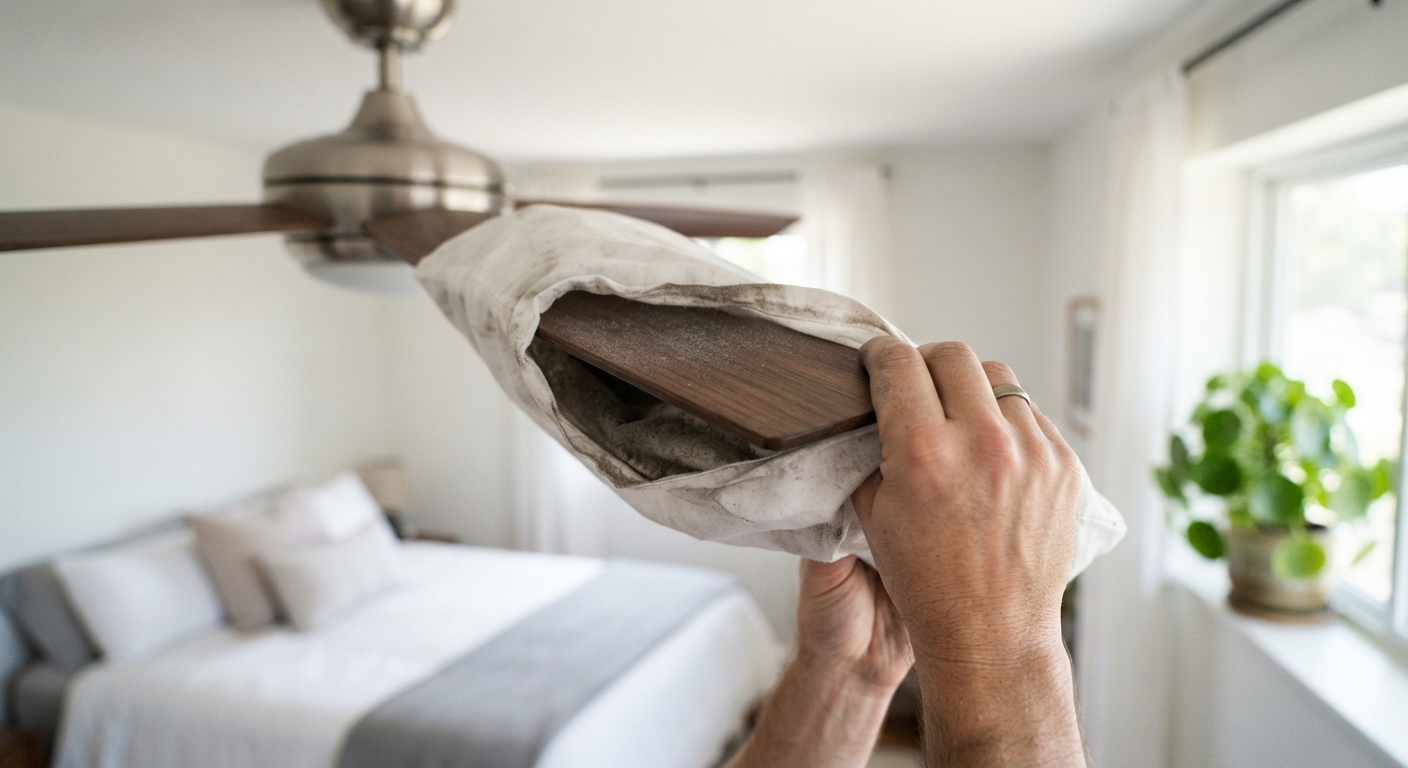
Using an old pillowcase to clean ceiling fan blades is an effective way to trap dust and prevent it from scattering around your home. This method minimizes mess, protects your furniture, and improves indoor air quality. Following the detailed steps above ensures safe and thorough cleaning every time.
Disclaimer: This article provides cleaning guidance and is not a substitute for professional maintenance or medical advice. Always prioritize safety and consult experts when needed.