5. Berries
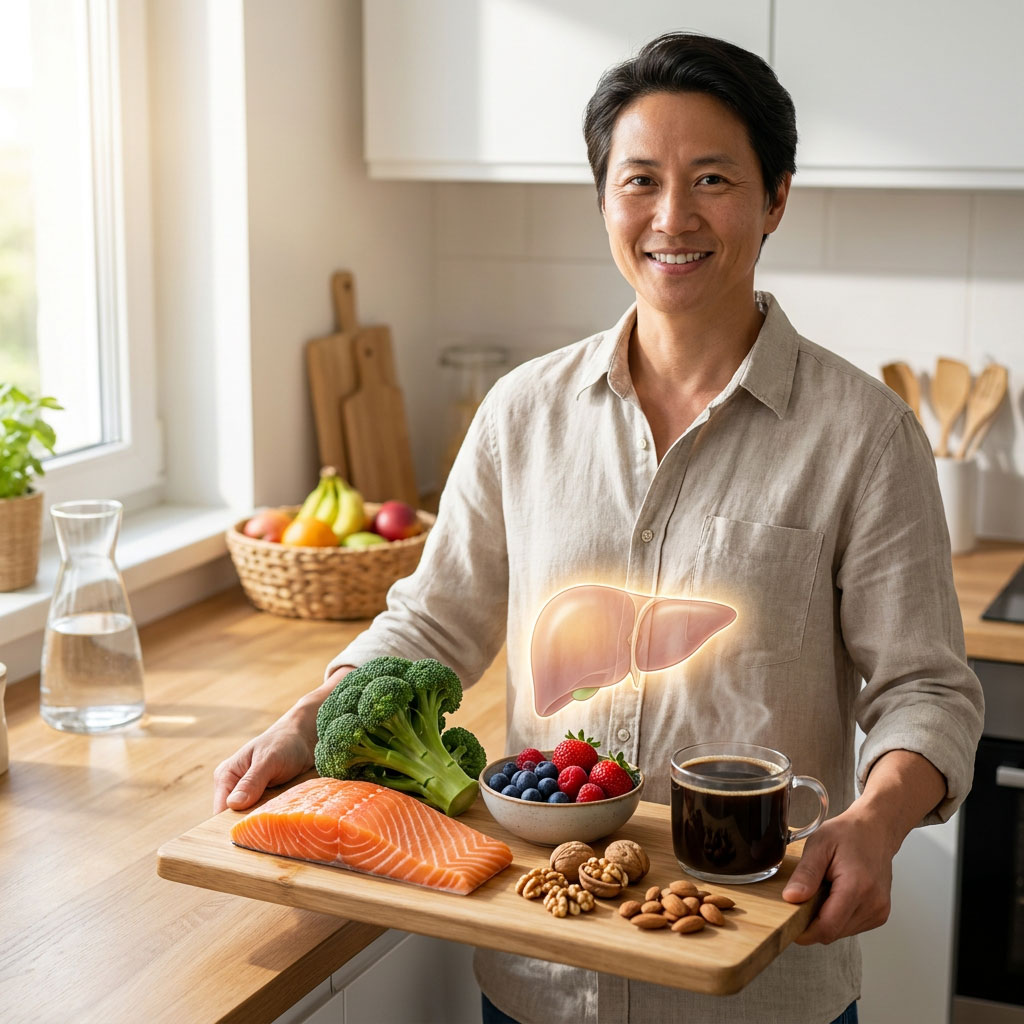
Blueberries, strawberries, raspberries, blackberries, cranberries — loaded with polyphenols and anthocyanins, the pigments behind their deep colors and much of their protective power against oxidative stress and inflammation.
Early research suggests berry compounds may help shield liver cells specifically. The human evidence is still developing, but berries earn their place easily: high in antioxidants, high in fiber, and low in sugar for a fruit — which matters, because sugar is one of the liver’s enemies. They’re one of the few sweet things that actively fits a liver-friendly diet.
Fresh or frozen both work — frozen berries keep their nutrients well.
The Supporting Cast
Not the top five, but genuinely worth building into meals: leafy greens, olive oil (a cornerstone of the liver-friendly Mediterranean pattern), oatmeal, avocados, beans and lentils, garlic, green tea (the drink, not the extract pills), and citrus fruits.
The pattern matters more than any single hero food. A diet built mostly from these, most of the time, does far more than any one “superfood” eaten occasionally.
What Actually Damages Your Liver
Protecting it is as much about what you skip as what you eat:
- Excess alcohol — still a leading cause of liver disease
- Extra weight, especially around the middle — the main driver of fatty liver
- Type 2 diabetes and insulin resistance
- Added sugar, and sugary soft drinks in particular — the liver turns excess fructose straight into liver fat
- Highly processed food
- Smoking
- Viral hepatitis
- Some medications taken incorrectly — including, easy to forget, that excess acetaminophen (Tylenol) is one of the most common causes of acute liver failure. Stay within the label dose, and be careful not to double up through combination cold-and-flu products that also contain it.
Keeping a healthy weight is the single most effective thing most people can do to protect their liver.
When to See a Doctor
Because fatty liver is silent, the strongest move isn’t watching for symptoms — it’s asking for a check if you carry risk factors (extra weight, diabetes, prediabetes, higher alcohol use). A simple blood panel, sometimes with a scan, can catch it early, while it’s still reversible.
See a provider promptly if you notice:
- Yellowing of the skin or eyes (jaundice)
- Persistent abdominal pain, especially upper right
- Unexplained fatigue
- Dark urine
- Swelling in the legs or abdomen
- Ongoing nausea
Several of these can mean disease that’s already advanced — which is exactly why catching it early, by asking rather than waiting, matters so much.
The Bottom Line
Your liver detoxifies your body every day without help, and no food or product “cleanses” it. But what you eat genuinely shapes how well it holds up — and with fatty liver disease now affecting around one in four adults, silently, that’s no longer a concern only for heavy drinkers.
Cruciferous vegetables, fatty fish, coffee, nuts, and berries have the best evidence for supporting liver health — as part of a pattern that limits alcohol, sugar, and processed food, keeps weight in a healthy range, and treats “detox” products as the risk they are, not the cure they claim to be.
The liver is remarkably good at healing itself when it’s caught early. The catch is the catching — and since it won’t tell you, that part is on you.
This article is for general information and isn’t a substitute for advice from a qualified healthcare professional.