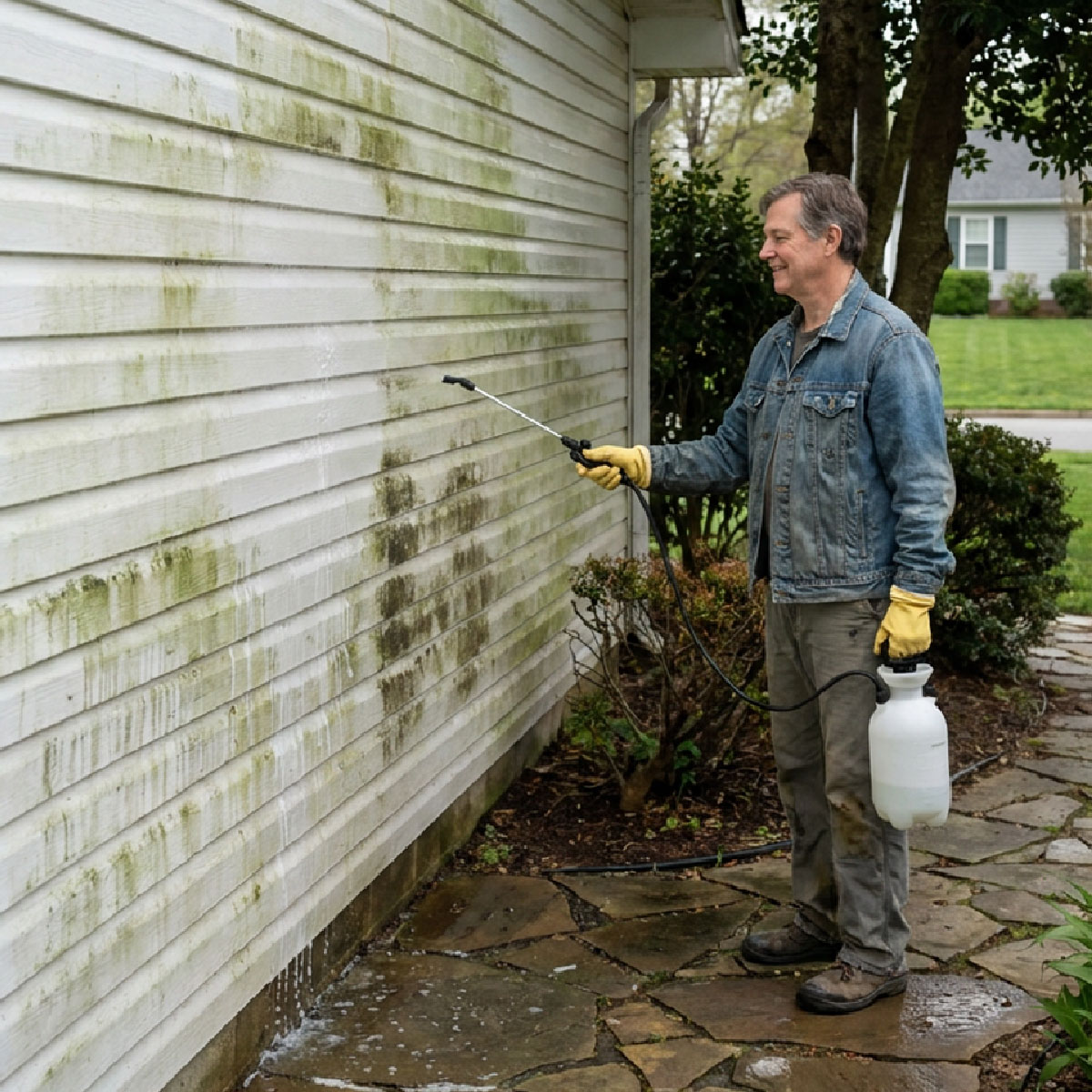
One tip many professionals use is working from the bottom upward when applying cleaner.
This helps reduce streaking as the solution runs down the wall.
When rinsing, many people work from the top downward.
Following the instructions on your chosen cleaning product is always the safest approach.
You May Not Need Heavy Scrubbing
This surprises many people.
After allowing enough time for the cleaner to work, much of the algae often rinses away with surprisingly little effort.
Stubborn spots may still need gentle brushing.
But the entire wall usually doesn’t.
That’s where the feeling of “almost no effort” comes from.
The cleaner does much of the work for you.
An Example
Imagine Mark notices green streaks covering the shaded side of his garage every spring.
His first instinct is to borrow a pressure washer.
Instead, his neighbor suggests trying an exterior siding cleaner first.
Mark sprays the cleaner, waits as directed, then rinses.
Most of the algae comes off with very little brushing.
He finishes much faster than he expected.
Another Example
Sarah notices algae returning every year behind a row of shrubs.
She cleans the siding successfully, but the stains come back the following season.
Instead of cleaning more often, she trims back the shrubs to improve airflow.
The siding dries faster after rain, and algae take much longer to return.
Sometimes preventing moisture is just as important as cleaning it.
Keeping Algae From Coming Back
No cleaning method prevents algae forever.
If the conditions remain the same, it will eventually return.
You can often slow its return by:
- Trimming bushes away from the house.
- Pruning tree branches to allow more sunlight.
- Cleaning gutters so water drains properly.
- Redirecting downspouts if water continually splashes the siding.
- Improving airflow around damp areas.
Reducing moisture is the best long-term strategy.
What About Bleach?
Some homeowners use diluted bleach solutions.
Others prefer commercial house-wash products designed specifically for siding.
Different siding materials have different recommendations.
Because bleach can damage plants, discolor some surfaces, and react with other cleaning products, it’s important to follow manufacturer instructions carefully and never mix cleaning chemicals.
If you’re unsure which cleaner is appropriate, check your siding manufacturer’s recommendations.
When Algae Might Not Be Algae
Not every green or dark stain is algae.
Sometimes it may actually be:
- Mold
- Mildew
- Dirt mixed with pollen
- Oxidation
- Water staining
If stains keep returning unusually quickly or appear inside the home as well, it may be worth investigating an underlying moisture problem.