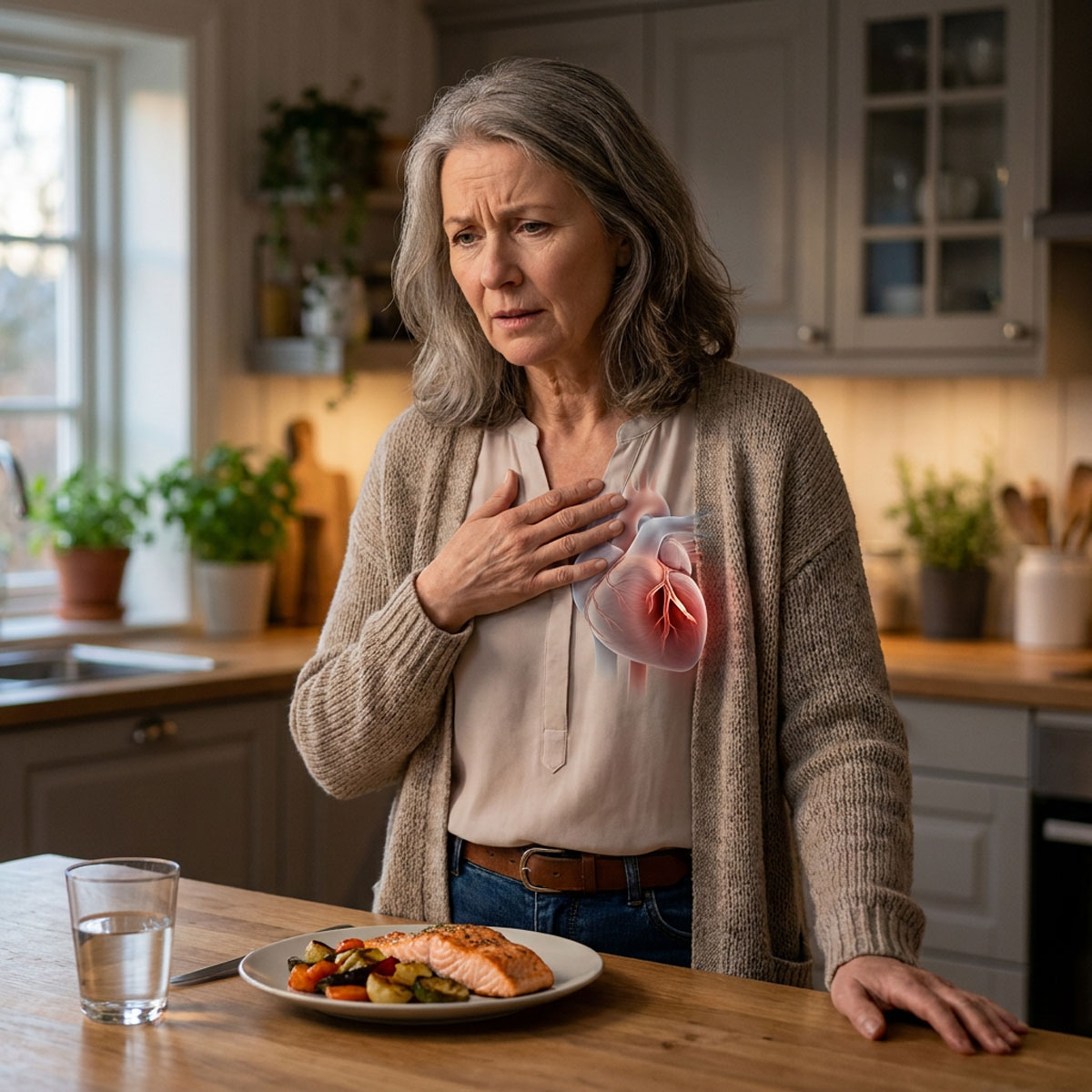
Heart attacks do not always announce themselves with dramatic chest pain and collapse.
Chest discomfort remains the most common symptom in women, but it may be described as pressure, tightness, fullness, burning, heaviness, or simply a feeling that something is not right. Women are also somewhat more likely than men to experience symptoms without chest pain or to have other symptoms such as shortness of breath, discomfort in the jaw, neck, back, shoulders, or arms, nausea, cold sweats, lightheadedness, or overwhelming fatigue.
The danger is not that these symptoms are impossible to recognize.
The danger is that they are easy to explain away.
Indigestion.
Stress.
A pulled muscle.
Poor sleep.
Getting older.
Not wanting to make a fuss.
Those explanations are understandable.
But when it comes to a possible heart attack, guessing is not your job.
Calling emergency services is.
If it turns out to be a false alarm, everyone will be relieved.
If it is a heart attack, acting quickly may save heart muscle—and it may save your life.