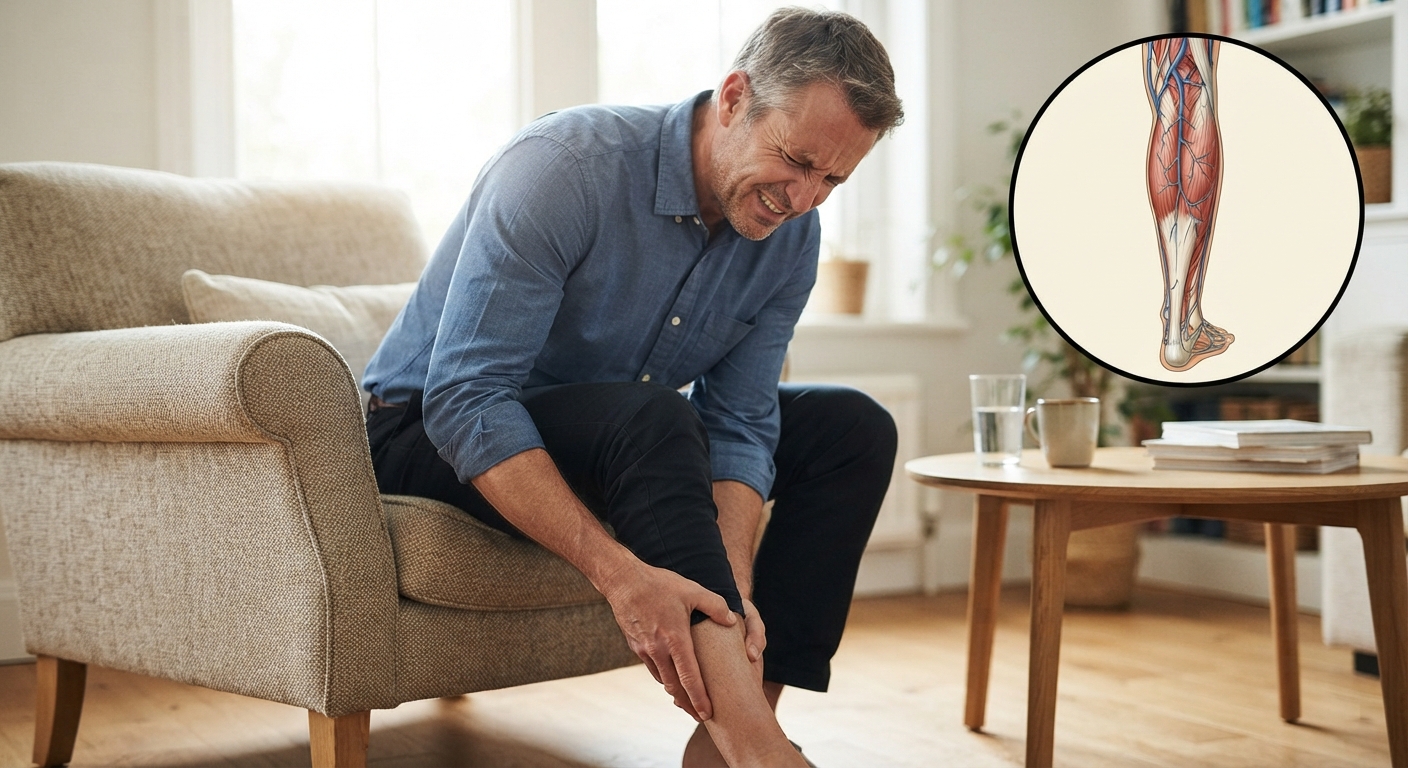
1. Dehydration and Electrolyte Imbalance
Leg cramps after sitting can often be traced back to dehydration and imbalances in key electrolytes such as potassium, calcium, and magnesium. These minerals are essential for proper muscle function, helping regulate contractions and relaxations. When your body lacks sufficient fluids or electrolytes, muscles may become overexcitable and prone to involuntary spasms or cramps.
In practice, this means if you spend long periods sitting without adequate hydration, especially in hot or dry conditions, your legs may cramp more frequently. Athletes or people who sweat excessively are also at higher risk since they lose electrolytes through sweat.
To address this, ensure you drink plenty of water throughout the day and consume a balanced diet rich in electrolytes. Foods like bananas (potassium), dairy products (calcium), and nuts or leafy greens (magnesium) support muscle health.
- Drink at least 8 glasses of water daily, adjusting up if you’re active or in hot weather.
- Include electrolyte-rich foods or consider a medically approved supplement if advised by your healthcare provider.
- Avoid excessive caffeine and alcohol, which can dehydrate you.
2. Poor Circulation and Blood Flow
Another common cause of leg cramps after sitting is impaired circulation. Sitting for prolonged periods can restrict blood flow to your legs, causing muscles to receive less oxygen and nutrients. This lack of circulation may trigger cramping as muscles struggle to function effectively.
Conditions such as peripheral artery disease (PAD), varicose veins, or even tight clothing can worsen circulation. Symptoms accompanying poor circulation might include coldness, numbness, or a tingling sensation in the legs.
Improving blood flow involves regular movement and lifestyle changes. Standing up to stretch or walk every 30 to 60 minutes during long sitting sessions can help. Compression stockings may also support circulation in some cases but should be used under medical guidance.
- Practice leg exercises or stretches during breaks to stimulate blood flow.
- Elevate your legs when resting to reduce venous pressure.
- Avoid crossing your legs for long durations, which can constrict blood vessels.