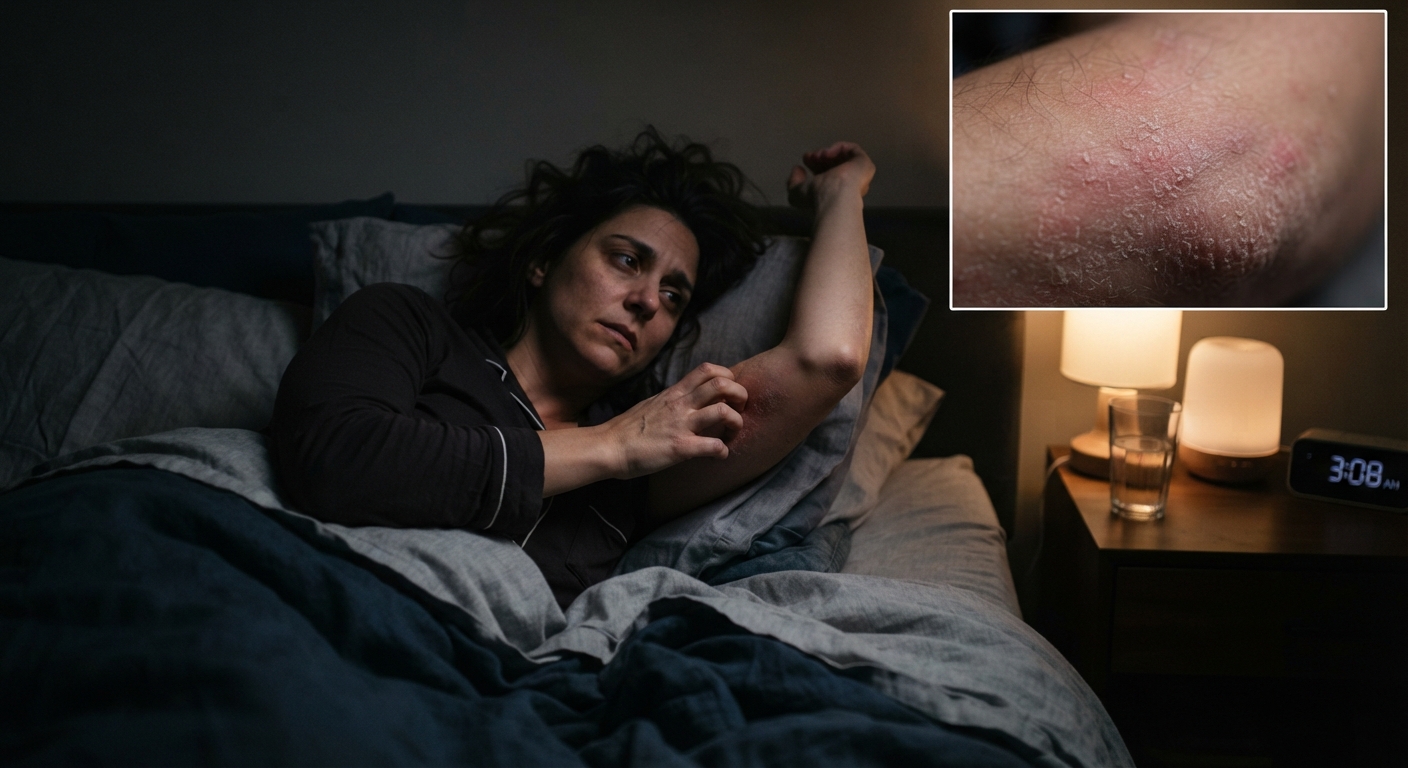
1. Dry skin
Dry skin, or xerosis, is one of the most common causes of itching that worsens at night. When skin loses moisture, it becomes rough, flaky, and prone to irritation. This dryness can intensify itching because the skin’s natural barrier is compromised, allowing irritants to penetrate more easily.
At night, the body’s temperature regulation and blood flow change, which can increase skin sensitivity and exacerbate the sensation of itch. Additionally, cooler bedroom environments or dry indoor air from heating systems further reduce skin moisture.
To manage dry skin-related itching, focus on maintaining skin hydration through:
- Regular use of fragrance-free, hypoallergenic moisturizers, ideally applied immediately after bathing to lock in moisture.
- Keeping showers or baths brief and using lukewarm water instead of hot water, which strips oils from the skin.
- Avoiding harsh soaps and detergents that can worsen dryness.
- Using a humidifier in the bedroom to maintain optimal air moisture levels.
2. Allergic reactions
Allergic reactions can cause nighttime itching due to histamine release in the skin. Common allergens include detergents, fabric softeners, certain bedding materials, and skincare products. These substances can trigger an immune response, leading to redness, swelling, and intense itching.
Since you spend several hours in bed, exposure to allergens on sheets, pillowcases, and blankets can make the itching feel worse at night. Sometimes, allergies to dust mites, which thrive in bedding, are responsible for persistent nighttime itching.
To reduce allergy-related itching:
- Use hypoallergenic bedding and wash linens frequently in hot water to eliminate dust mites.
- Avoid scented laundry products that may irritate sensitive skin.
- Consider allergy testing if symptoms persist to identify specific triggers.
- Discuss with a healthcare provider about antihistamines, which may help control nighttime itching caused by allergies.
3. Eczema flare-ups
Eczema, or atopic dermatitis, is a chronic inflammatory skin condition characterized by dry, itchy, and inflamed patches. Eczema symptoms often worsen at night due to increased skin temperature and moisture loss during sleep.
Flare-ups can be triggered by allergens, irritants, stress, or changes in weather. The intense nighttime itching associated with eczema can disrupt sleep and lead to scratching that further damages the skin barrier, increasing the risk of infection.
Managing eczema-related nighttime itching involves:
- Using prescribed topical corticosteroids or non-steroidal anti-inflammatory creams as directed by a dermatologist.
- Maintaining a strict moisturizing routine to repair and protect the skin barrier.
- Wearing breathable, soft fabrics like cotton to minimize irritation.
- Keeping bedroom temperature cool and using a humidifier to prevent skin dryness.
- Identifying and avoiding known personal eczema triggers.