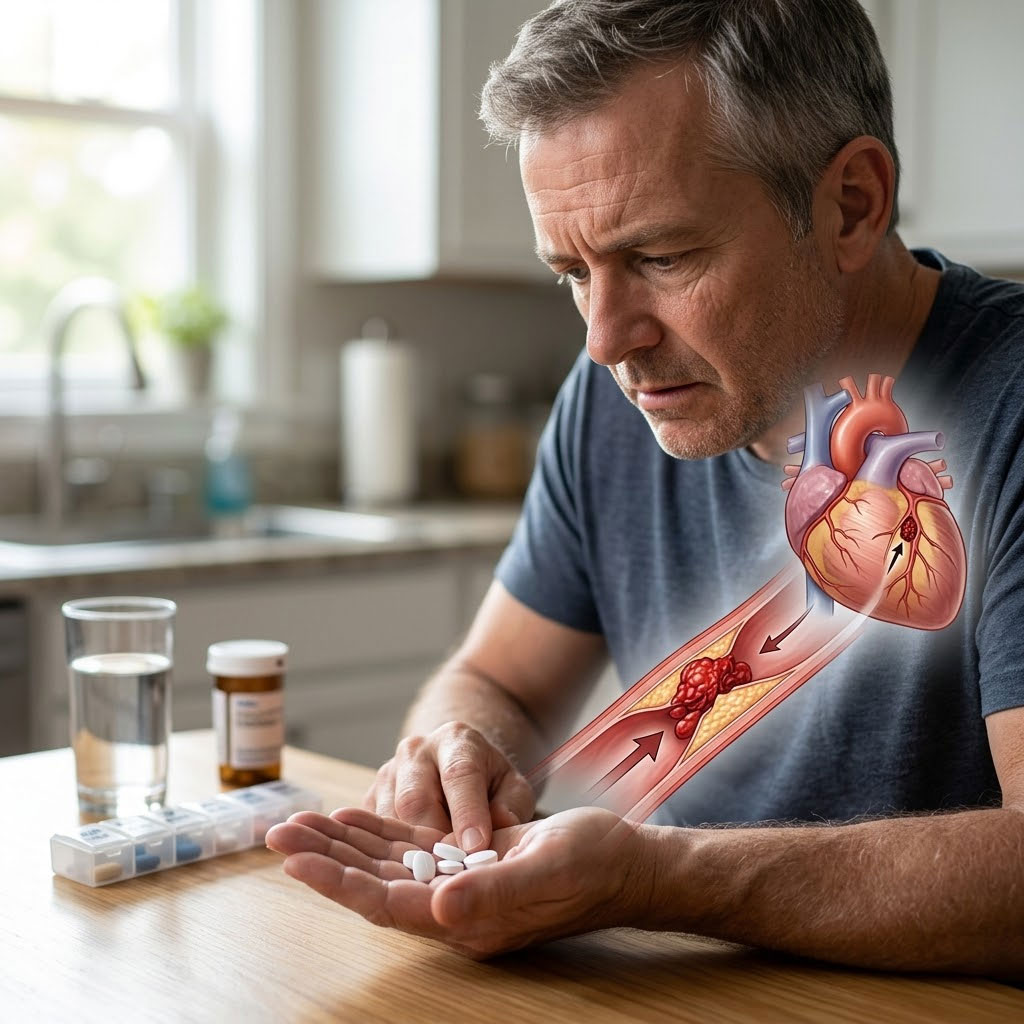
What a Clot Actually Feels Like
Whatever you take, this is the part worth committing to memory. Clots are highly treatable when caught and catastrophic when missed, and the difference is usually hours.
A clot in a leg vein — DVT. Almost always one leg, not both. That asymmetry is the single most useful clue:
- Swelling in one leg that doesn’t match the other
- Calf pain or tenderness, sometimes described as a persistent cramp that won’t release
- Warmth in the area
- Redness or a bluish discoloration
Both ankles puffy at the end of a hot day is a different thing entirely. One calf, swollen and sore, is not.
A clot that’s reached the lungs — PE. This is an emergency, and it can arrive with no leg symptoms at all:
- Sudden shortness of breath, out of nowhere, unrelated to exertion
- Sharp chest pain that gets worse when you breathe in
- Coughing up blood
- A racing heart
- Fainting or near-fainting
Sudden breathlessness plus chest pain that stabs on inhalation is a 911 call. Not a wait-and-see.
A heart attack. The classic version — crushing central chest pressure — is real, but it isn’t universal:
- Pressure, tightness, or pain in the chest
- Pain moving to the jaw, neck, shoulder, back, or arm
- Shortness of breath
- Cold sweat
- Nausea
- Sudden overwhelming fatigue
Women’s heart attacks more often skip the classic chest pain and present as fatigue, nausea, jaw or back pain, or breathlessness — which is a large part of why they’re missed and why women wait longer to call for help. If something feels profoundly wrong and you can’t name it, that is itself a reason to call.
Never drive yourself. Paramedics start treating in the ambulance and alert the hospital before you arrive.