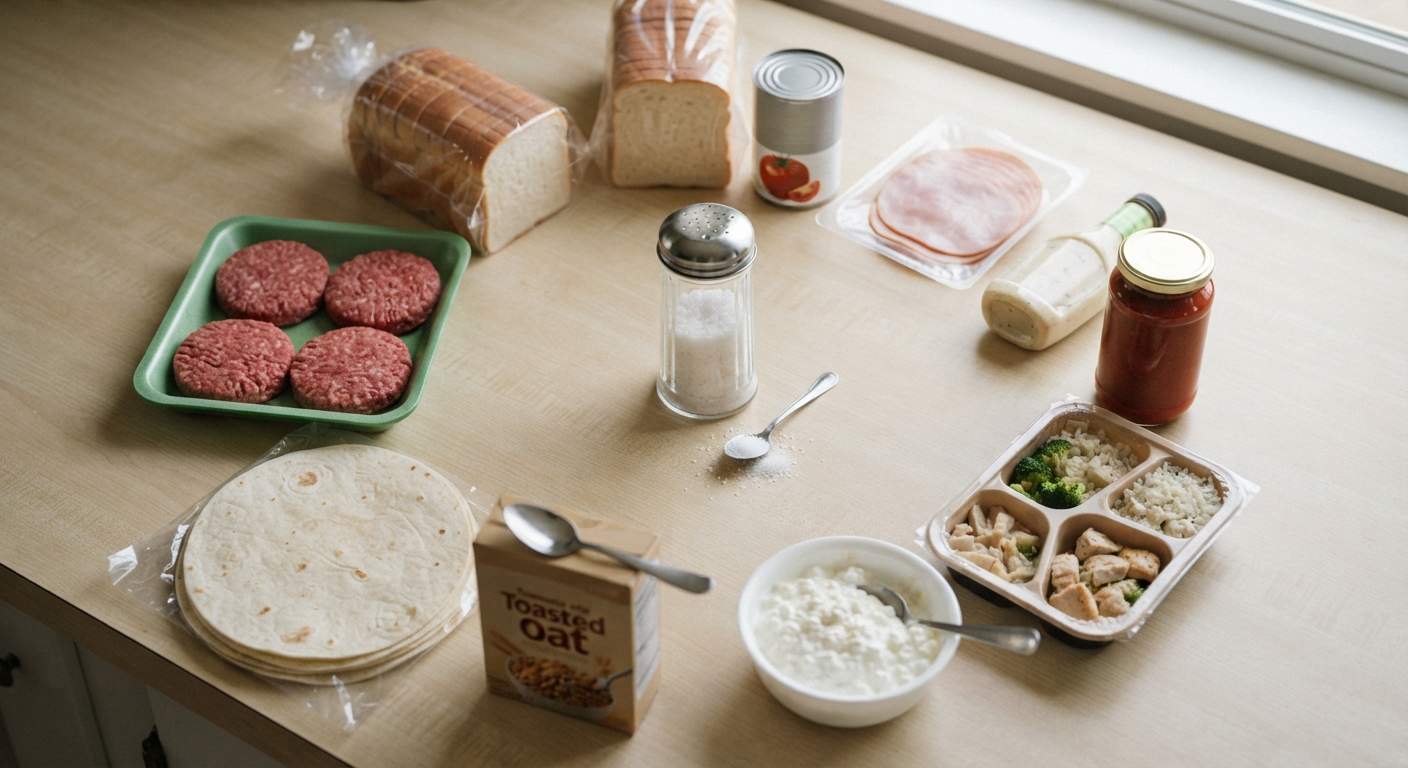
1. Bread and baked goods
Many people don’t realize that bread and baked goods can be a significant source of sodium in their diet, even though they don’t taste particularly salty. Sodium is often added during the baking process to enhance flavor, improve texture, and extend shelf life. This includes white bread, whole wheat bread, bagels, rolls, and even some pastries.
Since bread is consumed frequently and in multiple servings daily, the sodium can add up quickly. For example, two slices of sandwich bread can contain 200 to 400 milligrams of sodium, accounting for a substantial portion of the recommended daily limit.
To reduce sodium intake from bread, consider these tips:
- Choose bread labeled “low sodium” or “no salt added” when available.
- Compare nutrition labels to pick options with the lowest sodium content.
- Balance bread consumption with low-sodium foods throughout the day.
2. Canned soups
Canned soups are notorious for their high sodium content, often used as a preservative and flavor enhancer. Even soups labeled as “reduced sodium” can contain significant amounts, sometimes exceeding 700 milligrams per serving. Given that a typical can contains more than one serving, it’s easy to consume over half the daily recommended sodium limit in just one meal.
Many people consume canned soups for convenience, but it’s important to read labels carefully or consider alternatives. Homemade soups allow you to control the amount of salt added, and low-sodium broth or stock can be used in recipes.
When buying canned soups, look for:
- Labels that specify “low sodium” or “no added salt.”
- Serving sizes and total sodium per container.
- Ingredients lists to avoid those with added salty flavorings.