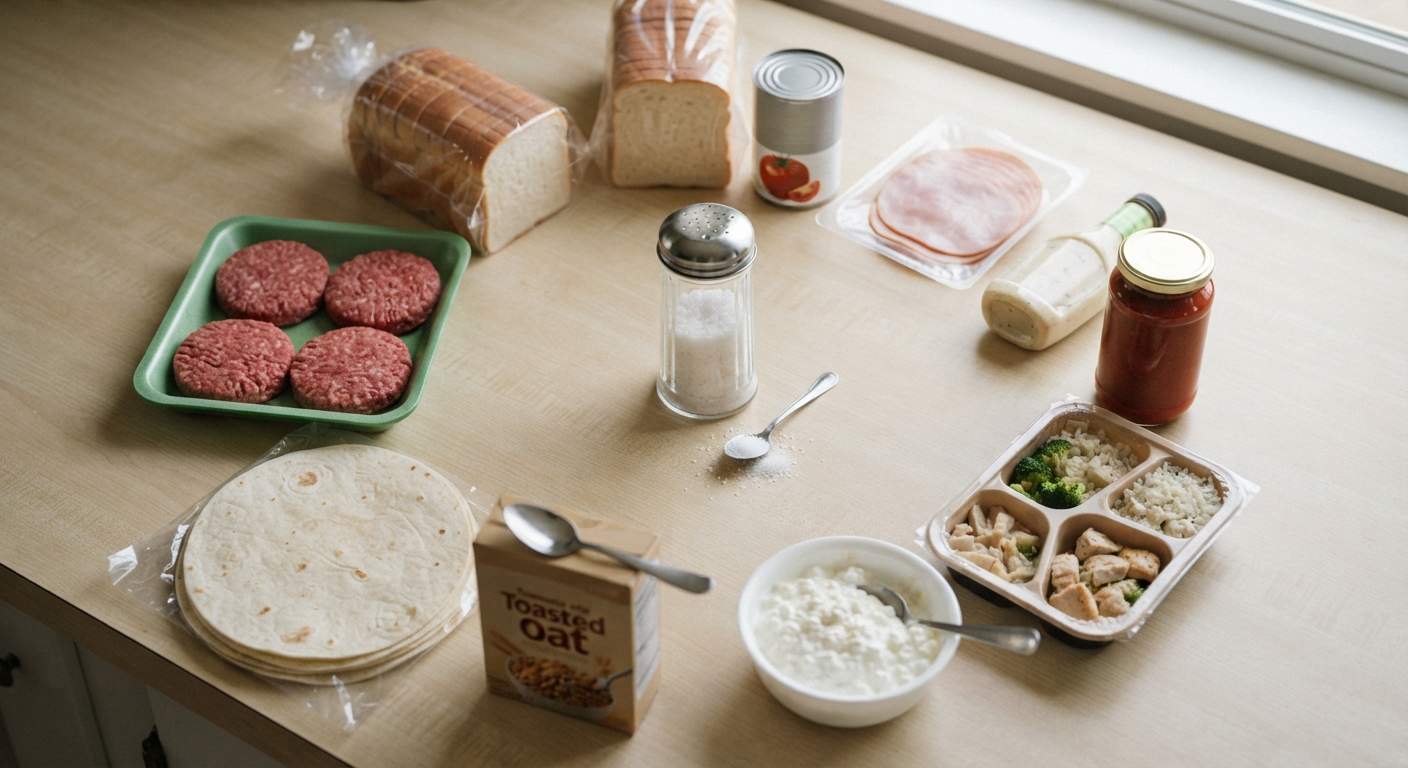
9. Tortillas and wraps
Tortillas and wraps, often seen as healthier alternatives to bread, can also be surprisingly high in sodium. Salt is added during processing to improve flavor and texture. Flour tortillas typically contain more sodium than corn tortillas, but both can contribute significantly depending on portion size.
A single large tortilla may contain 200 to 400 milligrams of sodium, which can add up quickly if multiple tortillas are eaten in one meal or when combined with other salty fillings.
To reduce sodium intake from tortillas and wraps:
- Choose corn tortillas over flour when possible, as they generally have less sodium.
- Look for brands that offer low-sodium or no-salt-added options.
- Limit the number of tortillas consumed per meal or balance with fresh, low-sodium fillings.
10. Processed burger patties
Processed burger patties found in grocery stores and fast-food outlets are often seasoned with salt and other sodium-containing preservatives. This helps enhance flavor and maintain juiciness but can push sodium content to 500 milligrams or more per patty.
Eating processed patties regularly, especially with salty buns, cheese, and condiments, can lead to a rapid increase in daily sodium intake. For individuals monitoring blood pressure or cardiovascular health, this is a significant concern.
To manage sodium from burger patties:
- Consider making fresh burger patties from lean ground meat without adding salt.
- Check labels when buying pre-packaged patties and select lower-sodium alternatives.
- Limit high-sodium toppings like processed cheese, bacon, and sauces.
When to See a Doctor
If you have high blood pressure, heart disease, kidney disease, or other health conditions affected by sodium intake, it’s important to monitor your diet closely. Sudden symptoms like swelling, persistent headaches, or dizziness may indicate complications related to sodium imbalance and warrant medical evaluation.
Always consult your healthcare provider before making significant changes to your sodium intake, especially if you are on medications such as diuretics or antihypertensives. They can provide personalized guidance and may recommend tests like a 24-hour urinary sodium measurement or blood pressure monitoring to assess your sodium status.
Conclusion
Many everyday foods contain hidden sodium that doesn’t always taste salty but can contribute significantly to your daily intake. Being aware of these sources—such as bread, canned soups, deli meats, and frozen meals—can help you make better dietary choices. Always read nutrition labels carefully, opt for low-sodium alternatives when available, and balance your meals with fresh, unprocessed foods.
Managing sodium intake is a key step in reducing the risk of hypertension and cardiovascular disease. Small changes in your food selections can add up to meaningful improvements in your overall health.
This article is for informational purposes only and is not a substitute for professional medical advice. Consult your healthcare provider for personalized recommendations.