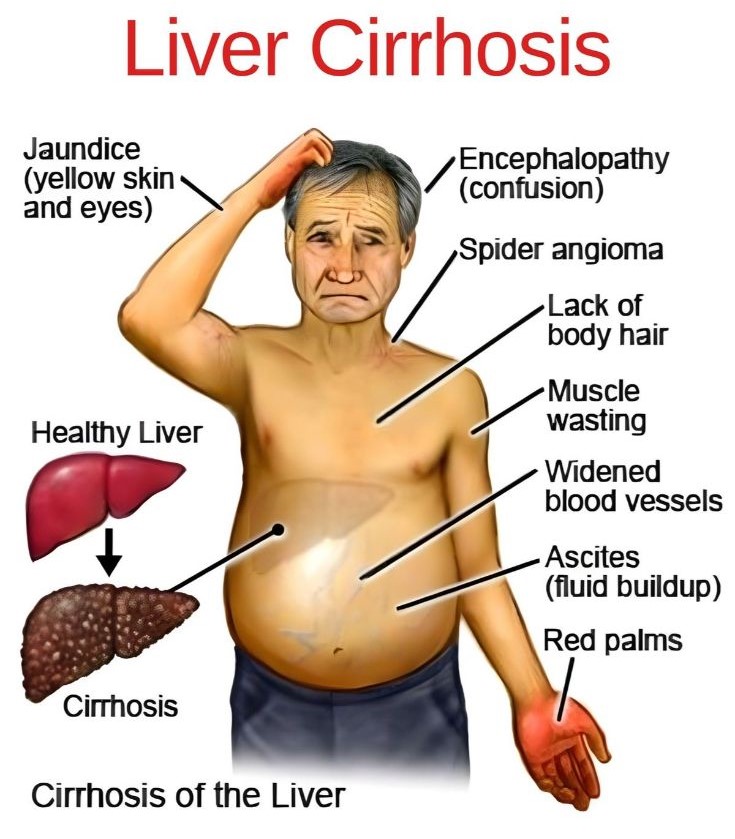
6. Widened Blood Vessels
Widened or dilated blood vessels, often visible on the skin, are another sign of liver cirrhosis. These occur because liver dysfunction causes changes in blood circulation and hormone levels, leading to vasodilation.
These widened vessels contribute to the characteristic flushed appearance seen in some patients with cirrhosis and can be a marker of increased portal pressure, a serious complication of liver disease.
7. Ascites (Fluid Buildup)
Ascites is the accumulation of fluid in the abdominal cavity and is one of the most serious complications of cirrhosis. It results from increased pressure in the portal vein (portal hypertension) combined with low albumin levels, which normally keep fluid in the blood vessels.
Patients may notice a visibly swollen abdomen, discomfort, and difficulty breathing when lying down. Ascites increases the risk of infections like spontaneous bacterial peritonitis and requires medical management that may include diuretics, salt restriction, and sometimes therapeutic paracentesis (fluid removal).
8. Red Palms
Red palms, also known as palmar erythema, occur when the blood vessels in the palms dilate, causing a red discoloration that often affects the thenar and hypothenar eminences. Like spider angiomas, this is linked to hormonal imbalances caused by liver dysfunction.
While not painful or dangerous on its own, red palms are an important visual clue that should prompt evaluation for liver disease, especially if accompanied by other symptoms.