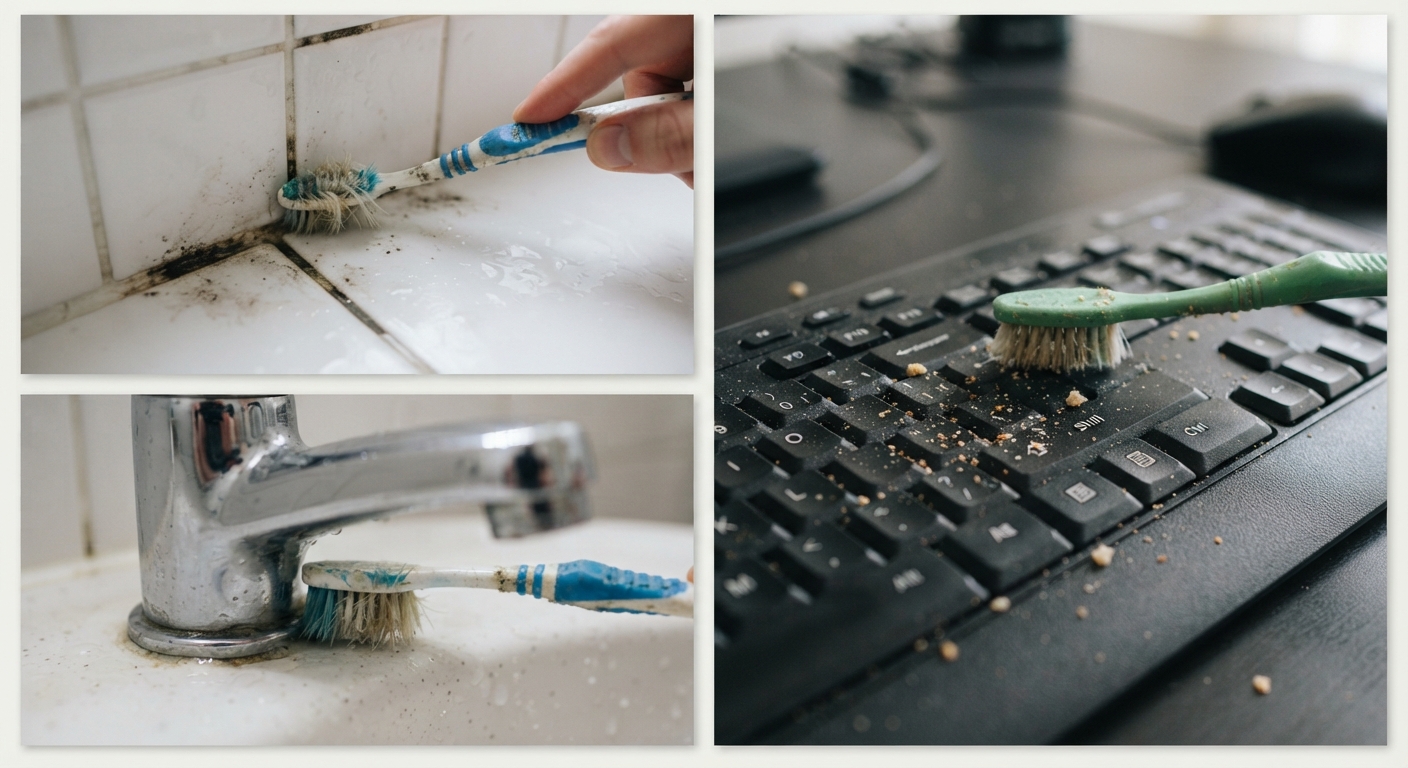
1. Clean Grout and Tiles
Old toothbrushes excel at cleaning grout lines between tiles, where dirt, mold, and mildew often accumulate. The small, stiff bristles can reach into narrow crevices that are difficult to clean with regular brushes or sponges. For best results, apply a grout cleaner or a paste made from baking soda and water directly onto the grout lines.
Use the toothbrush to scrub in a circular motion, focusing on stained or discolored areas. The toothbrush’s compact head allows for precise pressure, loosening grime without damaging the grout. After scrubbing, rinse the tiles thoroughly with warm water and wipe dry with a clean cloth to prevent water spots.
- For stubborn mold, add a few drops of hydrogen peroxide to the baking soda paste to increase effectiveness.
- Always wear gloves if using strong cleaning agents to protect your skin.
2. Detail Clean Faucets
Faucet fixtures accumulate hard water deposits, soap scum, and dirt around bases, handles, and spouts. An old toothbrush is perfect for detailed cleaning in these tight spots where cloths or sponges cannot reach. It allows you to scrub the buildup away gently but thoroughly.
Start by spraying the faucet with a mixture of white vinegar and water to help dissolve mineral deposits. Let it sit for a few minutes before scrubbing with the toothbrush. Use the brush to clean around the base, under the spout, and in any crevices, paying special attention to areas with visible buildup.
- For stainless steel or chrome faucets, avoid abrasive cleaners that can scratch the finish.
- Rinse thoroughly and buff dry with a microfiber cloth to restore shine.