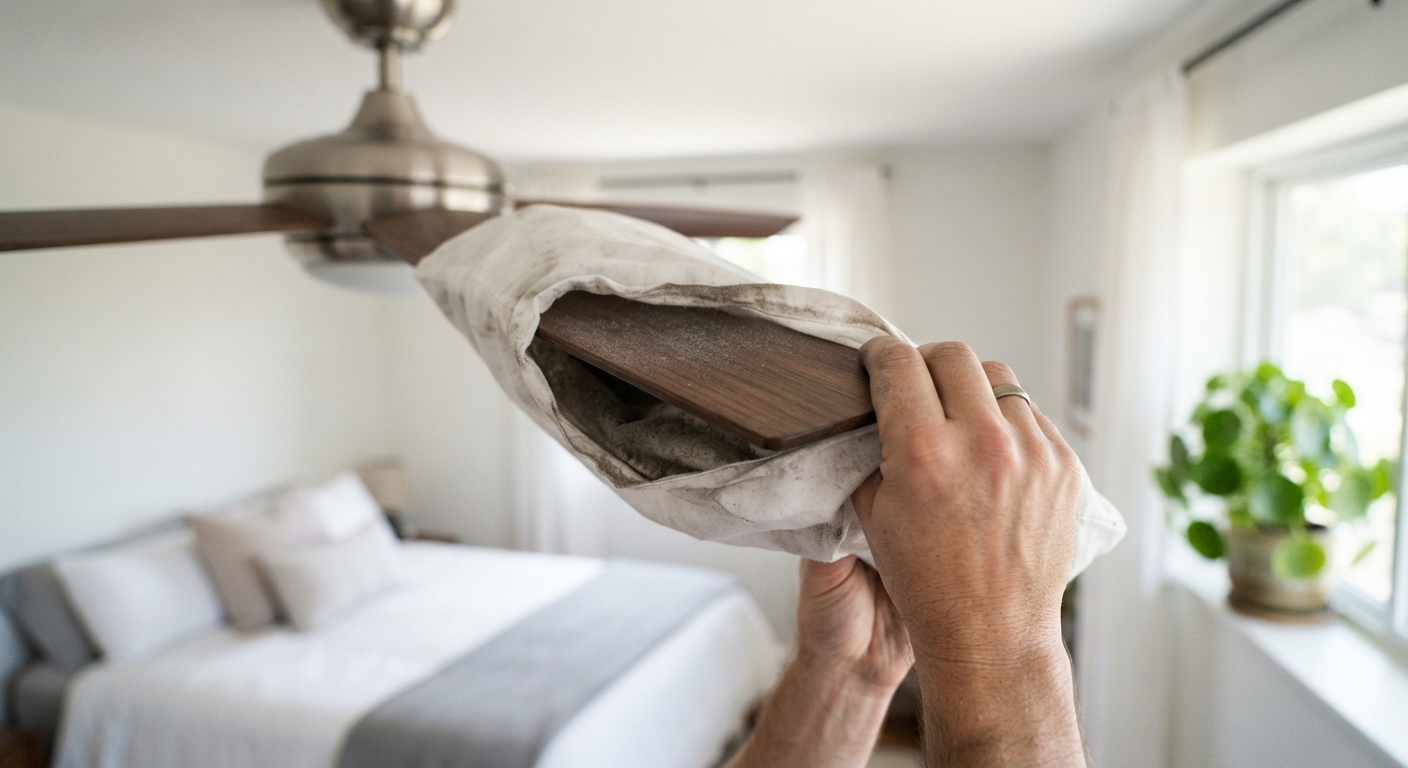
6. Dispose of dust safely
Once you have finished wiping all blades, carefully remove the pillowcase without shaking it to avoid dispersing dust into the air. Hold the open end closed as you carry it to a trash bag or outside garbage bin.
If your household has allergy or asthma concerns, consider wrapping the pillowcase in a plastic bag before disposing to contain dust particles effectively. Avoid dumping dust directly indoors where it can resettle on surfaces.
7. Wash pillowcase after use
After disposing of the dust, immediately wash the pillowcase to remove all trapped particles and allergens. Use a hot water cycle with a detergent designed to remove dust and allergens. Adding a cup of white vinegar during the rinse cycle can help break down residues and deodorize the fabric.
Dry the pillowcase thoroughly before storing it for future cleaning sessions. Regular washing prevents the buildup of dust mites and other pollutants that could affect indoor air quality.
8. Clean fan motor and housing
While the blades are the primary dust collectors, the fan motor and housing also accumulate dirt over time, which can affect performance and longevity. Use a microfiber cloth to gently wipe the motor casing, light fixtures, and any vents.
For stubborn dust in crevices, use a soft brush or compressed air canister to dislodge particles without damaging internal components. Avoid using water or liquid cleaners on the motor to prevent electrical hazards.