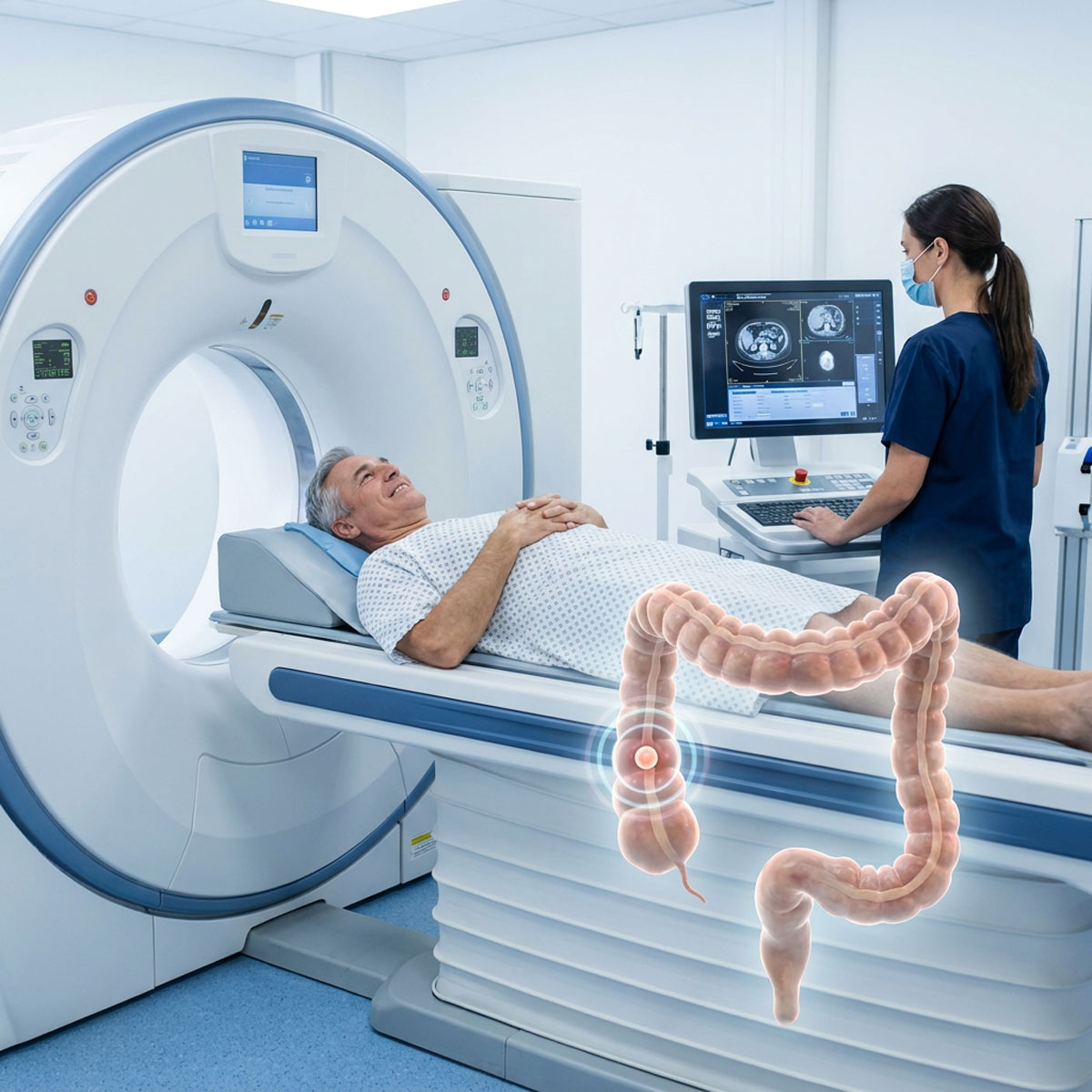
Despite its name, a virtual colonoscopy does not involve a camera traveling through the colon.
Instead, it uses a special type of CT scan to create detailed three-dimensional images of the large intestine.
During the examination, a small tube is placed just inside the rectum to gently introduce air or carbon dioxide into the colon.
This expands the colon so the CT scanner can produce clear images.
The patient then passes through the CT scanner while images are taken from different angles.
Advanced computer software combines these images into a virtual view of the inside of the colon.
Doctors can examine these images for polyps, cancers, or other abnormalities.
Why Many People Prefer It
Virtual colonoscopy offers several advantages that make it attractive to many patients.
The procedure itself is usually much shorter than a standard colonoscopy.
Most examinations are completed within 10 to 20 minutes.
No long flexible scope needs to travel through the entire colon.
Most people do not require sedation.
Because sedative medications are generally unnecessary, patients are usually able to return to normal activities shortly after the examination.
For some people, this makes scheduling much easier.
Is It Completely Non-Invasive?
Not entirely.
Although virtual colonoscopy is much less invasive than a traditional colonoscopy, it is not completely free of physical intervention.
A small tube is still inserted into the rectum to inflate the colon with gas.
This step may cause temporary pressure, fullness, or cramping.
Fortunately, these sensations usually improve quickly once the examination is finished.
Does It Replace a Traditional Colonoscopy?
This is one of the biggest misconceptions.
Virtual colonoscopy can identify many polyps and cancers.
However, it cannot remove polyps.
It cannot perform biopsies.
If the scan finds a suspicious growth, a traditional colonoscopy is usually still needed to remove or sample the abnormal tissue.
In other words, some people may ultimately need two procedures instead of one.