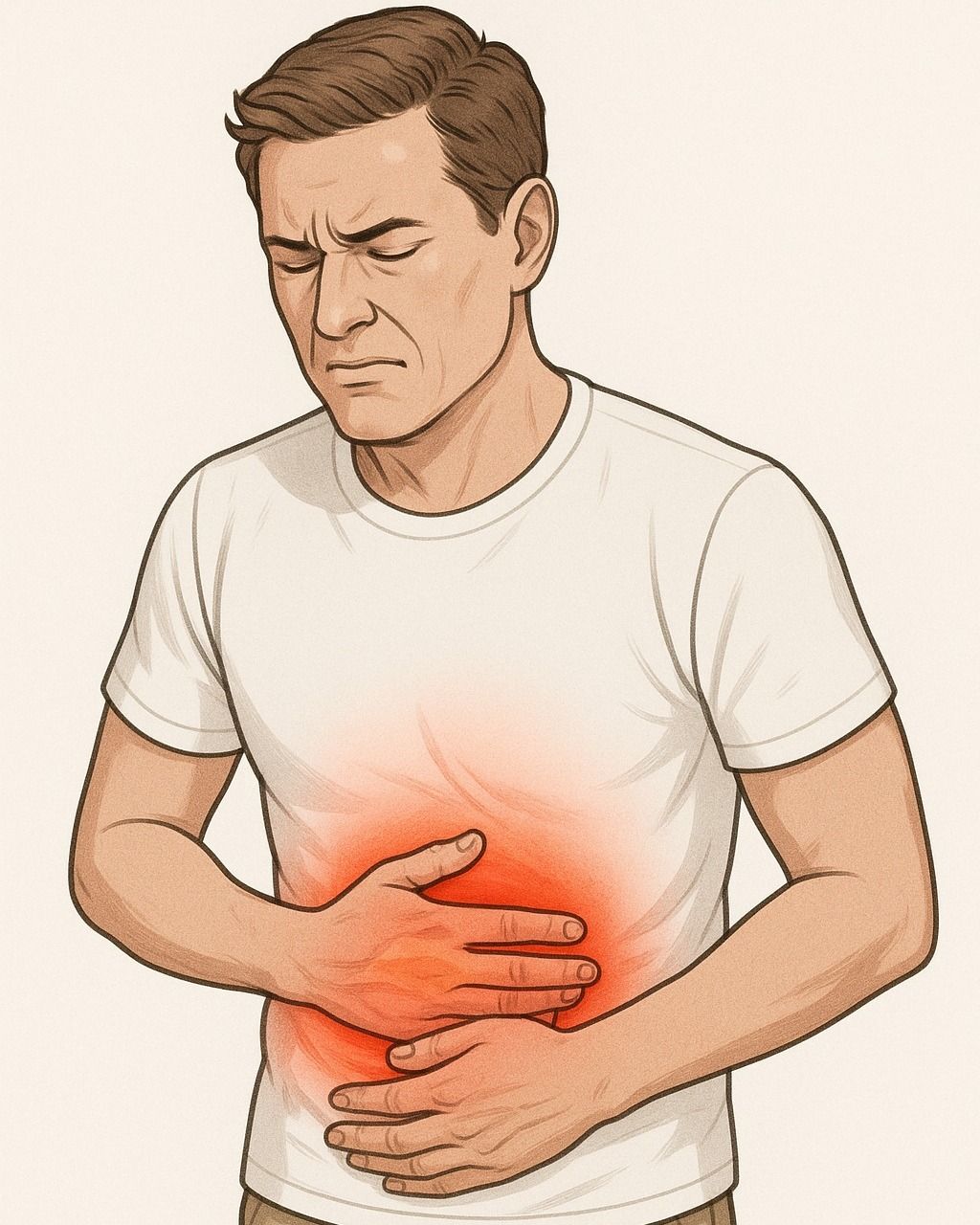
1. Acid Reflux
Acid reflux occurs when stomach acid flows back into the esophagus, irritating its lining and causing a burning sensation commonly known as heartburn. This condition is often persistent and may be mistaken for generic stomach pain. Besides heartburn, acid reflux can cause regurgitation of sour or bitter-tasting acid, difficulty swallowing, and a chronic cough.
Chronic acid reflux, or gastroesophageal reflux disease (GERD), can lead to complications like esophagitis or Barrett’s esophagus if left untreated. The pain is typically experienced in the upper abdomen or chest and may worsen after meals, when lying down, or bending over.
Management often includes lifestyle modifications such as avoiding trigger foods (spicy, fatty, or acidic), eating smaller meals, and elevating the head during sleep. Over-the-counter antacids can provide temporary relief, but persistent symptoms should be evaluated by a healthcare provider. Prescription medications like proton pump inhibitors or H2 blockers may be necessary to reduce acid production.
2. Gastric Ulcers
Gastric ulcers are open sores that develop on the lining of the stomach due to the breakdown of the protective mucosal layer. These ulcers cause persistent stomach pain that may feel like a burning or gnawing sensation, often occurring a few hours after eating or during the night.
The primary causes include infection with Helicobacter pylori bacteria and prolonged use of nonsteroidal anti-inflammatory drugs (NSAIDs). If untreated, ulcers can lead to serious complications such as bleeding, perforation, or gastric obstruction.
Diagnosis typically involves upper endoscopy and testing for H. pylori infection. Treatment includes antibiotics to eradicate the infection and medications to reduce stomach acid, such as proton pump inhibitors. Avoiding NSAIDs and smoking cessation are important preventive measures.