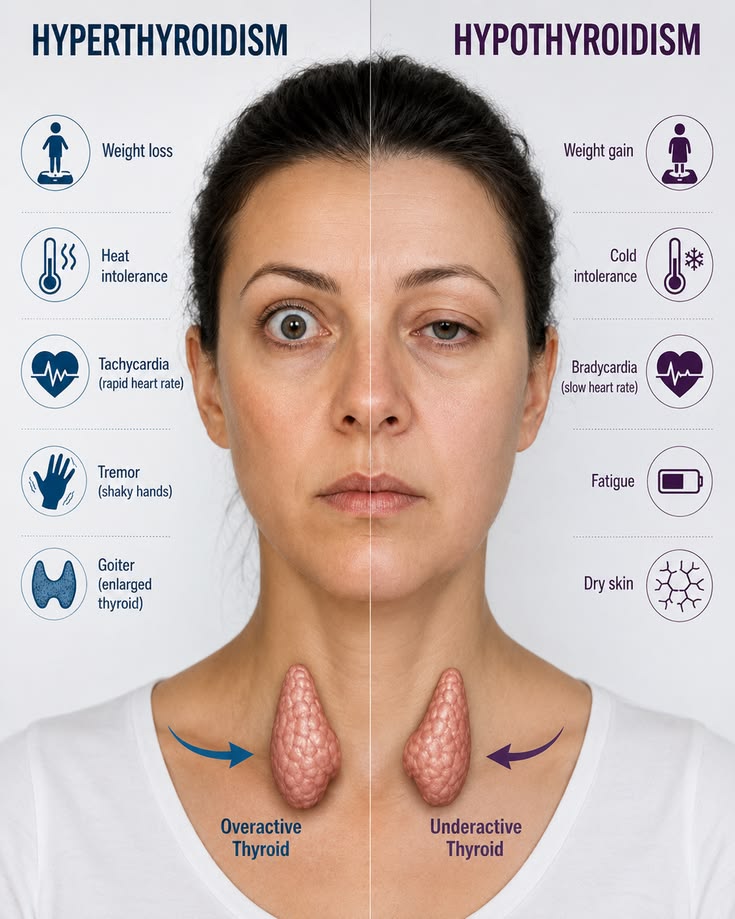
Thyroid Problems Can Look Opposite but Need Equal Urgency
If you experience rapid weight loss, tremors, or a racing heart, or conversely, unexplained weight gain, fatigue, and cold intolerance, your thyroid might be out of balance. Distinguishing between an overactive thyroid (hyperthyroidism) and an underactive thyroid (hypothyroidism) is crucial because each requires very different treatments and has distinct health risks.
Why Early Detection Matters
Both hyperthyroidism and hypothyroidism affect millions worldwide and can lead to serious complications if untreated. For example, untreated hyperthyroidism can cause heart problems, while hypothyroidism can lead to severe fatigue and cognitive issues. Recognizing the signs early can save you from costly medical interventions later.
How to Tell If Your Thyroid Is Overactive or Underactive
Start by checking your symptoms against two broad categories:
- Overactive Thyroid (Hyperthyroidism): Symptoms like rapid heartbeat (tachycardia), heat intolerance, weight loss, and hand tremors indicate your thyroid is producing too much hormone.
- Underactive Thyroid (Hypothyroidism): Symptoms such as slow heartbeat (bradycardia), cold intolerance, fatigue, weight gain, and dry skin suggest your thyroid is not producing enough hormone.
These symptoms can overlap with other conditions, so it is essential to see a healthcare professional for blood tests measuring thyroid hormone levels.
Check Your Medicine Cabinet
Certain medications can affect thyroid function or mimic its symptoms. For example, lithium and amiodarone are known to impact thyroid hormone production. If you are on these or similar drugs and notice thyroid-related symptoms, consult your doctor promptly.
The Cost of Ignoring Thyroid Symptoms
Untreated thyroid disorders can lead to complications requiring expensive treatments like surgery or lifelong hormone replacement therapy. Early diagnosis through blood tests costs significantly less and allows for simpler management with medication.
On average, blood tests to check thyroid function cost between $50 and $150 without insurance, whereas untreated complications can cost thousands in hospital and specialist fees.
Understanding these distinctions helps you make informed decisions about your health and seek timely care.
Here are the 10 key signs that reveal whether your thyroid is overactive or underactive. Number 3 is the one that often goes unnoticed but has serious heart implications.