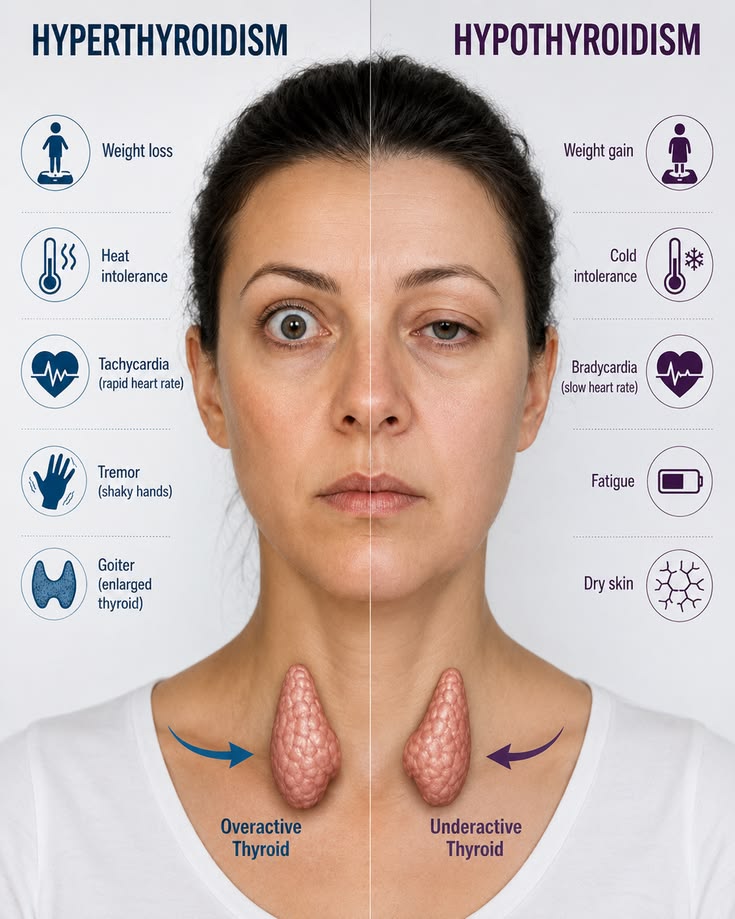
1. Weight changes
Weight fluctuations are among the most noticeable signs of thyroid imbalance. An overactive thyroid (hyperthyroidism) typically accelerates metabolism, leading to unexplained weight loss even when appetite and food intake remain normal or increase. This happens because excessive thyroid hormones stimulate the body’s cells to burn energy faster.
Conversely, an underactive thyroid (hypothyroidism) slows metabolism, causing weight gain that can be difficult to reverse simply by adjusting diet or exercise. The body conserves energy, reducing calorie expenditure and promoting fat accumulation.
It’s important to note that these weight changes can be subtle at first and may worsen over time. If you experience significant unexplained weight loss or gain lasting several weeks to months, it’s advisable to get your thyroid function tested with blood tests measuring TSH, free T4, and free T3 levels.
2. Temperature sensitivity
Temperature sensitivity is another hallmark of thyroid dysfunction, reflecting how the thyroid regulates your body’s heat production. With hyperthyroidism, you may experience heat intolerance, feeling unusually warm, sweating excessively, or struggling to tolerate hot weather.
In contrast, hypothyroidism diminishes heat generation, often making individuals sensitive to cold temperatures. You might find yourself needing extra layers or having cold extremities even in mild conditions.
These temperature changes are tied to the thyroid’s role in controlling basal metabolic rate, which influences how much heat your body produces. Persistent and unexplained temperature sensitivity in either direction warrants discussion with your healthcare provider, especially if accompanied by other symptoms.