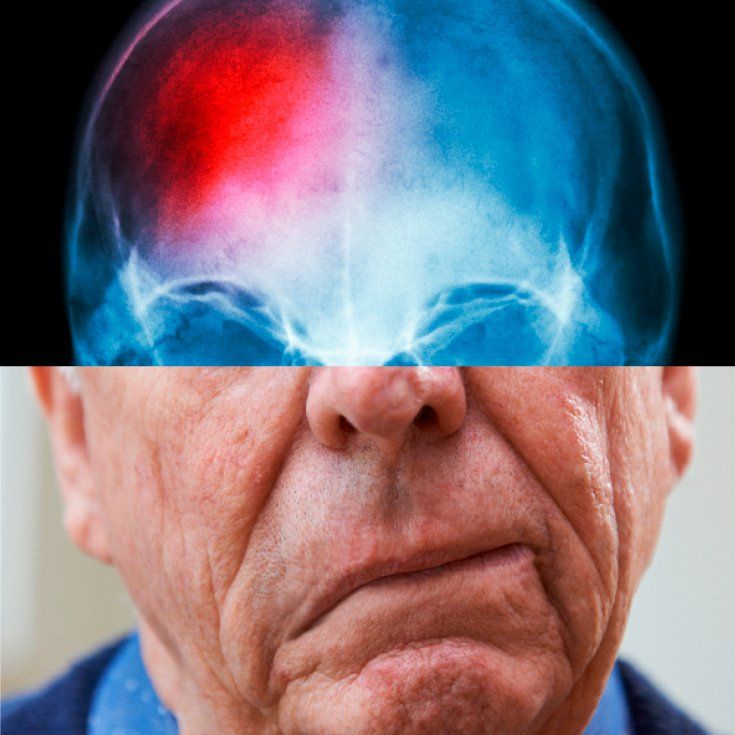
3. Speech difficulty
Speech difficulty during a stroke can manifest as slurred speech, garbled words, or an inability to speak at all (aphasia). This occurs when the stroke affects areas of the brain responsible for language production and comprehension, such as Broca’s or Wernicke’s areas.
Someone having a stroke may suddenly struggle to find words, repeat phrases, or may be unable to understand spoken or written language. Their speech may sound slow, unclear, or nonsensical.
Quickly identifying speech difficulty is essential because it often signals a large vessel stroke that can benefit from urgent clot-busting treatments or thrombectomy procedures.
- Ask the person to repeat a simple sentence.
- Listen for slurred, slow, or incoherent speech.
- Check if they have trouble understanding questions.
4. Sudden confusion
Sudden confusion or altered mental status is a warning sign indicating that the stroke has affected cognitive areas of the brain. This can include difficulty understanding simple concepts, disorientation about time or place, or inability to recognize familiar people or surroundings.
This symptom can be subtle but is highly significant, especially when it appears abruptly. It may be mistaken for intoxication or other conditions, but when combined with other stroke signs, it requires immediate evaluation.
Confusion results from reduced oxygen supply to parts of the brain responsible for memory, reasoning, and awareness.
- Ask simple questions about the date or location.
- Observe if the person seems unusually disoriented or forgetful.
- Note any sudden behavioral changes.
5. Vision problems
Sudden vision loss or double vision can occur when a stroke affects the visual pathways or the occipital lobe of the brain. This may present as partial or complete loss of vision in one or both eyes or as difficulty focusing.
Vision problems can include blurred vision, blackened areas in the visual field, or seeing double images. These symptoms can severely impact the person’s ability to navigate and respond to their environment.
Because vision loss can also be caused by other urgent conditions such as retinal artery occlusion, any sudden visual disturbance should prompt immediate medical attention.
- Check for sudden loss of vision in one or both eyes.
- Ask if the person experiences double or blurred vision.
- Note any difficulty tracking moving objects.