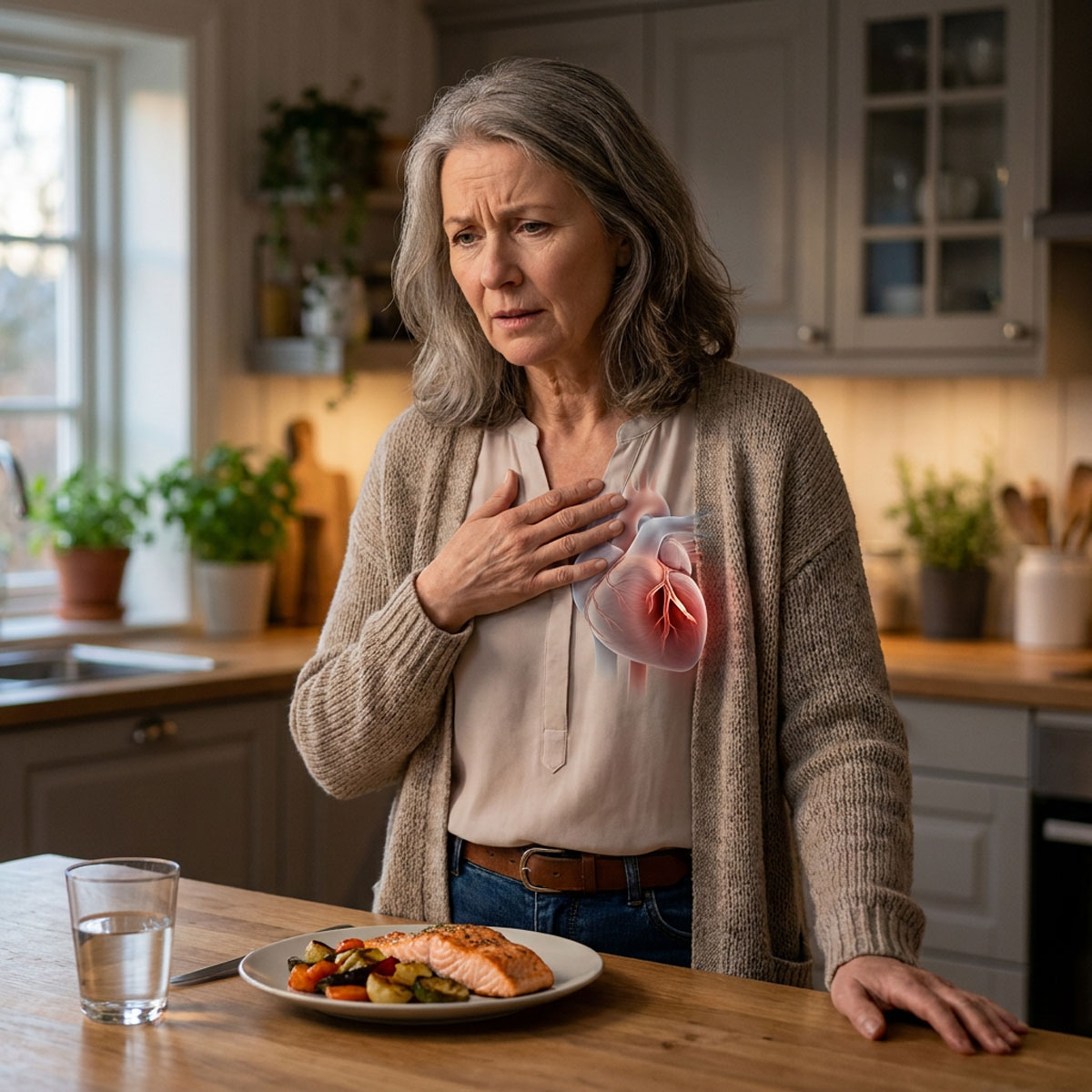
Imagine this example.
Linda is 67.
She finishes dinner and notices pressure in the middle of her chest.
She feels slightly sick to her stomach.
She assumes the meal was too rich.
She decides she’ll feel better after a night’s sleep.
That explanation is completely understandable.
Many of us have experienced indigestion before.
The problem is not that she was foolish.
The problem is that a heart attack can feel surprisingly similar.
Or consider another example.
Margaret has been helping care for her grandchildren all week.
One afternoon she notices unusual shortness of breath walking up stairs she climbs every day.
Her upper back aches.
She blames fatigue and lifting children.
Again, the explanation sounds perfectly reasonable.
That is exactly why heart attacks are sometimes missed.
The symptoms often fit everyday life.
It’s Not Just the Person Who Misses It
For many years, heart disease was commonly pictured as a man’s illness.
That image became deeply rooted in public awareness.
As a result, symptoms in women have sometimes been attributed to anxiety, stress, digestive problems, or muscle strain more often than heart disease.
Women are also more likely to arrive at the hospital later than men after symptoms begin.
This is a well-recognized issue that medicine continues to address through better research, education, and awareness.
The goal is not to blame anyone.
It is to help people recognize heart attacks sooner.
Time Really Matters
Every minute counts during a heart attack.
When blood flow to part of the heart is blocked, heart muscle begins to suffer damage.
The longer the blockage continues, the greater the injury can become.
Modern treatments can restore blood flow and save heart muscle.
But they work best when they are given early.
That is why waiting to “see if it passes” is so dangerous.
The delay, not the uncertainty, is often what causes the greatest harm.