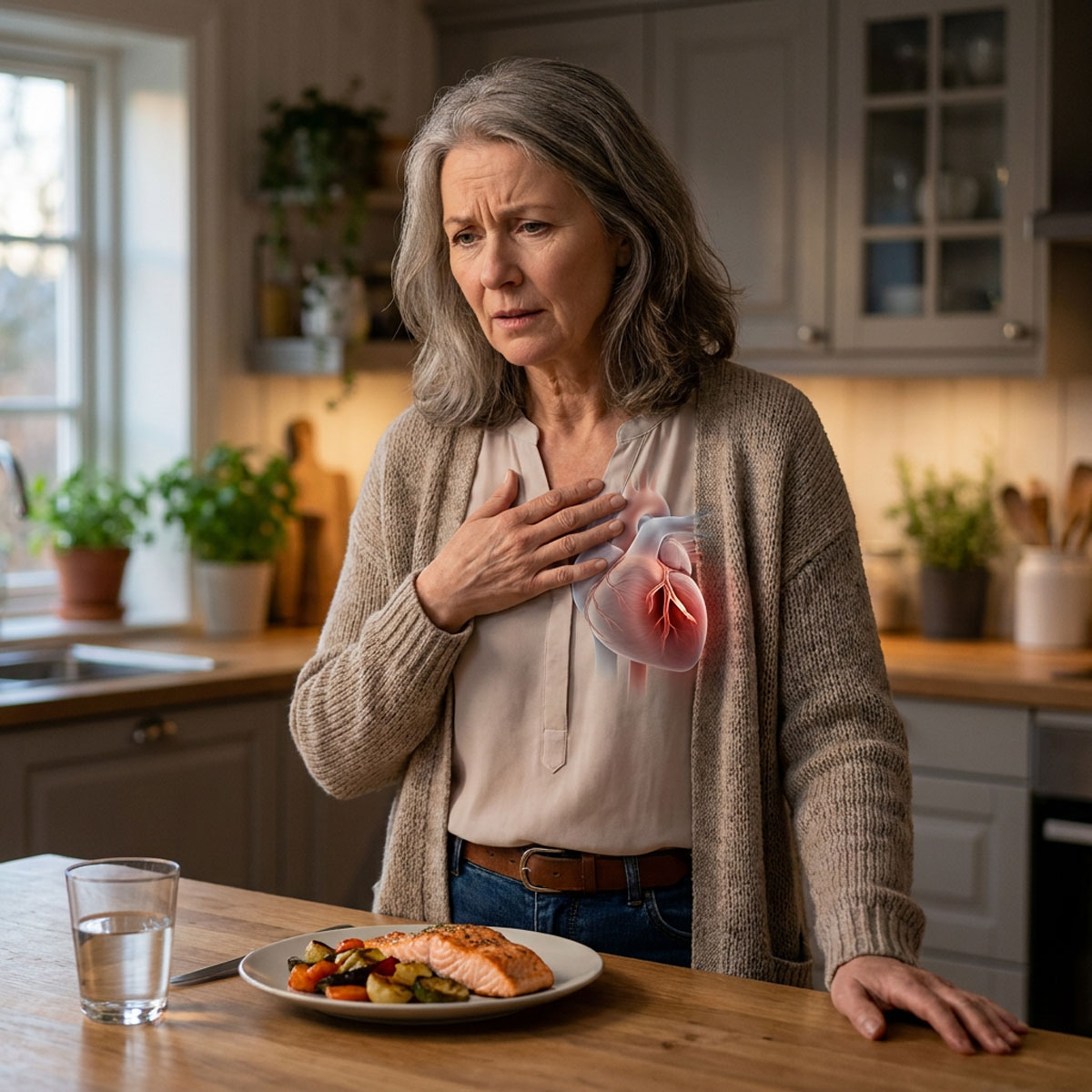
Many people think they can simply have a family member drive them to the hospital.
Others decide to drive themselves.
Neither is the safest option.
Emergency medical teams can begin assessment and treatment while you are on the way to the hospital.
They can monitor your heart, communicate with the hospital ahead of your arrival, and respond immediately if your condition suddenly worsens.
A private car cannot do any of those things.
If it turns out not to be a heart attack, that is good news.
No one will be upset that you called.
Emergency departments would much rather evaluate someone whose symptoms turn out to have another cause than care for someone who waited hours because they hoped things would improve.
Diabetes Can Make Heart Attacks Quieter
People with long-standing diabetes sometimes experience heart attacks differently.
Over time, diabetes can affect the nerves that normally help carry pain signals.
Because of these nerve changes, some warning symptoms may feel less intense than expected.
That does not mean the heart attack is less serious.
It simply means the body may send quieter signals.
This is one more reason not to judge the seriousness of symptoms by how painful they are.
“I’m Just Getting Older”
Many women attribute new symptoms to aging.
They notice less energy.
More breathlessness.
Occasional discomfort.
A little nausea.
Perhaps they have been sleeping poorly.
Perhaps life has been stressful.
Perhaps they have simply been doing too much.
These explanations are often reasonable.
But when symptoms are new, unusual, or different from your normal experience, it is safer to consider that they may deserve urgent medical attention.
Your job is not to diagnose yourself.
Your job is to recognize that something may be wrong and let emergency professionals evaluate you.
The Heart Attack You Can’t Feel
Returning to silent heart attacks, it is worth remembering what makes them different.
By definition, you cannot recognize a truly silent heart attack while it is happening because you are unaware of it.
Sometimes the only clue appears later during routine heart testing.
An ECG or another heart examination may reveal evidence of an old heart attack that the person never realized had occurred.
While you cannot catch a silent heart attack in the moment, you can reduce your future risk by taking common cardiovascular risk factors seriously.
Managing blood pressure, cholesterol, diabetes, and avoiding smoking all help protect the heart.
And if you remember an episode from weeks or months ago that never seemed quite right—even if it has completely passed—it is worth mentioning it to your doctor.
Sometimes the heart still carries the record of what happened.
Don’t Let Uncertainty Make the Decision
Perhaps the most important message is this.
You are not expected to know whether you are having a heart attack.
You are not expected to diagnose yourself.
Symptoms do not always follow a script.
They can be dramatic.
They can be subtle.
They can feel like pressure instead of pain.
They can resemble indigestion, anxiety, muscle strain, or exhaustion.
That uncertainty is exactly why emergency services exist.
If the symptoms suggest the possibility of a heart attack, calling for help is the right decision.
Being wrong is far safer than being late.