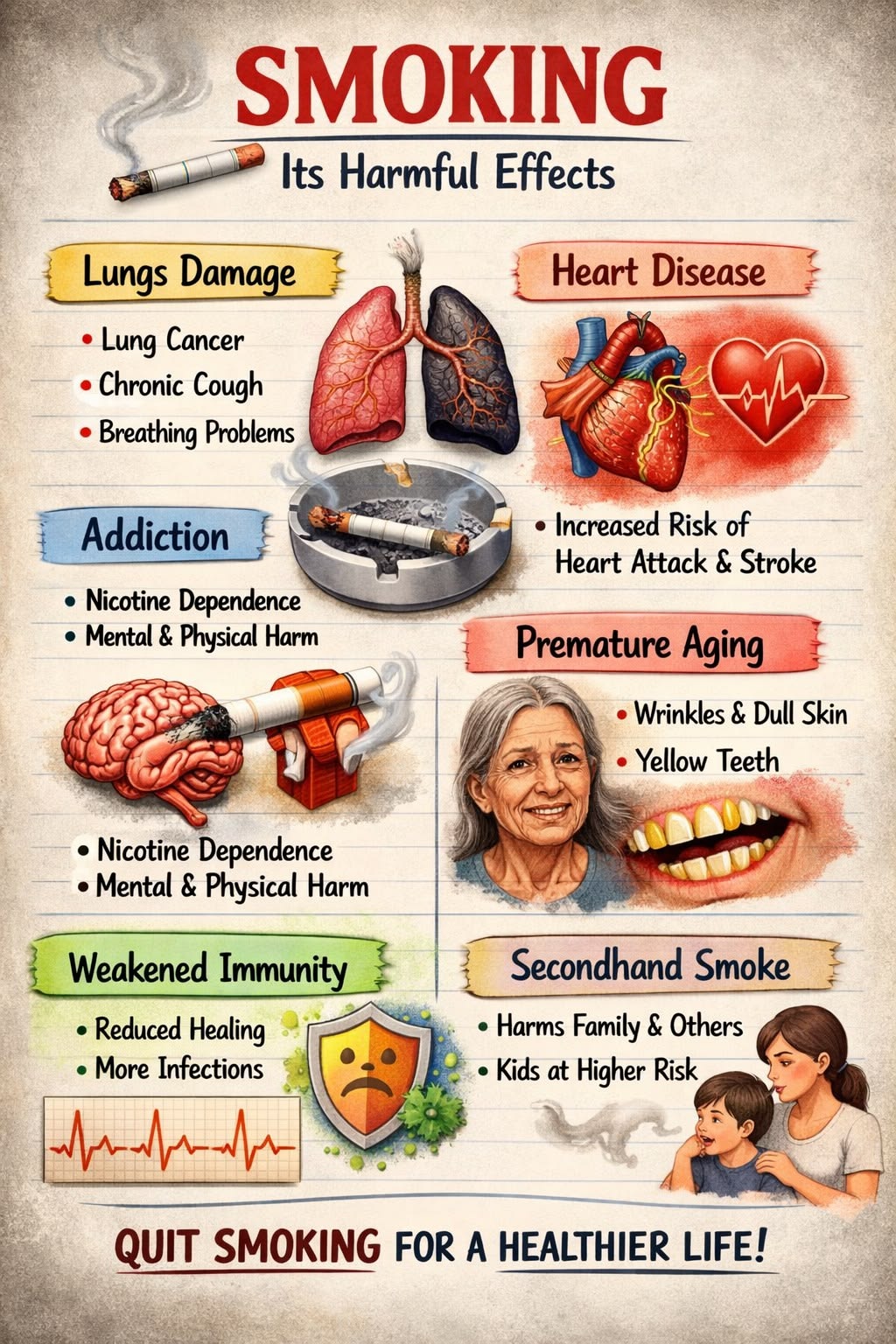
3. Addiction
Nicotine is the primary addictive substance in cigarettes, creating both mental and physical dependence. When inhaled, nicotine rapidly reaches the brain, triggering the release of dopamine—a neurotransmitter associated with pleasure and reward. This reinforces the smoking behavior and makes quitting difficult.
Beyond the immediate addiction, nicotine alters brain chemistry over time, leading to withdrawal symptoms such as irritability, anxiety, and strong cravings when not smoking. These symptoms often cause relapse, making long-term cessation challenging without support.
- Nicotine replacement therapies (patches, gum, lozenges) can help manage withdrawal.
- Behavioral counseling increases the likelihood of successful quitting.
- Medications like varenicline may be prescribed to reduce cravings under medical supervision.
4. Premature Aging
Smoking accelerates the visible signs of aging, especially in the skin and teeth. The chemicals in tobacco reduce blood flow to the skin, depleting oxygen and nutrients essential for repair and regeneration. This leads to wrinkles, sagging, and a dull complexion.
Additionally, smoking damages collagen and elastin fibers, which maintain skin elasticity and firmness. The repetitive pursing of lips during smoking also contributes to fine lines around the mouth.
Teeth discoloration and yellowing are common due to tar and nicotine deposits, which also increase the risk of gum disease and tooth loss.
- Signs to watch for include deep wrinkles, leathery skin texture, and yellowed teeth.
- Sun protection and skincare can mitigate some damage but cannot reverse all effects caused by smoking.
- Quitting smoking improves skin tone and slows further aging.