6. Energy levels
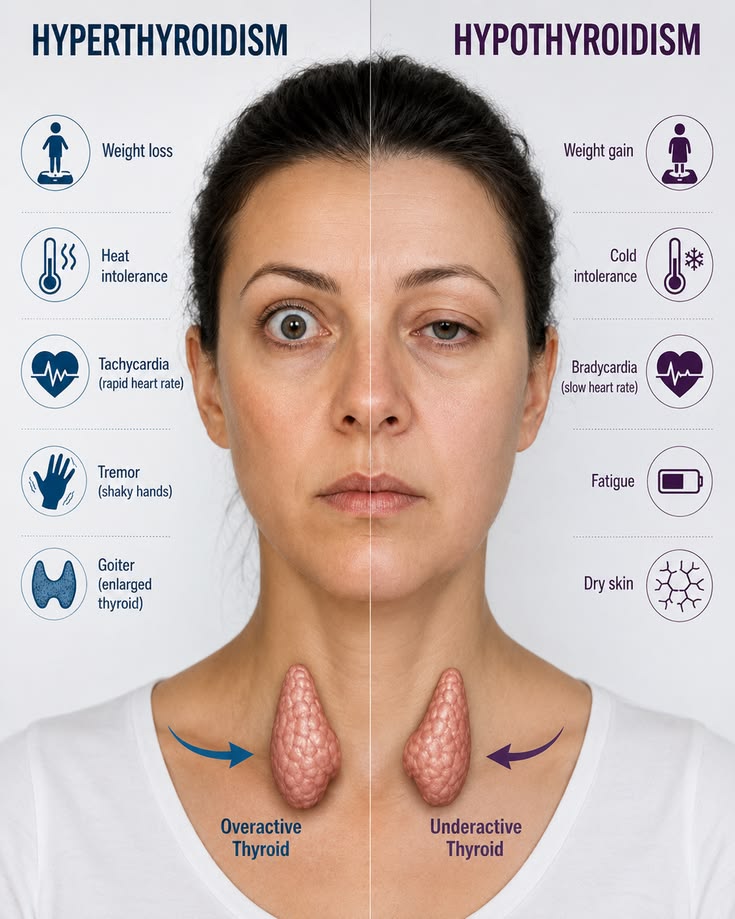
Energy fluctuations are often among the most debilitating symptoms of thyroid disorders. Hyperthyroidism typically causes increased energy, but this is often accompanied by restlessness, nervousness, and difficulty relaxing. Despite feeling wired, many patients report poor stamina and quick exhaustion due to inefficient energy use.
In contrast, hypothyroidism leads to profound fatigue and low energy, even after adequate rest. The slowdown in metabolism reduces cellular energy production, making everyday activities feel taxing.
Chronic fatigue or unexplained changes in energy should prompt thyroid function testing, especially if accompanied by other systemic symptoms.
7. Skin condition
Thyroid hormones influence skin health through their effects on metabolism, circulation, and moisture balance. Hyperthyroidism often results in warm, moist, and sometimes itchy skin, due to increased sweating and blood flow.
Hypothyroidism typically causes dry, coarse, and pale skin. The decreased oil and sweat gland activity leads to flakiness and a tendency toward cold intolerance. In some cases, hypothyroidism also causes puffiness or a swollen appearance, particularly around the eyes.
Skin changes linked with thyroid disorders can be mistaken for dermatological issues, so a thorough history and examination are important.
8. Mood and cognition
Thyroid imbalances significantly impact mood and cognitive function. Hyperthyroidism can cause anxiety, irritability, restlessness, and difficulty concentrating. Some patients experience mood swings or even symptoms resembling panic attacks.
Hypothyroidism, on the other hand, often leads to depression, sluggish thinking, memory problems, and difficulty focusing—sometimes called “brain fog.” These cognitive symptoms can severely affect quality of life if untreated.
Recognizing mood changes as potential signs of thyroid dysfunction is important, especially when standard psychiatric treatments provide limited relief.